What Are Pahari Paintings? Inside the Himalayan Art Tradition Captivating Museums in 2026
Concurrent exhibitions in Washington, Cleveland and Cincinnati are bringing renewed attention to Pahari painting, the emotionally rich miniature tradition that flourished across India’s Himalayan kingdoms between the seventeenth and nineteenth centuries.

In 2026, Pahari painting is receiving renewed international attention through a series of major exhibitions and a significant new publication dedicated to the tradition. Concurrent shows at the Smithsonian National Museum of Asian Art, the Cleveland Museum of Art and the Cincinnati Art Museum, alongside the publication of Pahari Paintings: Art and Stories, are introducing wider audiences to one of the most emotionally sophisticated forms of Indian painting.
For many viewers outside South Asia, Pahari painting remains less familiar than Mughal miniatures or Rajput court art. Yet these luminous works, created in the Himalayan kingdoms of northern India between the seventeenth and nineteenth centuries, possess extraordinary visual and emotional depth. Rich in colour, poetry, devotion and atmosphere, they occupy a singular place within the history of Indian art.
The current exhibitions and scholarship are not only bringing these paintings into focus again but also reshaping how historians understand the tradition itself.
What Are Pahari Paintings?
The word “Pahari” means “from the hills,” referring to the Himalayan hill states spread across present-day Himachal Pradesh and parts of Jammu. Beginning around the seventeenth century, rulers across these kingdoms commissioned paintings for royal collections, devotional manuscripts and literary works.
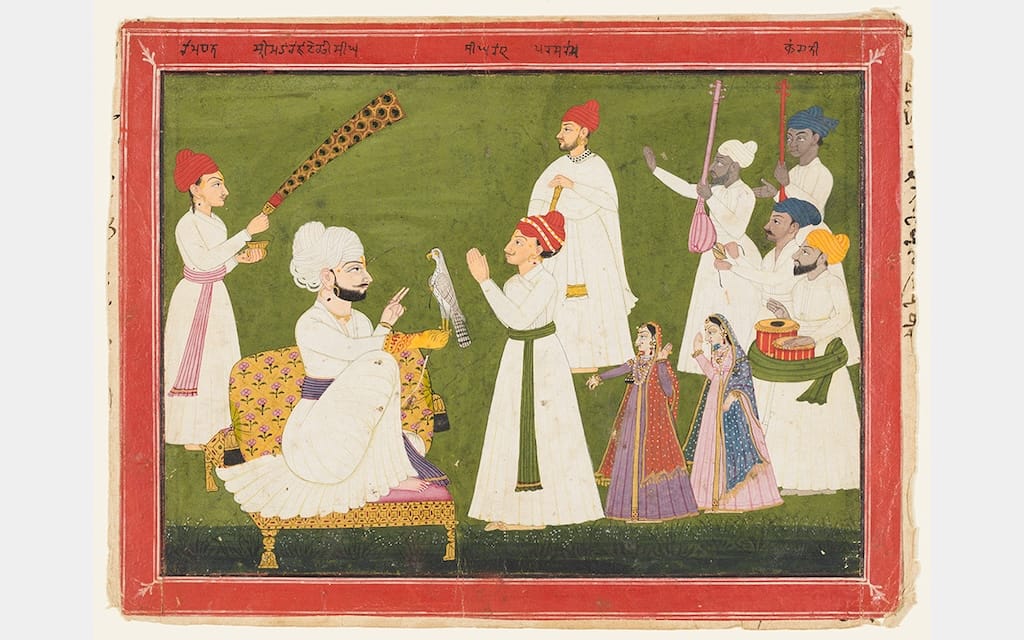
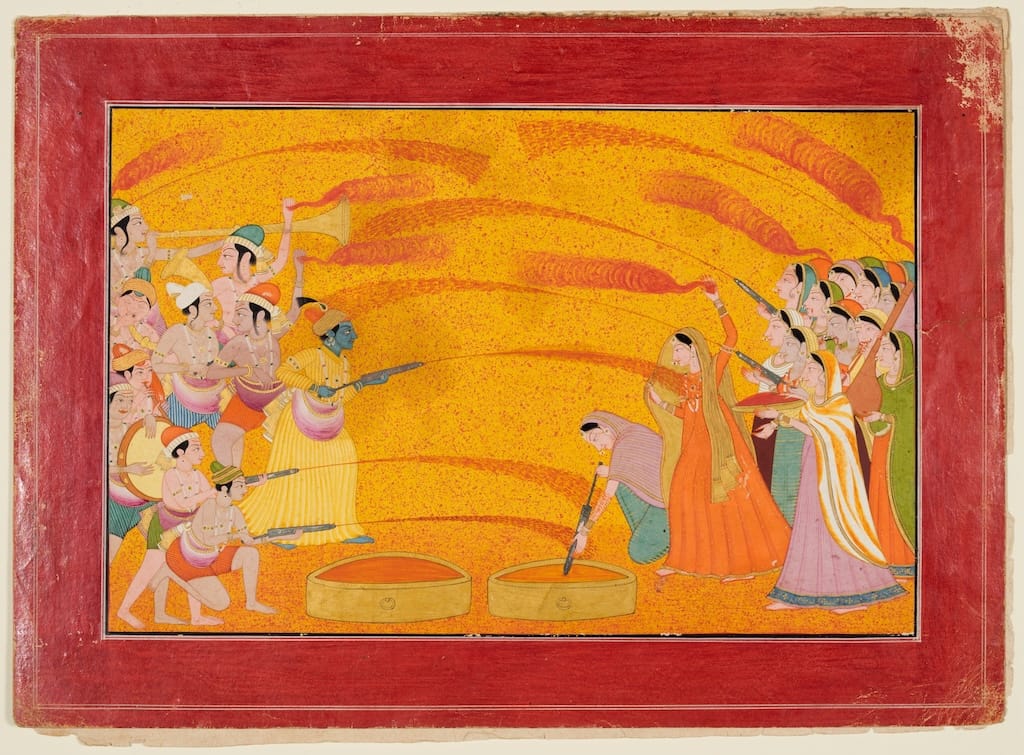
Though often small in scale, these paintings were remarkably ambitious in expression. Artists used opaque watercolours made from finely ground pigments, gold and natural materials to create jewel-like surfaces filled with delicacy, rhythm and emotional intensity. Themes ranged from scenes of Krishna devotion and Hindu epics to romantic poetry, royal portraiture and moments of courtly life.
Unlike many imperial painting traditions that focused on political grandeur, Pahari painting frequently explored inner emotional worlds. Longing, devotion, romance, separation and spiritual yearning became central themes. Nature itself appeared emotionally alive: forests glowed with atmosphere, rivers curved through dreamlike landscapes and storm-filled skies mirrored human feeling.
One reason these paintings continue to resonate today is their ability to combine stylisation with psychological intimacy. A gesture, a glance or the placement of a figure within a landscape can convey profound emotional complexity.
A Tradition Built Through Artistic Exchange
For decades, art historians categorised Pahari paintings according to individual courts and dynasties. Recent scholarship, however, has started moving away from those rigid classifications.
The new publication Pahari Paintings: Art and Stories, edited by Sonya Rhie Mace, Sarang Sharma and Vijay Sharma, reflects this changing perspective. Published in March 2026, the 368-page volume draws from one of the most important collections of Pahari art ever assembled and foregrounds recent fieldwork and research into hereditary artist communities and inter-valley mobility.
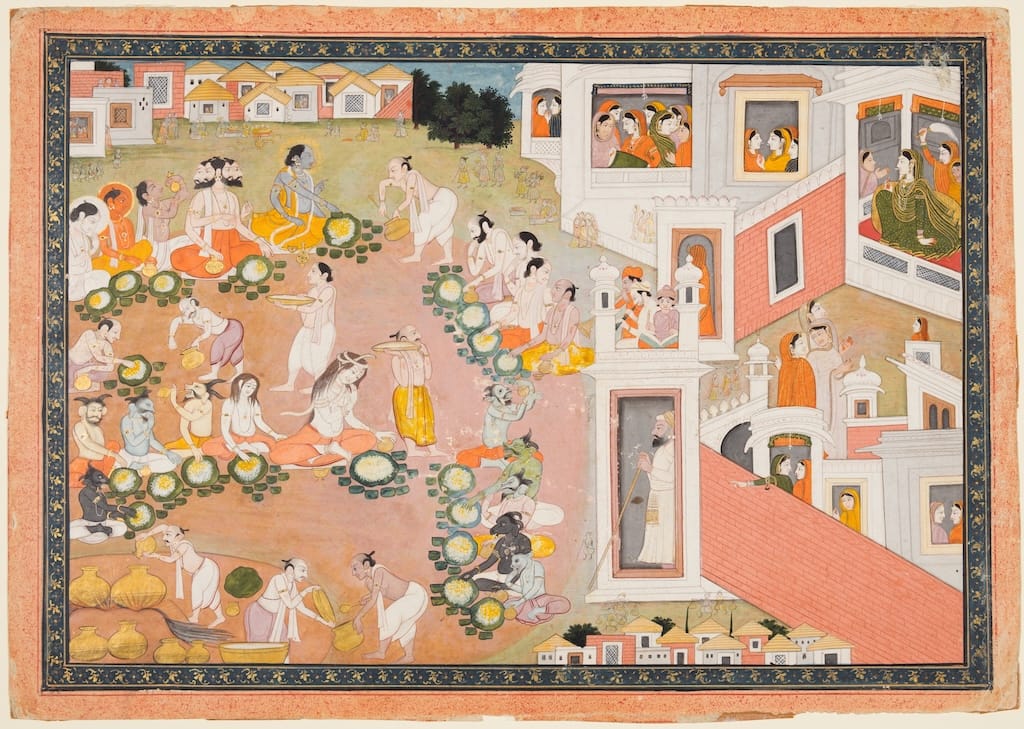
Rather than treating the tradition as a series of isolated court styles, the publication positions Pahari painting as a fluid network of artists, patrons and workshops working across Himalayan kingdoms. Essays by scholars including Catherine Glynn Benkaim, Debra Diamond and Vrinda Agrawal examine how collaboration and movement shaped the diversity and innovation of the tradition.
Many of the paintings reproduced in the volume are being published for the first time. The book also includes translations of inscriptions, collecting histories and reflections from the Benkaim Collection, which now forms the foundation of major holdings at the Smithsonian, Cleveland and Cincinnati museums.
The Smithsonian Exhibition
At the centre of this renewed focus is Of the Hills: Pahari Paintings from India’s Himalayan Kingdoms, currently on view at the Smithsonian National Museum of Asian Art through July 26, 2026. The exhibition presents 48 paintings and coloured drawings, bringing together celebrated masterpieces and works never before publicly exhibited.
The exhibition explores artistic collaboration across three key periods between 1620 and 1830 while examining how painters helped establish the Himalayas as a sacred geography.
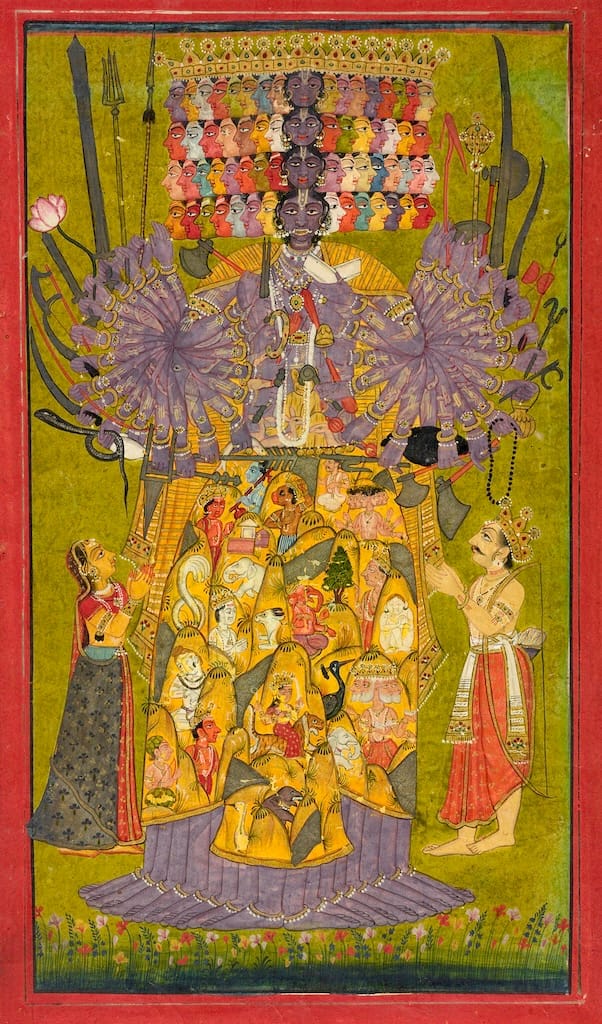
“These paintings are swoon-worthy,” said curator Debra Diamond in the museum’s exhibition announcement. “Created with opaque watercolors made from ground pigments, beetle wings and gold, it’s no surprise that they are among the most beloved of Indian paintings.”
The exhibition also features works from the renowned collection of Ralph Benkaim and Catherine Glynn Benkaim, whose collecting and scholarship significantly shaped the field of Pahari studies.
Cleveland and Cincinnati Offer New Perspectives
At the Cleveland Museum of Art, Pahari Paintings: Art and Stories remains on view through August 23, 2026. The exhibition celebrates the museum’s acquisition of works from the Benkaim Collection while exploring the wider visual culture of the Himalayan kingdoms.
Alongside devotional and poetic paintings are embroidered textiles known as rumal, produced collaboratively by women and painters in the region. A section devoted to the romance Madhavanala-Kamakandala highlights the relationship between literary storytelling and visual art.
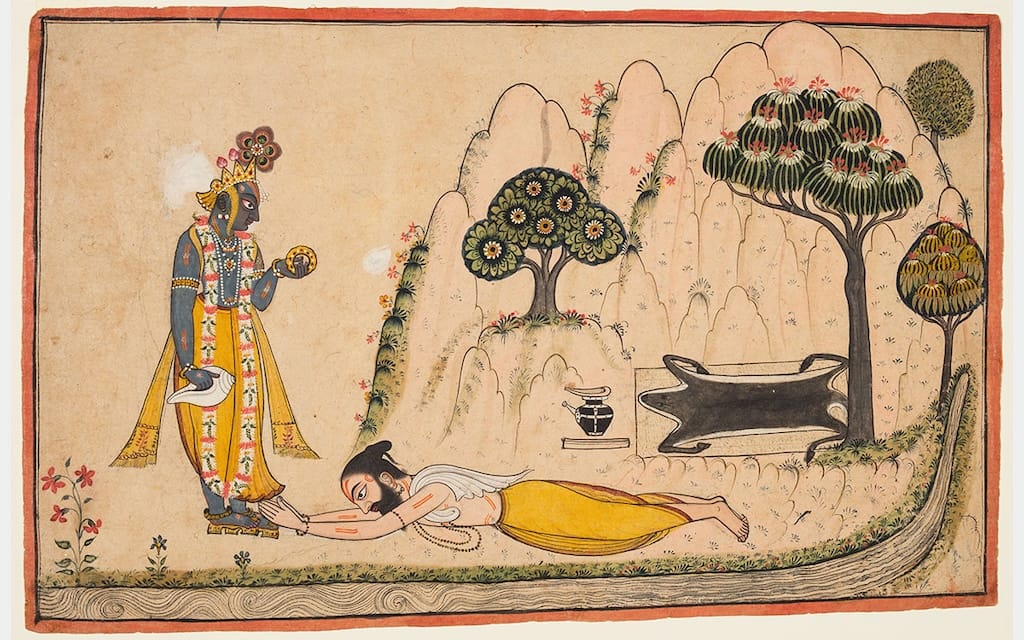
The museum is also presenting Epic of the Northwest Himalayas: Pahari Paintings from the “Shangri” Ramayana, expanding the historical and narrative context of the tradition.
Meanwhile, the Cincinnati Art Museum exhibition Longing: Painting from the Pahari Kingdoms of the Northwest Himalayas, on view through June 7, 2026, approaches the works through the lens of emotion and sensory experience.
Featuring more than forty paintings, the exhibition explores themes of devotion, romance, desire and political aspiration. Selected works are paired with music, scent and tactile elements intended to heighten the paintings’ bhava, or emotional mood.
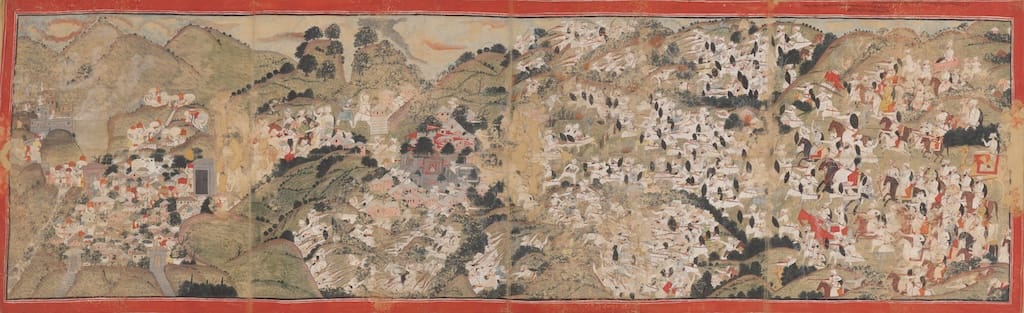
This emphasis on atmosphere feels especially suited to Pahari painting, where emotion often matters as much as narrative.
Krishna, Poetry and the Language of Emotion
No figure appears more frequently in Pahari painting than Krishna. Stories from the Bhagavata Purana, the Gita Govindaand related devotional texts inspired generations of painters across the Himalayan courts.
These paintings were not merely illustrations of scripture. They were visual interpretations of emotional and spiritual experience. Krishna’s interactions with Radha and the gopis became metaphors for longing, divine love and transcendence.
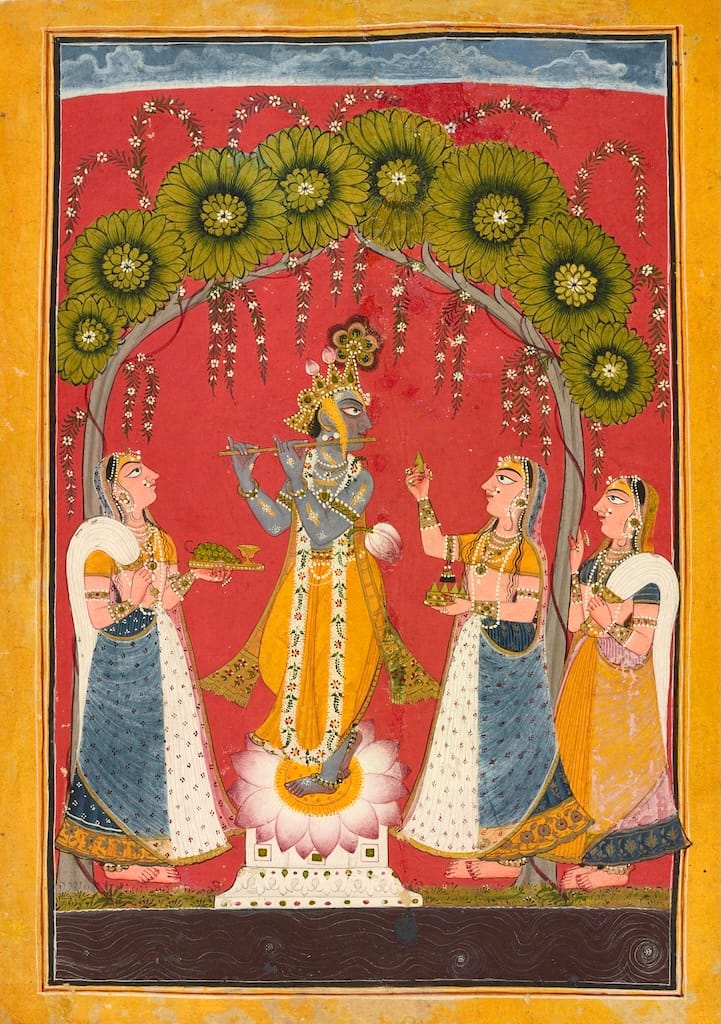
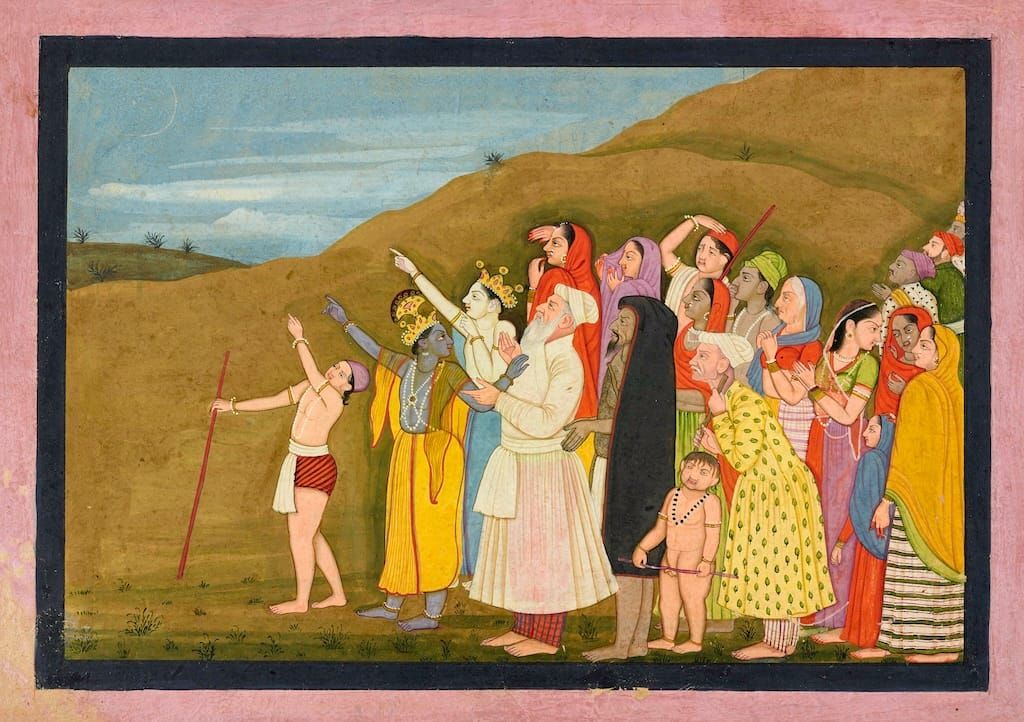
One painting highlighted in the Smithsonian exhibition depicts Krishna and his family gazing at a solar eclipse beneath a green hillside sky. The scene balances cosmic scale with remarkable intimacy and emotional stillness.
The paintings also reveal deep connections to poetry and music. Rhythmic compositions echo literary metre, while colour and gesture create visual moods that feel almost musical in structure.
Why Pahari Painting Still Feels Contemporary
Part of what makes Pahari painting so compelling today is how modern many of the works appear. Their stylised landscapes verge on abstraction. Their emotional subtlety feels cinematic. Their atmospheric qualities anticipate concerns that continue to shape contemporary art and visual culture.
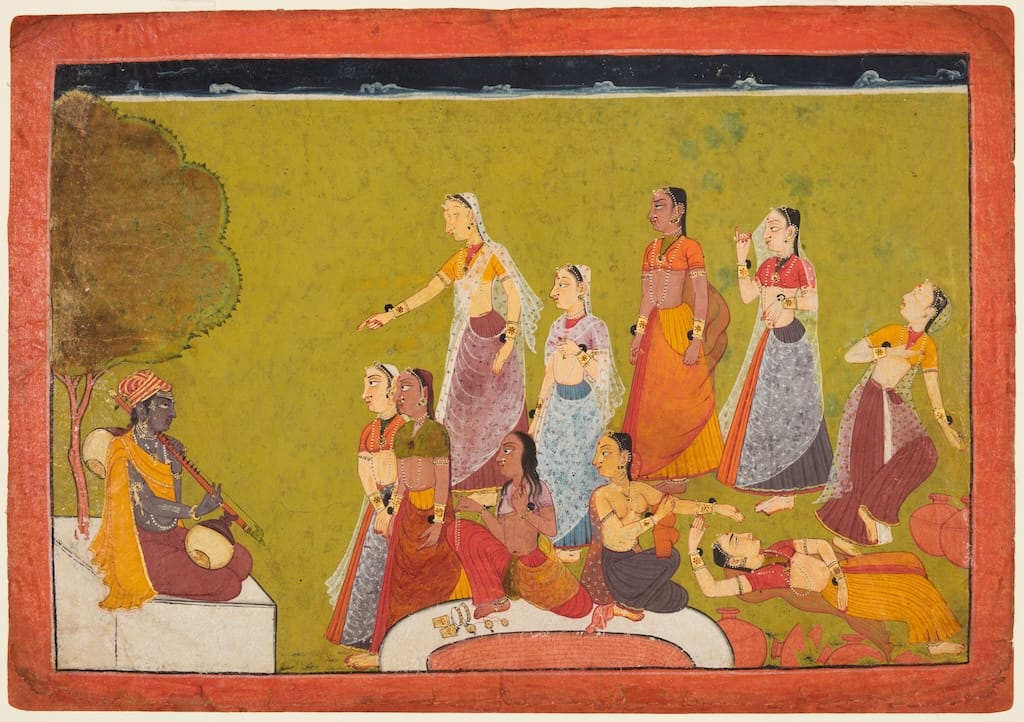
For viewers accustomed to fast digital imagery, these paintings offer something different: intimacy, slowness and sustained attention. Their details unfold gradually. Emotional complexity emerges over time.
The exhibitions currently taking place across Washington, Cleveland and Cincinnati reflect a growing recognition that Pahari painting is not simply a regional tradition but one of the great achievements of South Asian art history.