Are Artists Born or Made? Nature vs Nurture in Art History
From Renaissance workshops to contemporary art schools, the debate over whether artists are born or made has shaped art history for centuries. Examining figures from Picasso to Frida Kahlo reveals how talent, education, society and experience together shape artistic genius.

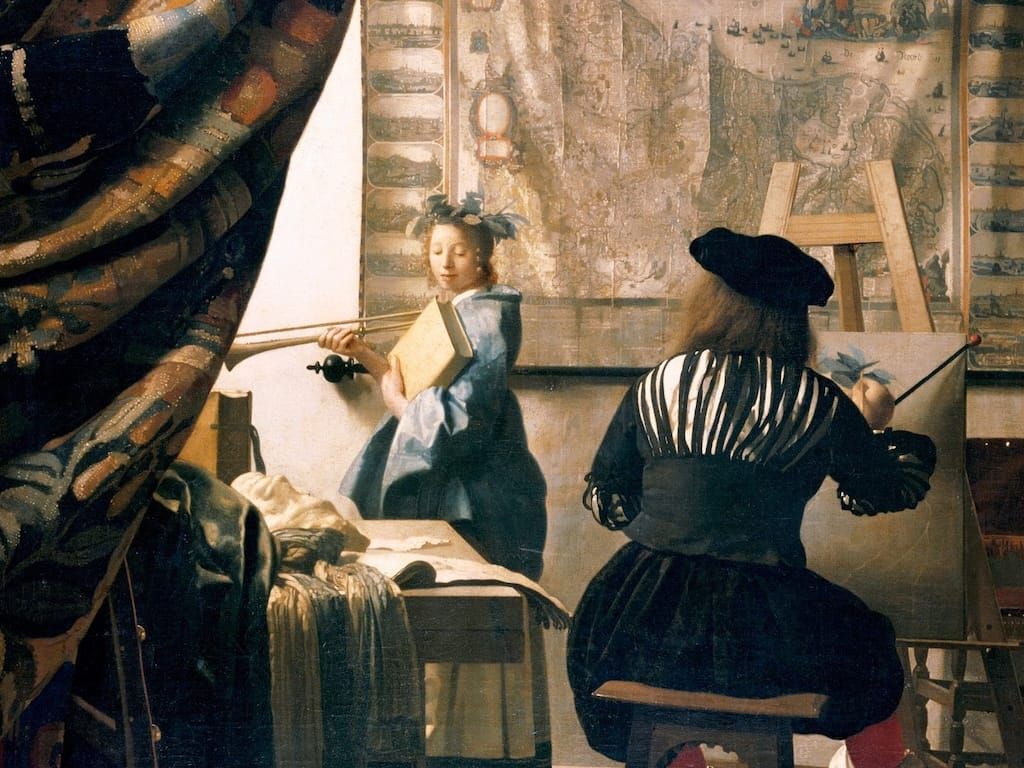
The question of whether artists are born or made has lingered for centuries. Is artistic genius an innate gift possessed by a rare few, or can creativity be cultivated through education, environment and experience? Art history offers compelling arguments for both sides. Some artists appear to emerge with astonishing natural ability from an early age, while others develop gradually through rigorous training, social influence and persistent labour. The debate between nature and nurture is not simply a psychological curiosity. It shapes the way societies understand talent, education and artistic legitimacy itself.
From the Renaissance workshops of Florence to contemporary art schools and digital platforms, the making of an artist has always depended upon a complicated interaction between inherited disposition and external circumstance. Art history demonstrates that neither nature nor nurture alone can fully explain artistic achievement. Instead, the greatest artists often emerge at the intersection of aptitude, discipline, opportunity and historical context.
The Romantic Myth of the “Born Genius”
The romantic image of the “born genius” became particularly influential in the nineteenth century. Artists were increasingly portrayed as exceptional individuals touched by mysterious inspiration. This notion elevated creativity into something almost sacred. Figures such as Wolfgang Amadeus Mozart in music and Pablo Picasso in visual art became symbols of extraordinary natural talent appearing early in life.
Picasso is often cited as evidence that artistic greatness is innate. Born into a family of painters in Málaga, he demonstrated remarkable technical skill as a child. By his teenage years he had mastered academic realism to a degree many trained artists never achieve. His father, himself an art teacher, reportedly recognised his son’s unusual abilities early on. Yet Picasso’s development was not purely spontaneous. He received extensive classical training at art schools in Barcelona and Madrid. He was immersed in artistic circles, exposed to museums and encouraged by a culturally engaged family. Talent alone did not create Picasso. His environment amplified it.
Similarly, the Renaissance master Michelangelo is frequently presented as a near-mythical genius. Giorgio Vasari’s famous biographies portrayed him as divinely gifted, capable of producing masterpieces almost effortlessly. However, Michelangelo’s achievements were also the product of intense apprenticeship and patronage. As a teenager, he trained in the workshop of Domenico Ghirlandaio before entering the court of Lorenzo de’ Medici in Florence, where he studied classical sculpture and philosophy. His talent flourished within systems of education, mentorship and elite support.
Renaissance Workshops and the Culture of Learning
The Renaissance workshop itself demonstrates the importance of nurture in artistic production. Artists were rarely isolated geniuses. Young apprentices learned through observation, repetition and collaboration. Skills such as drawing, pigment preparation and anatomical study were acquired over years of disciplined practice. Workshops functioned as educational institutions in which artistic traditions were transmitted across generations. Even extraordinarily gifted artists depended on these structures.
The idea that artistic skill can be cultivated gained further strength during the Enlightenment and the rise of formal academies in Europe. Institutions such as the Royal Academy in London and the Académie des Beaux-Arts in Paris promoted the belief that art could be systematically taught. Students copied classical sculptures, studied perspective and attended life drawing classes. Technique was understood not as mysterious inspiration but as a discipline developed through rigorous education.
This academic approach helped democratise artistic training to some extent. While social class and gender barriers remained severe, art became increasingly accessible as a profession rather than an inherited privilege. The success of many nineteenth-century painters reflected perseverance and institutional support as much as innate brilliance.
Artists Who Developed Through Persistence
The career of Vincent van Gogh complicates the myth of effortless genius even further. Van Gogh did not display remarkable artistic ability in childhood. He only committed seriously to art in his late twenties after several failed careers. Much of his artistic growth occurred through self-education, relentless experimentation and correspondence with his brother Theo. He studied prints, copied other artists and practised continuously. His mature style emerged gradually rather than appearing fully formed. Today, Van Gogh is regarded as one of the greatest painters in Western art, suggesting that artistic identity can develop later in life through persistence and immersion rather than early prodigious talent.
The role of environment becomes even clearer when considering artists shaped by specific cultural or political contexts. The Mexican painter Frida Kahlo transformed personal suffering, national identity and political consciousness into a unique visual language. Her art cannot be separated from the circumstances of her life, including her physical injuries, her relationship with Diego Rivera and the revolutionary atmosphere of post-revolutionary Mexico. Kahlo’s creativity emerged not merely from innate ability but from lived experience and social context.
The Influence of Society and Community
The Harlem Renaissance in the United States demonstrated how artistic movements are nurtured collectively through community networks, cultural pride and political momentum. Artists, writers and musicians flourished because supportive intellectual environments existed around them. Creativity was not simply individual but social.
Modern psychology also challenges simplistic ideas about natural talent. Studies on expertise often emphasise the importance of deliberate practice. Psychologist Anders Ericsson famously argued that exceptional performance in many fields results less from innate genius and more from sustained, structured effort over time. Although creativity may involve certain cognitive predispositions, artistic mastery typically requires years of disciplined engagement.
This does not mean natural differences are irrelevant. Some individuals clearly possess unusual visual memory, sensitivity to colour, spatial reasoning or emotional perception from an early age. Children sometimes display remarkable drawing ability before formal instruction. Yet these raw capacities still require cultivation. Without encouragement, access to materials or educational support, talent may never fully develop.
Gender, Class and Access to Artistic Opportunity
Socioeconomic conditions also play a decisive role in determining who becomes an artist. Throughout history, many talented individuals lacked the resources or social freedom necessary to pursue artistic careers. Women, in particular, were systematically excluded from artistic institutions for centuries. Despite possessing talent equal to their male contemporaries, female artists often faced limited access to training, patronage and public recognition.
The recent reappraisal of artists such as Artemisia Gentileschi reveals how structural barriers shape artistic history. Gentileschi’s extraordinary skill emerged despite immense social obstacles. Trained by her father Orazio Gentileschi, she developed into one of the most accomplished painters of the Baroque period. Yet for centuries her work was overshadowed by male contemporaries. Her story illustrates how nurture includes not only education but also social permission and visibility.
Creativity in the Digital Age
In contemporary art, the debate between nature and nurture has become even more complex. Digital technologies have transformed artistic access. Tutorials, online communities and affordable tools allow aspiring artists to learn independently from almost anywhere in the world. Creative skills that once depended upon elite institutions can now be cultivated through digital platforms. This expansion suggests that artistic potential may exist far more widely than traditional histories acknowledged.
At the same time, contemporary culture still romanticises the idea of innate genius. Young prodigies continue to attract fascination because they appear to confirm the belief that creativity is mysterious and exceptional. Yet even these prodigies usually emerge from highly supportive environments involving mentorship, exposure and resources.
Beyond Nature vs Nurture
Perhaps the problem lies in the question itself. Asking whether artists are born or made creates a false division between biology and environment. Human creativity rarely develops in isolation from either factor. Nature may provide certain predispositions, sensitivities or inclinations, but nurture shapes how these capacities are expressed, refined and sustained.
Art history repeatedly demonstrates that genius is not simply discovered within individuals but constructed through networks of education, patronage, culture and labour. Even the most celebrated artists depended upon teachers, collaborators, collectors and historical conditions. Their achievements were never purely solitary.
Moreover, defining artistic greatness itself is culturally conditioned. Different societies value different forms of creativity. An artist celebrated in one era may be ignored in another. This means that artistic success depends not only on personal ability but also on shifting historical tastes and institutions of recognition.
Conclusion
The appeal of the “born artist” myth may stem from its emotional power. It is comforting to imagine genius as rare and magical. Yet the history of art offers a more democratic and ultimately more hopeful perspective. Creativity can be nurtured. Skills can be learned. Vision can deepen through experience. Many great artists were shaped as much by perseverance, curiosity and opportunity as by any innate gift. In the end, artists are neither simply born nor entirely made. They emerge through the interaction of temperament, discipline, environment and history.