Touch the Sky: Shreya Pate Curates the City in Fragments
At Galerie Mirchandani + Steinruecke, Shreya Pate brings together seven artists to explore objects, urban landscapes and the human longing to rise, revealing unexpected connections between memory, materiality, aspiration and everyday life.

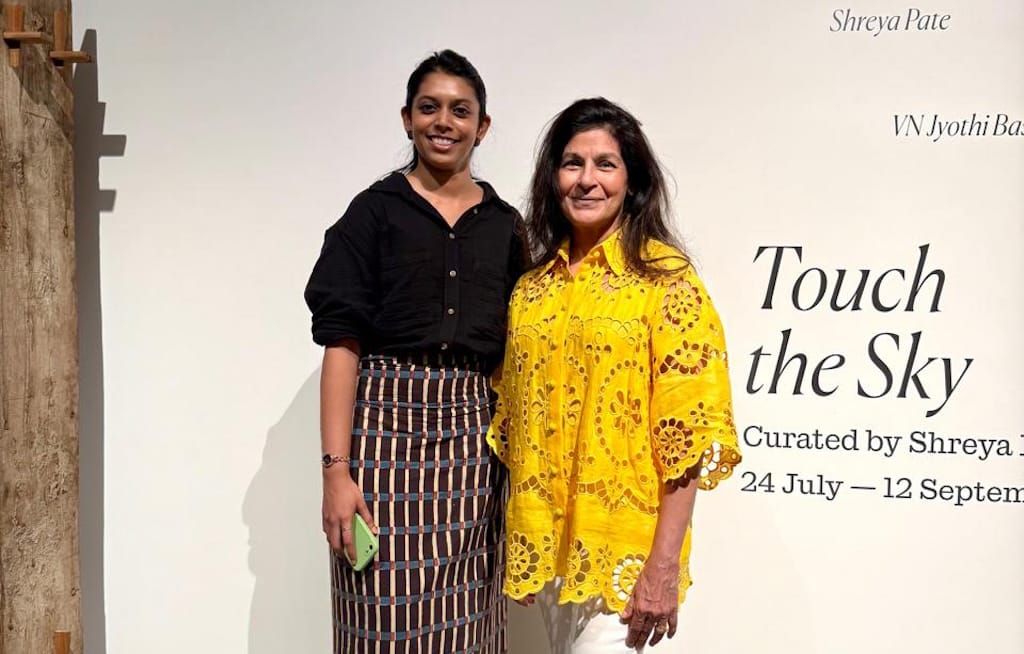
What if objects could dream? What if a tree, a house, a swing or a trail of incense smoke could embody something as deeply human as aspiration? These questions lie at the heart of Touch the Sky, a group exhibition curated by artist and architect Shreya Pate in Mumbai, bringing together Abir Karmakar, Arun KS, Benitha Perciyal, Nicola Durvasula, Sunhil Sippy, V.N. Jyothi Basu and Pate herself.
On view from 24 July to 12 September 2026 at Mirchandani + Steinruecke in Mumbai, the exhibition approaches the city through fragments, objects, structures, memories and imagined possibilities. Yet beneath its interest in architecture, materiality and the urban environment lies something more intimate. For Pate, Touch the Sky is ultimately about people and the emotions that objects provoke in us.
"We are all surrounded by objects as they are very much part of our daily lives," Pate says. "It is their participation in our lives that makes them active." Instead of considering objects as independent entities, she is interested in how they connect to us, what we feel when we look at or touch them, and how they form part of a larger landscape. "Because ultimately the objects act as mirrors."
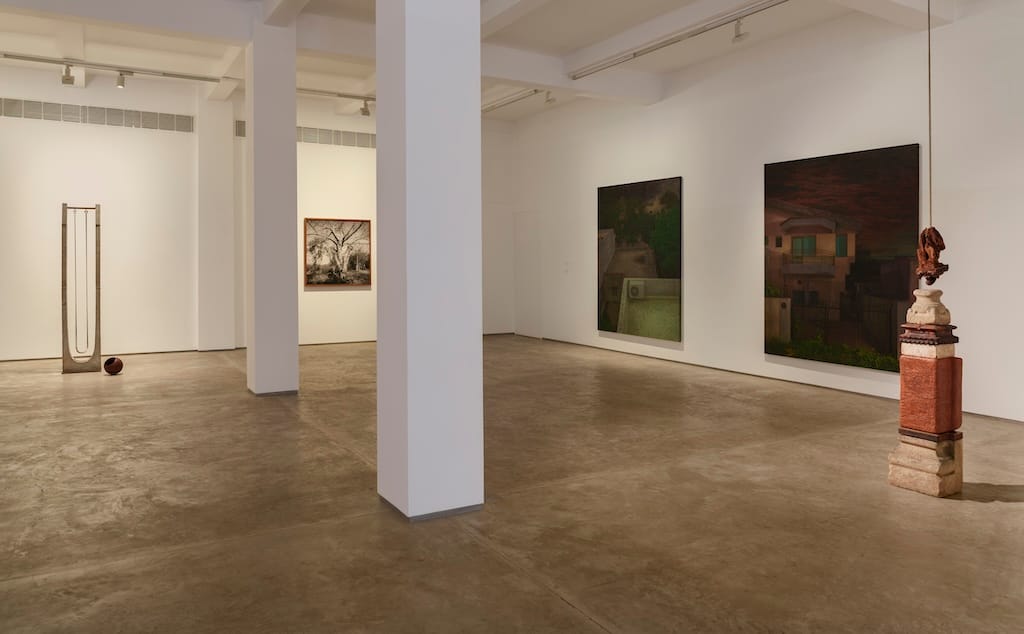
A City Seen in Fragments
This idea provides a way into Touch the Sky. The exhibition begins with a provocative proposition: do objects, made of steel and mortar, wood and stone, or shaped through ancient forms of alchemy, possess a desire to grow, repair, reproduce or reach beyond themselves?
The question is poetic, but it speaks to a familiar experience. Objects surround us so completely that they often become invisible. We live among buildings, furniture, trees, photographs and countless other forms of material culture without necessarily considering the emotional relationships we develop with them. A house can evoke childhood, a tree can become inseparable from a memory, while an architectural fragment can suggest an entire vanished world.
In Touch the Sky, these relationships are brought into focus.
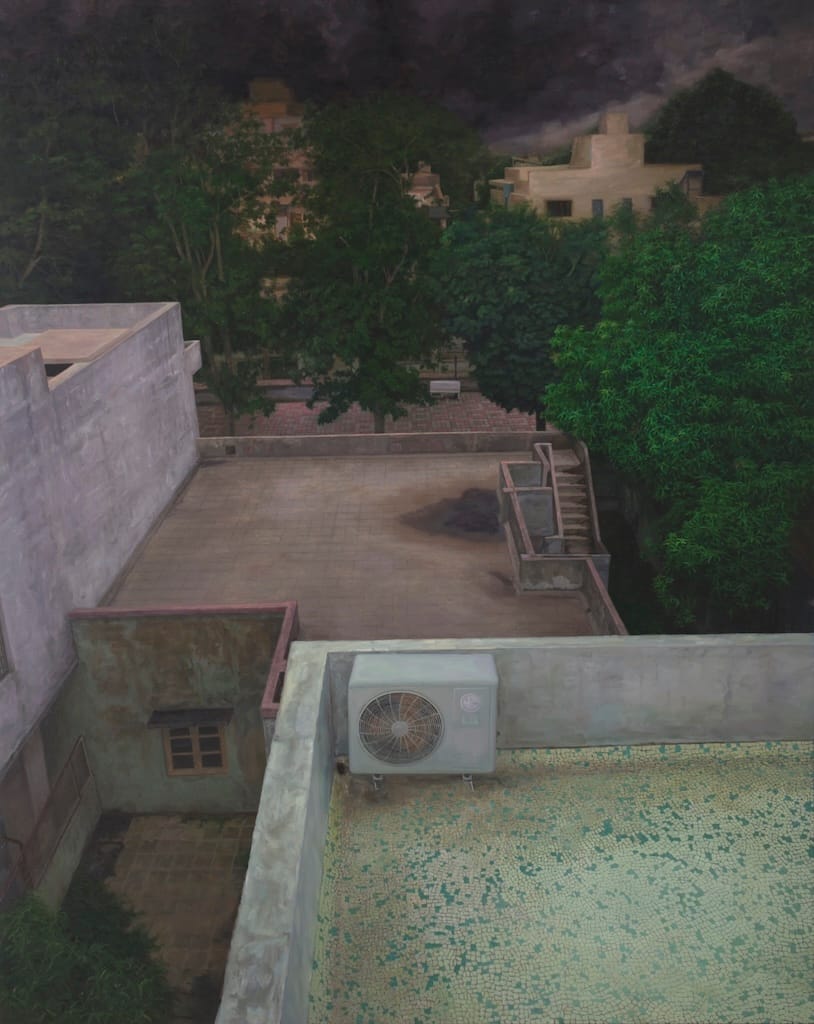
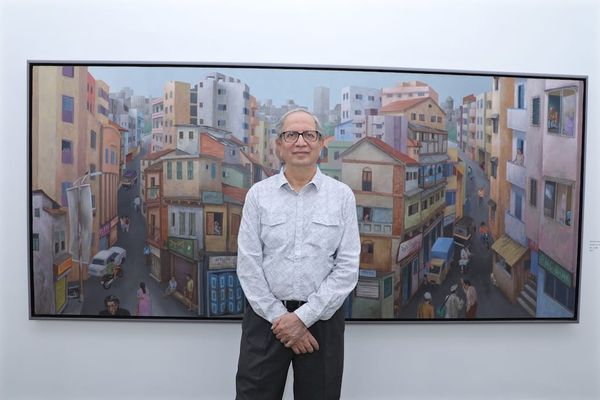
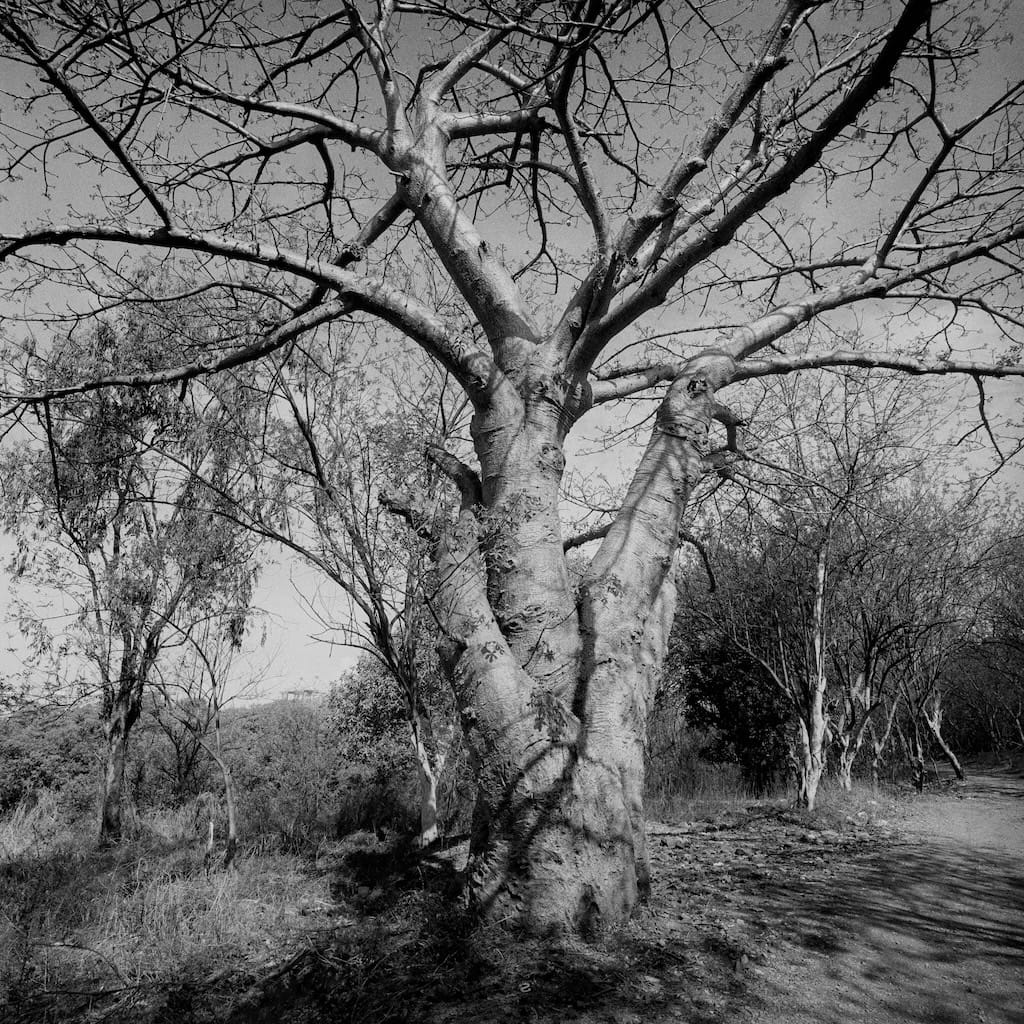
The city is presented not as a complete urban panorama but through fragments. A modest concrete house emerges from foliage, caught somewhere between abandonment and renewal. A tree appears separated from its original environment yet remains rooted within the photograph. Architectural fragments retain traces of structures that once existed elsewhere. Objects become carriers of histories even after their original contexts have disappeared.
At first glance, the works may seem disconnected. For Pate, however, their relationship emerges through closer looking.
"When looked at individually, the artworks may look fragmentary at one glance," she explains. "But as you look deeper at what they are trying to say, we can find a connection and have a dialogue with each one of them."
The Desire to Rise
That dialogue is expressed through a recurring movement: upwards.
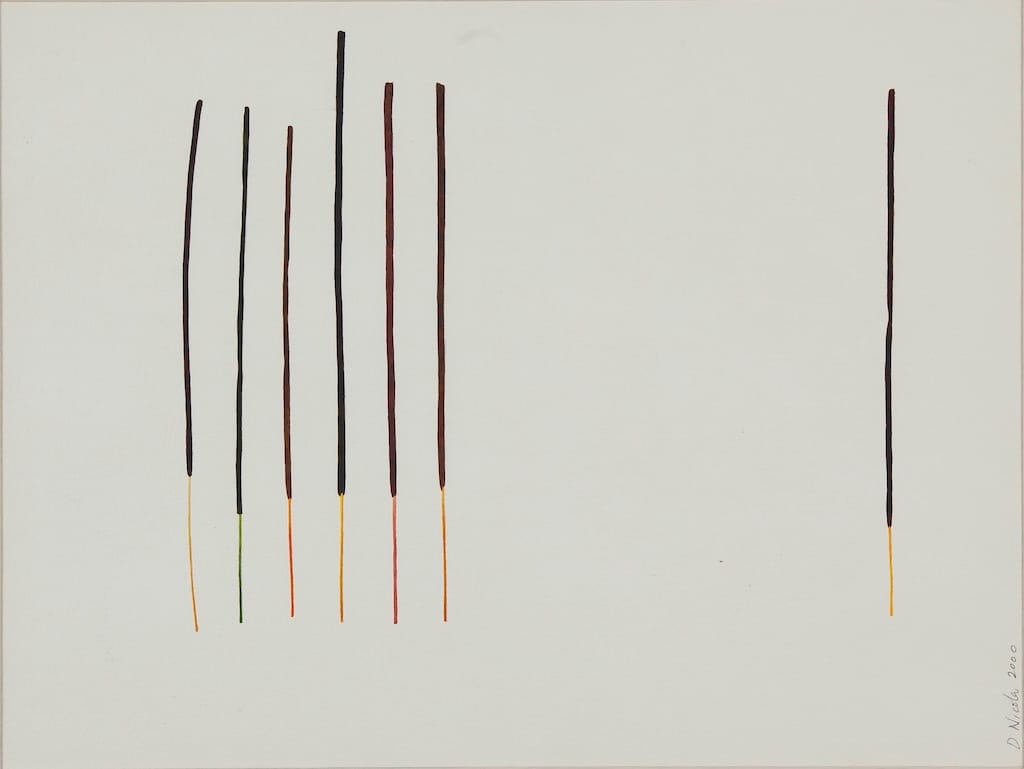
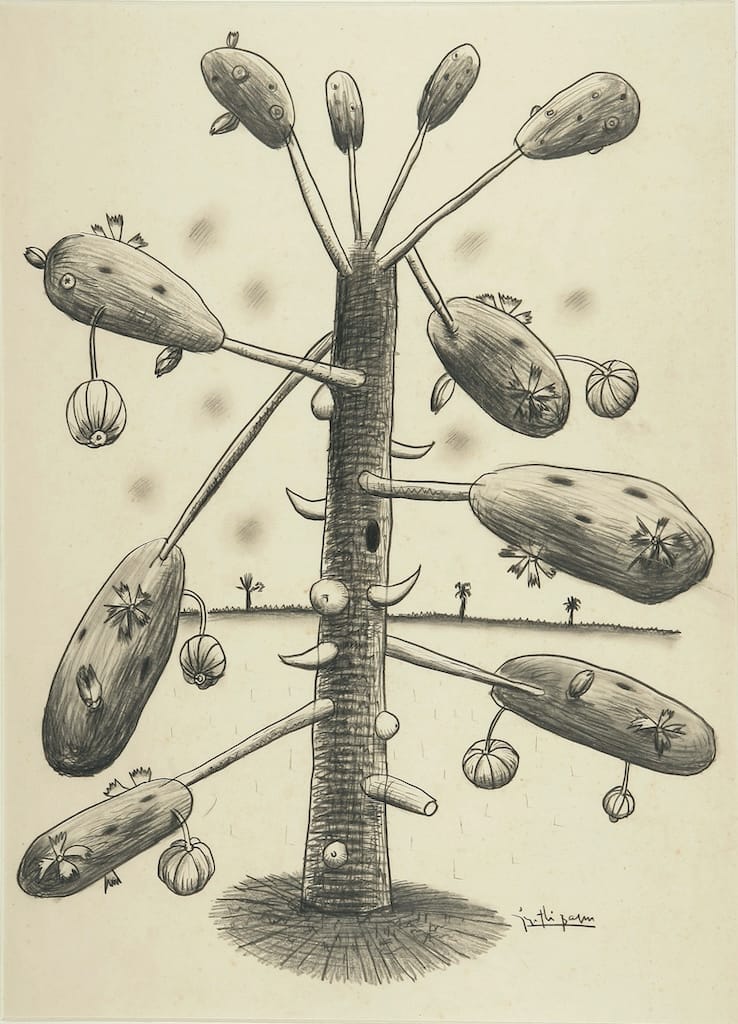
"All of them aspire to touch the sky," Pate says. "Be it the trees or the swing or the agarbattis."
The title therefore becomes less a description of a physical act than a metaphor for a shared human impulse. To touch the sky is to reach beyond one's immediate circumstances. It is an act of aspiration, whether expressed through architecture, nature, movement, memory or imagination.
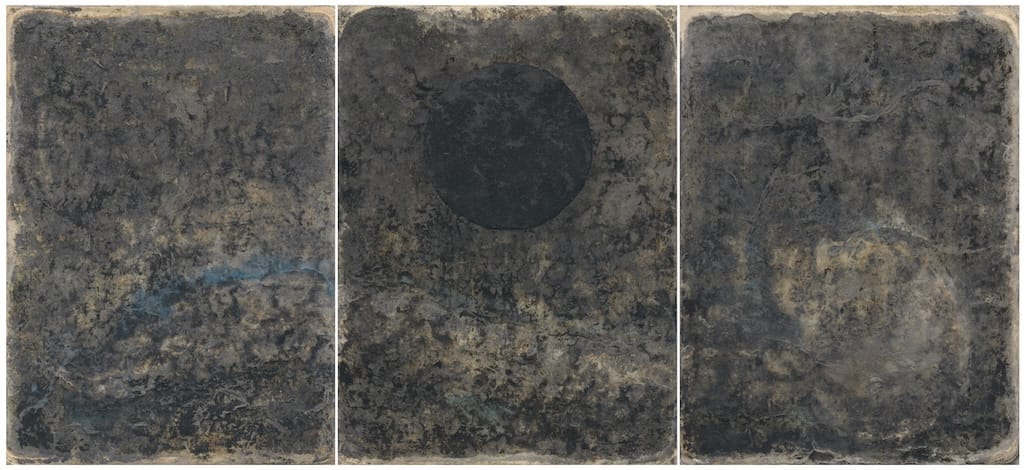
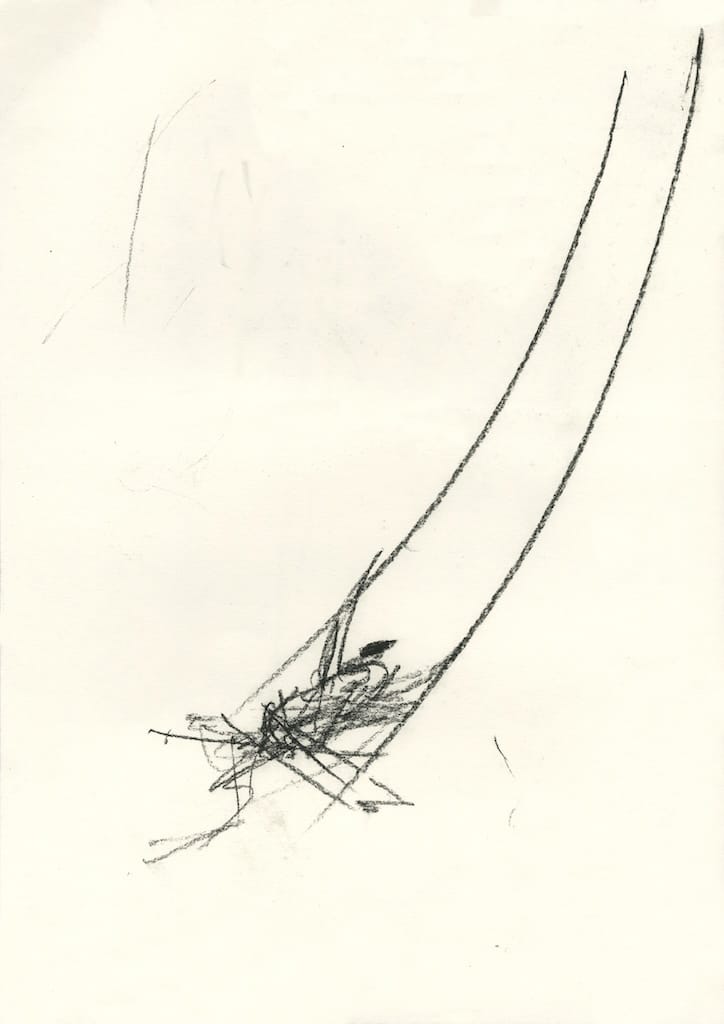
One of the exhibition's most evocative images is the smoke released by agarbattis. The incense is an ordinary object, associated with ritual and everyday life, but its smoke transforms it. Rising in fine, shifting lines, it seems to move beyond the physical limitations of the object that produced it. It becomes an image of something attempting to escape its confines and extend itself into another realm.
The same impulse appears in the exhibition's treatment of trees, houses and other elements of the built and natural environment. Each seems caught between what it is and what it might become.
From Architecture to Curating
Pate's own background makes this exploration particularly significant. Trained in architecture at the Bharati Vidyapeeth College of Architecture in Mumbai and later at the Royal College of Art in London, she has developed an artistic practice concerned with domestic structures, the body and the material world. Her sculptures have explored habitation through seemingly ordinary activities such as cooking, bathing and sleeping.
Yet Pate ultimately locates the emotional charge of these works in the artists who create them.
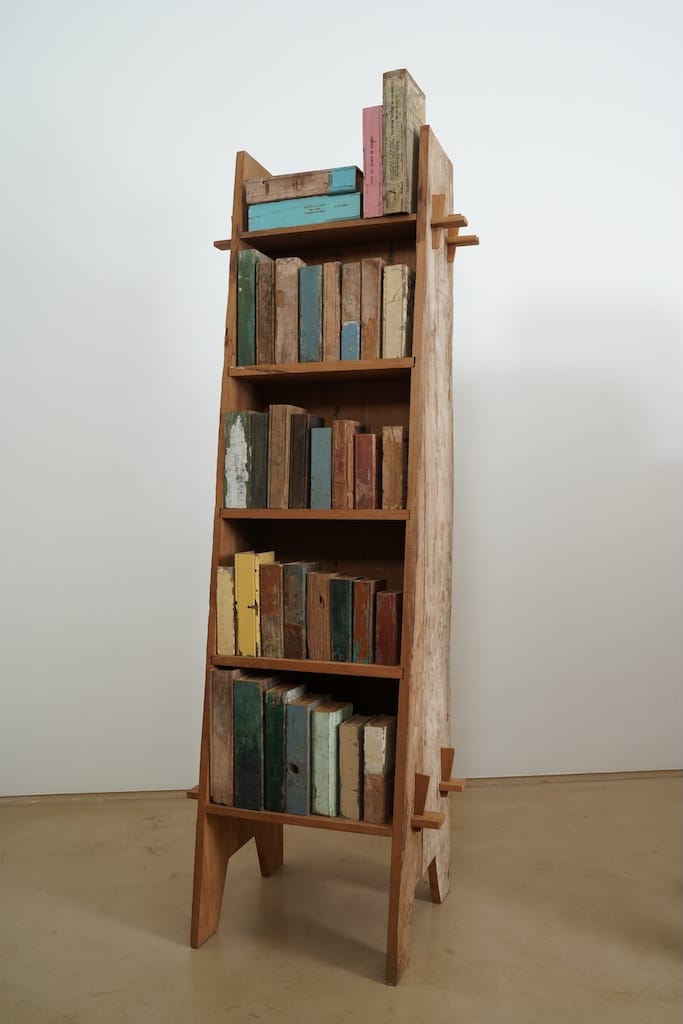
"The artist's being gives shape to what comes out as a sculpture, painting, photograph or drawing," she says. "It is the reflection of one's inner world."
This understanding also shaped her approach to curating the exhibition. The process began with several artworks that had already been selected by Ranjana Steinruecke, co-founder of Galerie Mirchandani + Steinruecke. Pate then searched for the thread connecting them.
"Once that was established, we brought in a few more artworks that were relevant to the narrative irrespective of the medium," she explains. "Rather than looking at a particular artist's work, we went through the artworks. It was a very organic process."
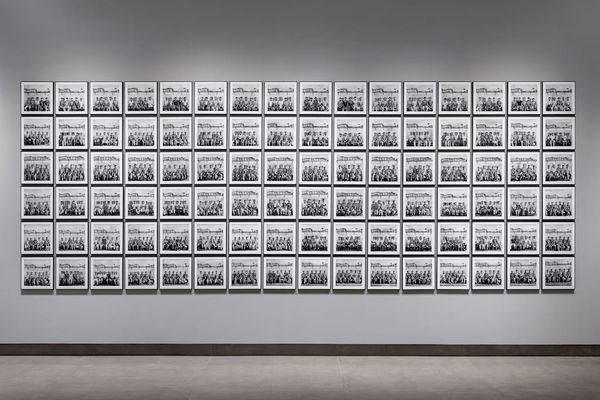
The result is an exhibition in which painting, photography, sculpture and installation are not treated as separate categories. They become different ways of approaching a shared idea.
Pate describes her curatorial method in similarly relational terms. "I look at each project individually, how it works within that particular context, for example this curation, Touch the Sky; what was necessary for it to come together, how each artist's work connects to another and how the exhibition becomes homogeneous and whole."
An Exhibition That Remains Human
That sense of wholeness is important. The exhibition may be composed of fragments, but its purpose is not fragmentation for its own sake. Instead, the fragments gradually reveal a common impulse.
This becomes especially relevant to the exhibition's engagement with the contemporary city. Urban environments are constantly being constructed, demolished, modified and repurposed. Buildings disappear while materials survive. Natural landscapes are absorbed into cities and transformed. Objects move from one context to another, accumulating new meanings as they do.
The exhibition text also connects these ideas to contemporary questions around artificial intelligence, suggesting that intelligence and agency might be distributed across people, objects, technologies and environments rather than belonging exclusively to humans.
For Pate, however, the exhibition remains fundamentally human.
"It is different how each person perceives a certain idea," she says. "Art in general is more a reflection of who you are, and for the viewer it is a point of contact, which may or may not happen with each artwork."
What matters, then, is not necessarily whether every visitor reaches the same interpretation. The exhibition leaves room for individual experience.
"This particular show I feel is more human than it is anything else," Pate says. "It is the constant human longing to rise upwards, which is portrayed in the exhibition."
A Universal Longing
This may be the most revealing way to understand Touch the Sky. What initially appears to be an exhibition about objects is ultimately an exhibition about our relationship with them. What appears to be a meditation on the city becomes a meditation on how we inhabit it. And what appears to ask whether objects possess aspirations becomes a question about our own.
Pate does not prescribe how visitors should respond. "Not really. It is what it is," she says when asked whether she hopes audiences will look differently at the buildings and objects around them.
Instead, she places the emphasis on individual perception and the possibility of shared experience.
"Unless one is rooted in existence, the longing to rise upwards may not emerge. But if many of us feel the same way, then we all share something in common. The expression may differ, but the root of it could be universal."
In Touch the Sky, seven artists, including Pate herself, gather these different expressions into a landscape of fragments. Individually, the works may appear to stand apart. Together, they begin to reveal a shared movement: upwards, beyond the immediate, towards something that remains just out of reach.
The sky, ultimately, is not the destination. It is the longing to reach it.