Reena Saini Kallat's 'Spectral Frequencies' at Chemould
Through bamboo flutes shaped by extinct birdsong, images of disappearing rivers and a sundial commemorating vanished species, Reena Saini Kallat explores the connections between sound, memory, time and the fragile relationship between humans and nature.

In Spectral Frequencies, Indian contemporary artist Reena Saini Kallat examines the disappearance of species and the transformation of natural environments through a series of works that translate sound and other ephemeral phenomena into material forms. Bringing together sculpture, drawing and photography, the exhibition explores how the traces of extinct birds and drying rivers can be preserved as visual and physical records of ecological change. On view from 24 October to 21 November 2026, the exhibition extends Kallat's longstanding engagement with memory, erasure and collective histories into the ecological realm.
From Collective Memory to Ecological Loss
Working across drawing, sculpture, photography, video and installation, Kallat has spent much of her career examining displacement, belonging and the boundaries that shape individual and collective identities. Her artistic concerns have been informed in part by her family's experience of Partition, which continues to influence her understanding of borders and historical memory.
"I think of memory as something that is never entirely stable. It is shaped by what we inherit, what we choose to remember and equally by what is suppressed or gradually erased," she explains. "Partition was not simply a geographical division. It ruptured lives, relationships and shared cultural histories. Its reverberations continue across generations, shaping both individual and collective memory."
Over the years, these concerns have expanded beyond the political and human dimensions of borders to encompass their implications for the natural world. Kallat is interested in how territorial divisions, human interventions and the ownership of land and resources disrupt ecological relationships that are inherently interconnected. In Spectral Frequencies, this enquiry takes the form of an examination of extinction, environmental transformation and the fragile interdependencies between human and non-human worlds.
Giving Form to Extinct Birdsong
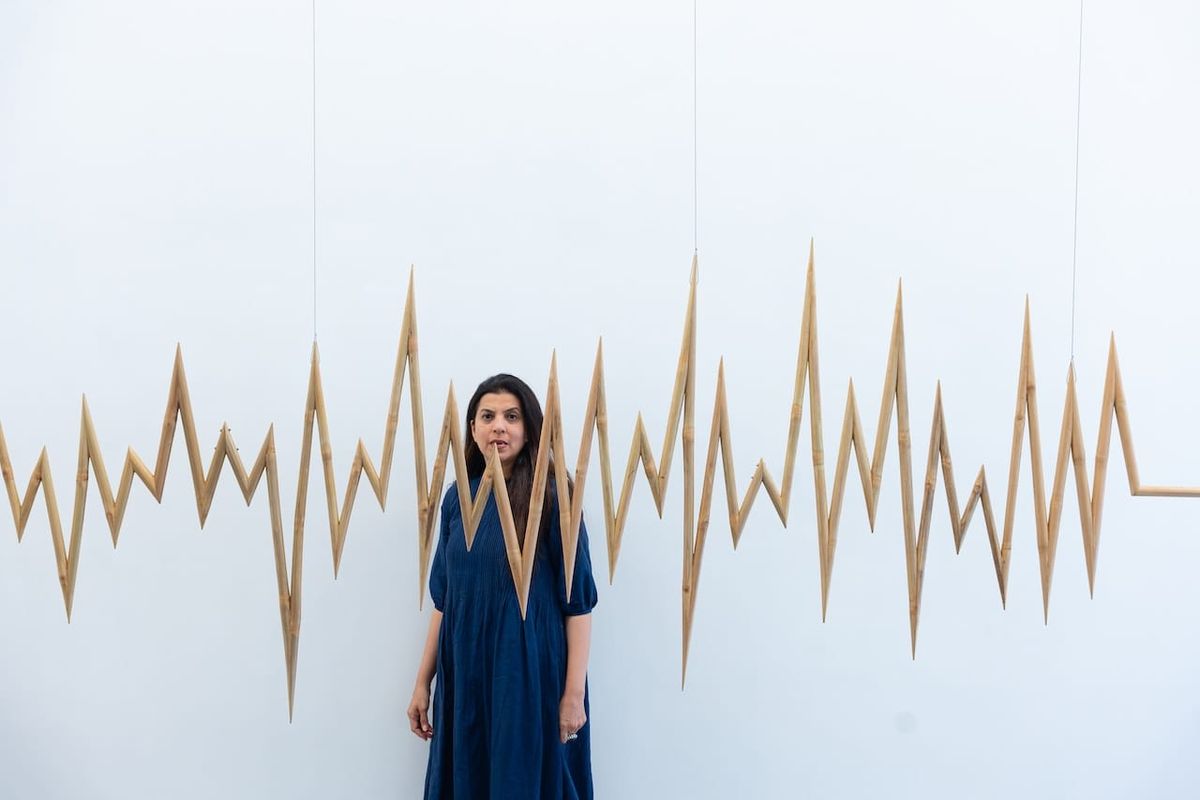
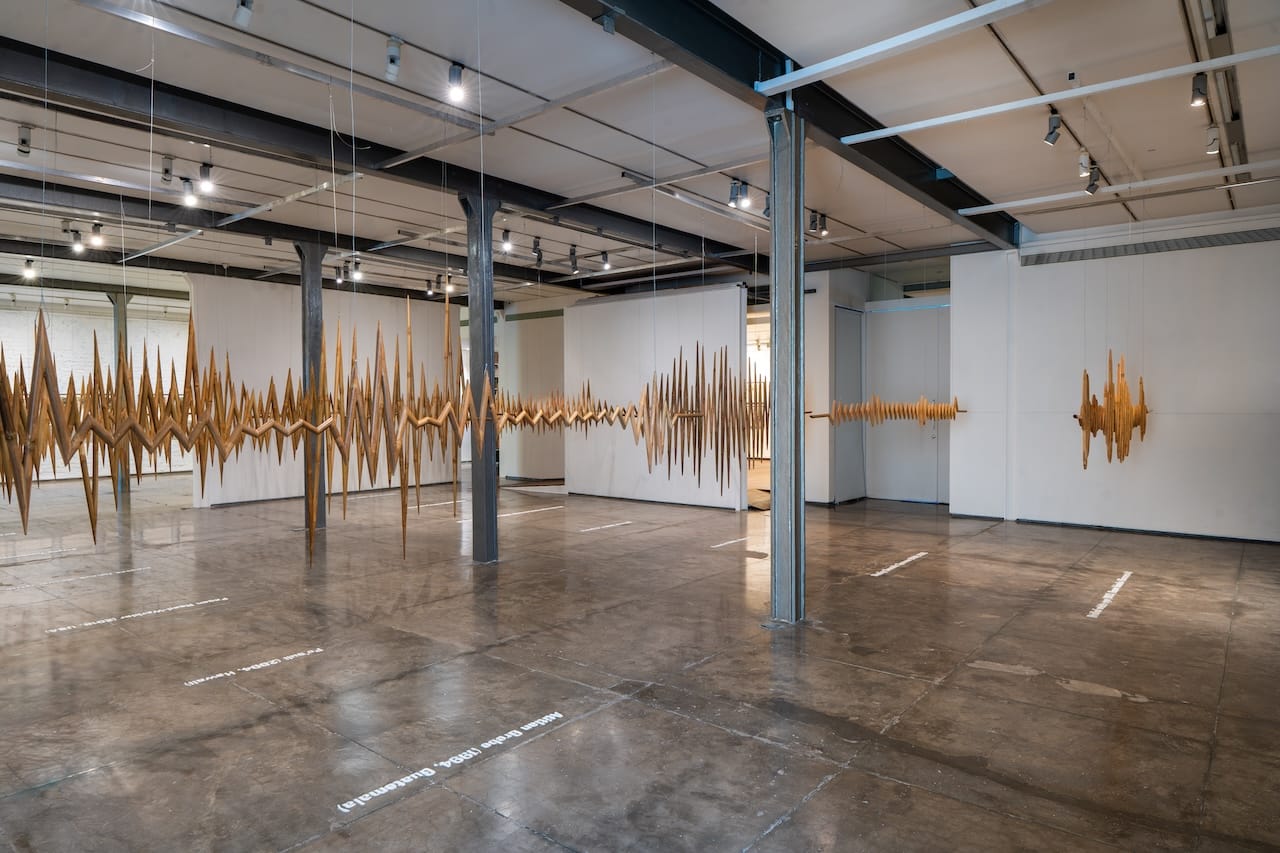
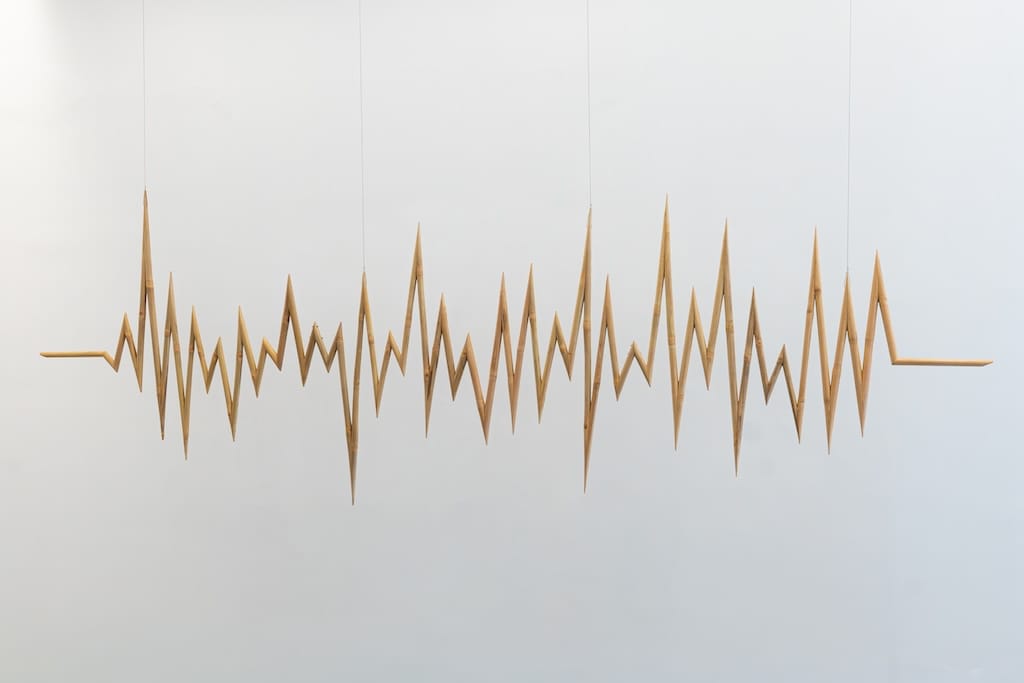
At the centre of the exhibition is Spectral Frequencies: Breathlines (2025–26), an installation of bamboo flutes shaped according to the waveforms of recorded calls from thirteen extinct bird species. Drawing on sonographic recordings, Kallat translates the distinctive frequencies of these calls into sculptural forms, transforming sounds into objects that can be encountered in physical space. The flutes, suspended above the names of the birds inscribed in salt alongside their respective years of extinction, become material traces of voices that can no longer be heard in the wild.
The species represented include the Huia of New Zealand, the Carolina Parakeet of the United States, the Kauaʻi ʻŌʻō of Hawaii, the Alagoas Foliage-gleaner and Cryptic Treehunter of Brazil, and the Atitlán Grebe of Guatemala, among others. Their disappearance reflects a range of environmental pressures, including habitat destruction, overhunting and human intervention.
The choice of bamboo is closely connected to the conceptual origins of the installation. As Kallat explains, "The call of the Kauaʻi ʻŌʻō from Hawaiʻi is said to have resembled the sound of a flute, which is how I thought of transforming the sound waveforms into the sculptural forms of flutes. As a wind instrument, the bamboo flute also carries associations with breath and resonance, with the idea of sound as a carrier of memory."
Although Kallat collected recordings of all the species represented, only one voice is heard in the gallery: that of the Kauaʻi ʻŌʻō. The recording captures the repeated calls of the last known male, who continued calling for a mate despite no females of his species remaining. Its final recorded call, believed to have been directed towards a mate that would never respond, becomes the emotional centre of the installation.
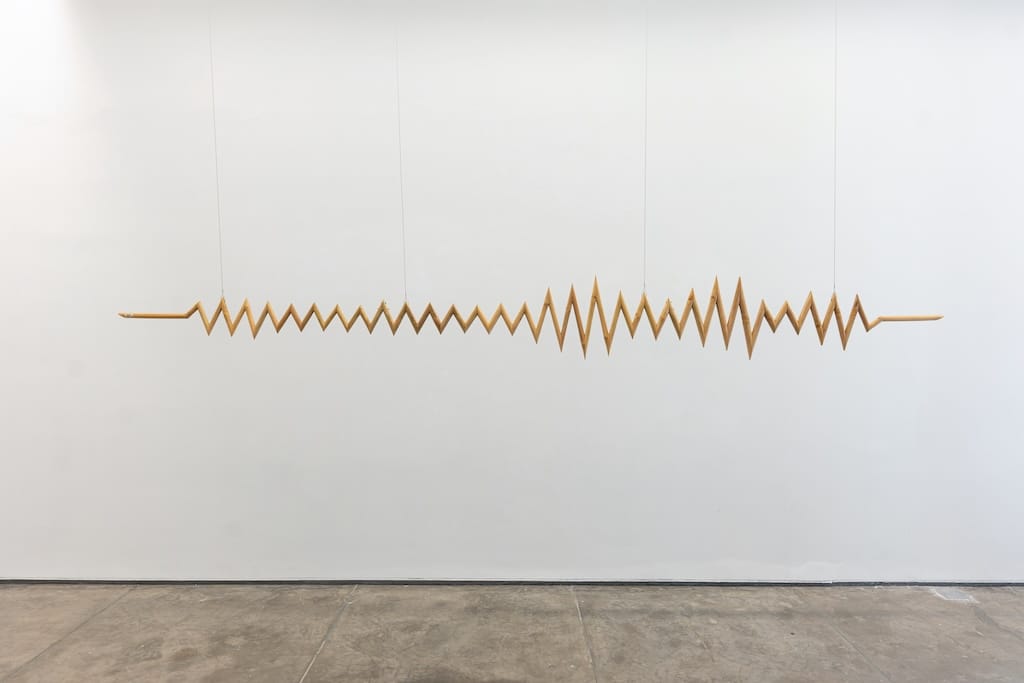
"I was particularly moved by the poignant story behind a 1987 recording of the last known male Kauaʻi ʻŌʻō. He kept calling out for a mate, but no females remained, marking the end of a lineage that had perhaps evolved over thousands of years," says Kallat. "I decided to silence the other flutes so that visitors would hear only this one solitary call, repeated but left unanswered. For me, this isolated voice at the threshold of extinction became an expression of both longing and irreversible loss."
The contrast between the thirteen physical representations and the solitary voice creates an unsettling meditation on isolation and extinction. Along the walls, the names of another 130 extinct birds are written in pencil, extending the installation into a broader memorial to species that now survive only through archival records.
The Sounds of Disappearing Landscapes
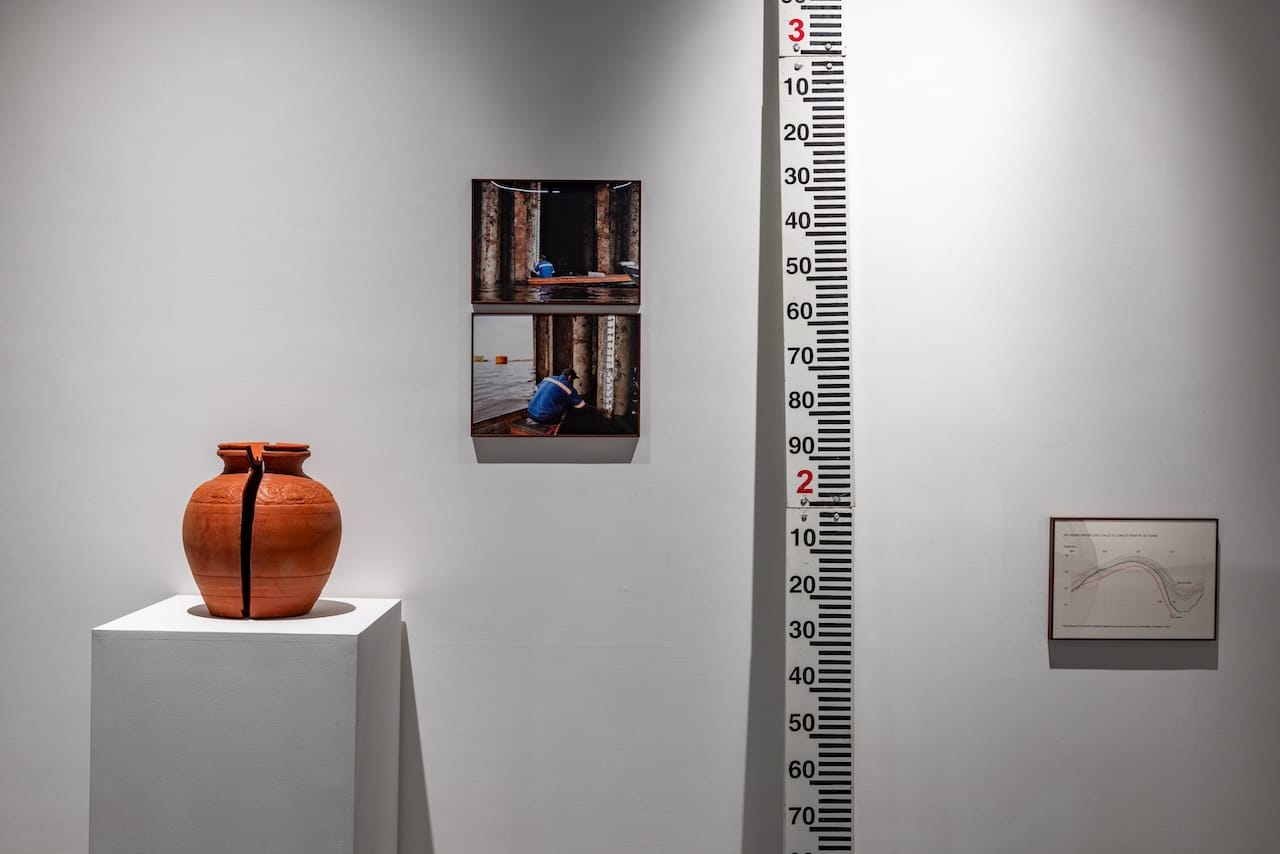
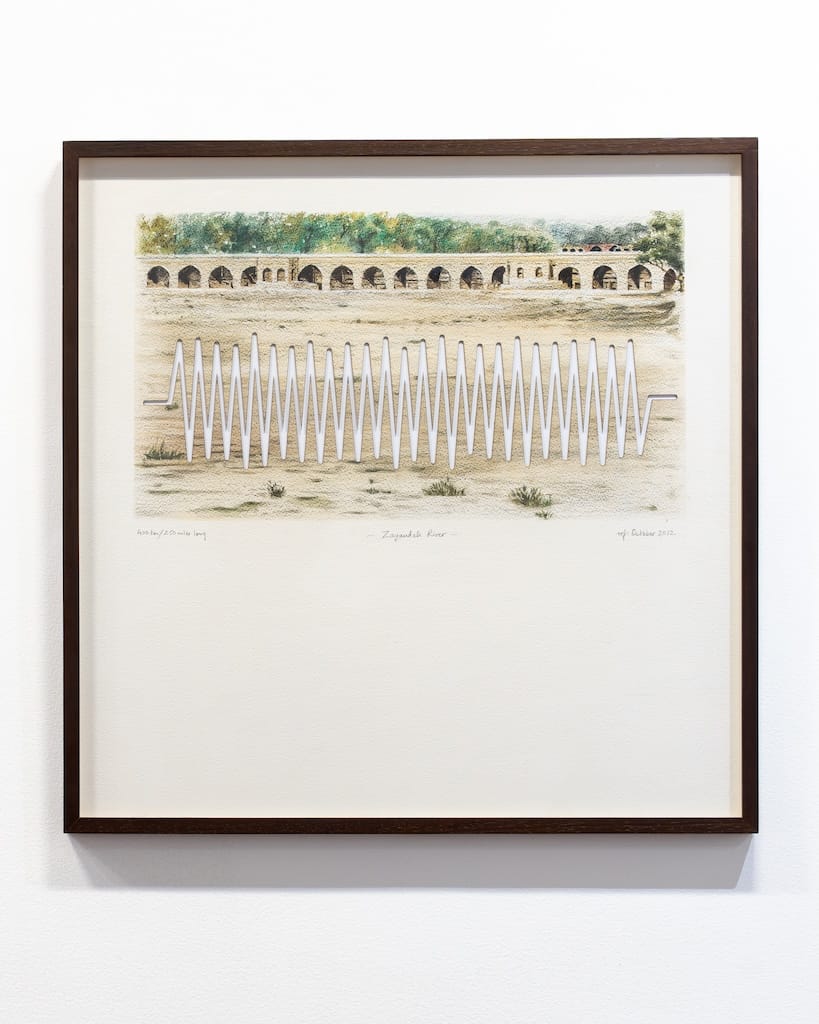
The exhibition's engagement with ecological disappearance extends beyond birdsong to the changing geography of water. In River Morphologies (2025), Kallat turns her attention to rivers whose courses have diminished or dried up over time. Executed in gouache, charcoal and pencil on embossed and laser-cut paper, the works depict arid riverbeds as delicate contours of ecosystems in retreat. Overlaid with laser-cut forms derived from archival field recordings of the rivers, the images bring together the visible remains of waterways and the sonic impressions of their former flows.
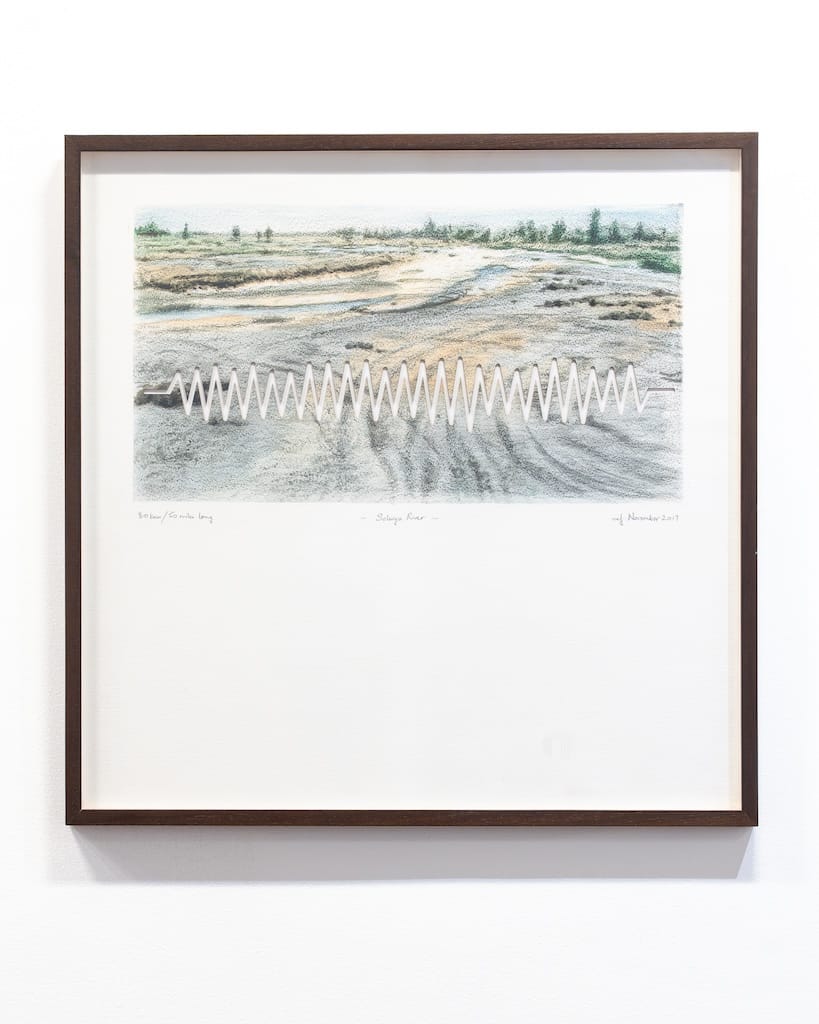
The resulting compositions occupy an intriguing space between drawing and sound. The waveforms translate the gurgles, murmurs and roars of flowing water into silent visual structures, retaining the shape of a sound while removing the possibility of hearing it. The laser-cut sections register absence as physical space, making the missing sounds almost tangible. As Kallat describes them, the waveforms resemble "an echocardiogram of the river's last pulses".
For the artist, these works are concerned with more than the physical disappearance of water. "A river is much more than a channel of water. It sustains habitats, communities and a network of interconnected lives," she says. The drying riverbeds become records of environmental change, but they also invite consideration of the human decisions surrounding land, resources and development that contribute to ecological degradation.
This political dimension connects River Morphologies to Kallat's earlier works, including Hyphenated Lives and Leaking Lines, which examine how political borders and human interventions disrupt natural flows and influence the movement of people and resources. While political boundaries are human constructs, their consequences extend into the natural world. Rivers, forests and migratory routes do not necessarily conform to the territorial divisions imposed upon them.
"Water makes these contradictions particularly visible. A river may flow through several countries, but decisions made upstream can have a direct impact on communities downstream. Access to water is not just based on geography but also by political power, economic interests and how resources are distributed. The health of our rivers is also a reflection of the health of the planet," Kallat observes.
Measuring the Time of Extinction
A different understanding of time emerges in Last Seen in Light (2025–26), a photographic work centred on a sundial transformed into a memorial for vanished birds. Its circular surface bears the extinction dates of twelve species, each accompanied by a waveform derived from archival recordings of their calls. The inscriptions bring together the identity of each bird, the moment of its disappearance and the sonic trace of a voice that has fallen silent.
As the shadow of the sundial's gnomon moves across its surface, it passes over the dates and waveforms, bringing two different understandings of time into relation. The movement of the sun represents the cyclical rhythms of the natural world, while the extinction dates mark an irreversible sequence of losses. The sundial, traditionally an instrument for measuring the passage of time, becomes a memorial to lives that cannot return.
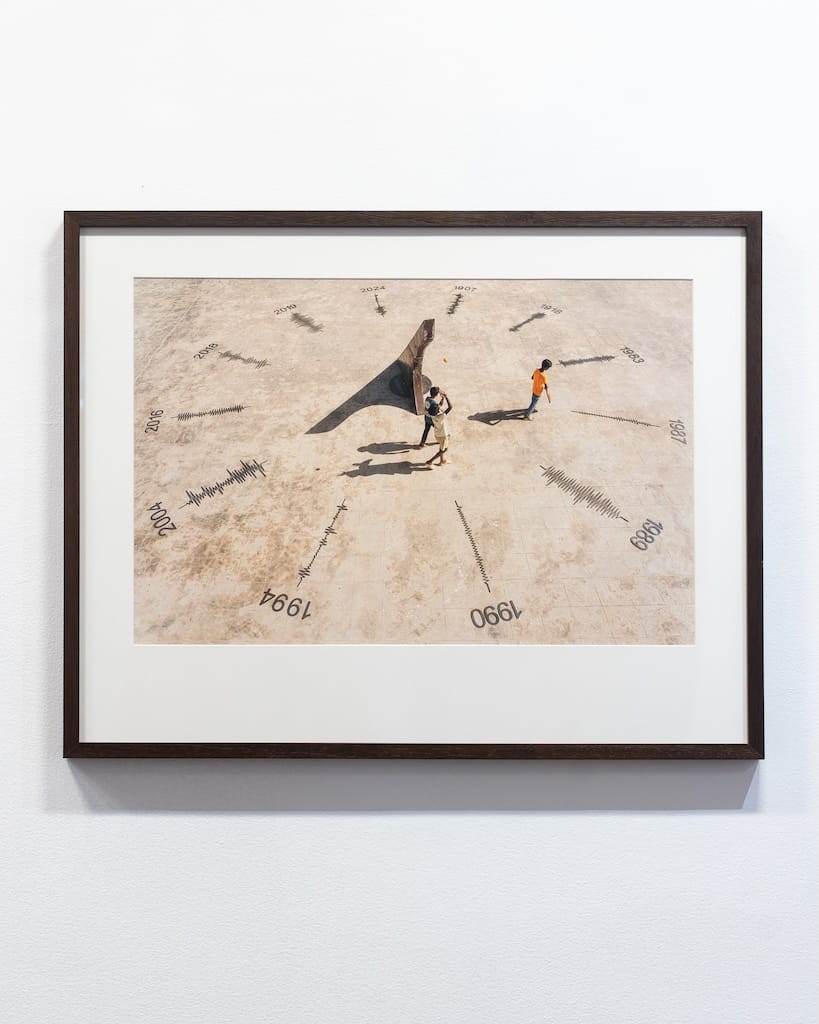
Kallat describes her interest in the contrast between "two very different registers of time": planetary time, marked by the cyclical movement of the sun and the shifting of shadows, and the irreversible finality of extinction. The work brings the continuity of natural cycles into tension with the permanence of ecological loss. Its title, Last Seen in Light, also refers to the photographic process through which an image is formed, adding another layer to the relationship between visibility, memory and disappearance.
Research, Materials and the Language of Absence
Across these works, Kallat explores the tension between preservation and erasure, translating ephemeral phenomena such as breath, birdsong, flowing water and shadows into visual and material forms. Research plays an important role in the development of these works. Archival recordings, historical documents and other forms of evidence provide the factual foundations from which Kallat develops her visual and material language.
The relationship between documentation and artistic interpretation is not a straightforward one. "The research gives the work its grounding, while the artistic process creates room for ambiguity, reflection and new ways of seeing," she explains. For Kallat, an artwork begins to emerge when information develops its own visual, material or spatial logic, allowing the factual and the poetic to remain in conversation.
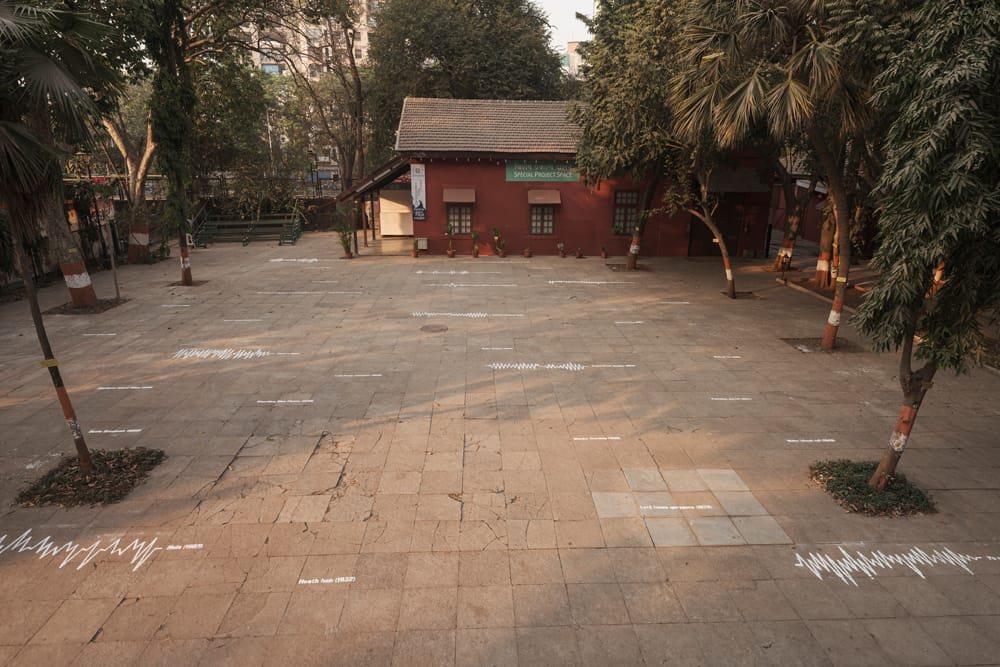
An earlier work, Drawing on the Invisible, similarly explored the relationship between sound and disappearance, tracing the calls of birds in salt. The material's associations with sustenance, preservation and erosion introduced a tension between the desire to preserve a memory and the inevitability of its dissolution.
Her choice of materials is integral to this process. As she explains, "Material is never simply a vehicle for conveying an idea. It carries its own histories, associations and possibilities and these can fundamentally alter the direction a work takes." Salt, bamboo, archival paper and photographic processes each bring their own meanings to the exhibition, allowing the materials themselves to participate in the articulation of loss and memory.
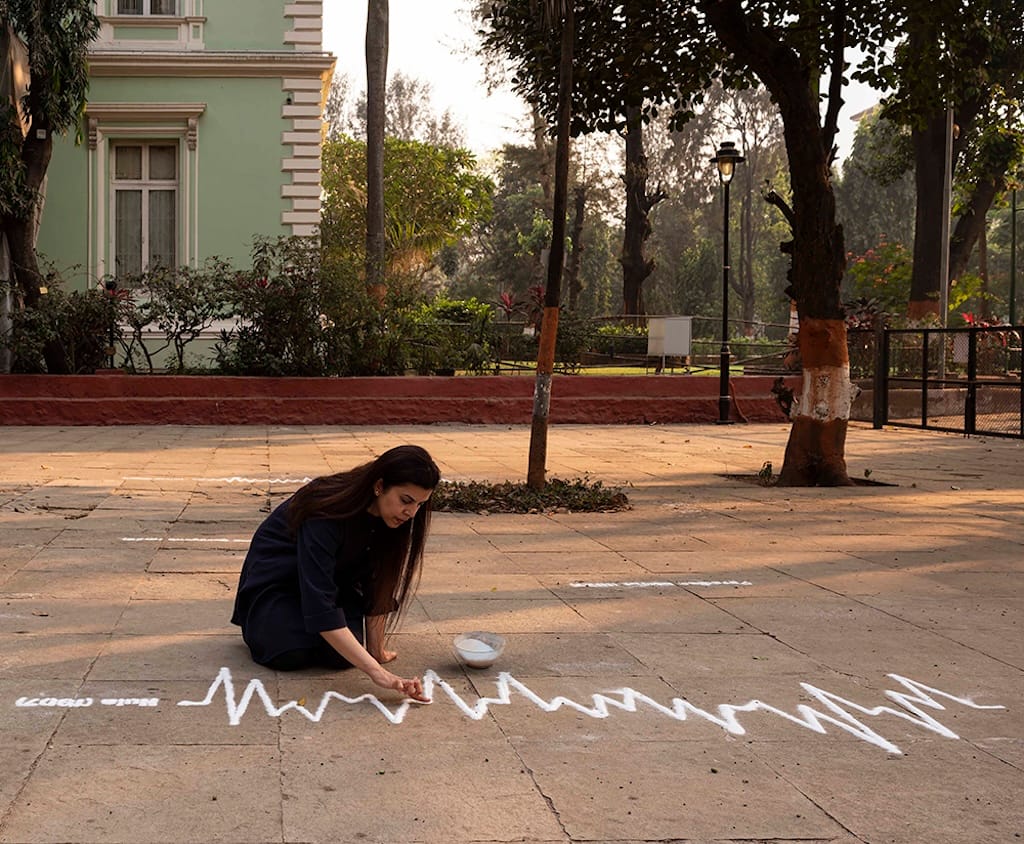
Kallat's wider interest in giving form to what is absent or at risk of disappearing also informs her understanding of what art can achieve.
"I think art has a particular capacity to hold our attention in ways that other forms of communication may not always allow. It can make us pause, listen more carefully or look again at something we might otherwise overlook. An artwork is also a form of translation rather than an unmediated record of the past. It allows us to think of the limits of what can be recovered. The choices we make continue to shape the world around us. It is humbling to consider the many worlds that exist beyond our immediate perception and art can serve as a reminder of what we still have the possibility of protecting."
The exhibition is on view at Chemould Prescott Road, Mumbai, until 21 November 2026.