Oriol Vilanova Explores the Fragile Traces of Human Connection in New Rome Installation
The Spanish artist presents 'The Pressing Duty to Remain Human', a new installation of handwritten postcards at Conciliazione 5, the Holy See’s contemporary art space in Rome, bringing together anonymous messages, personal histories and the enduring need to communicate.

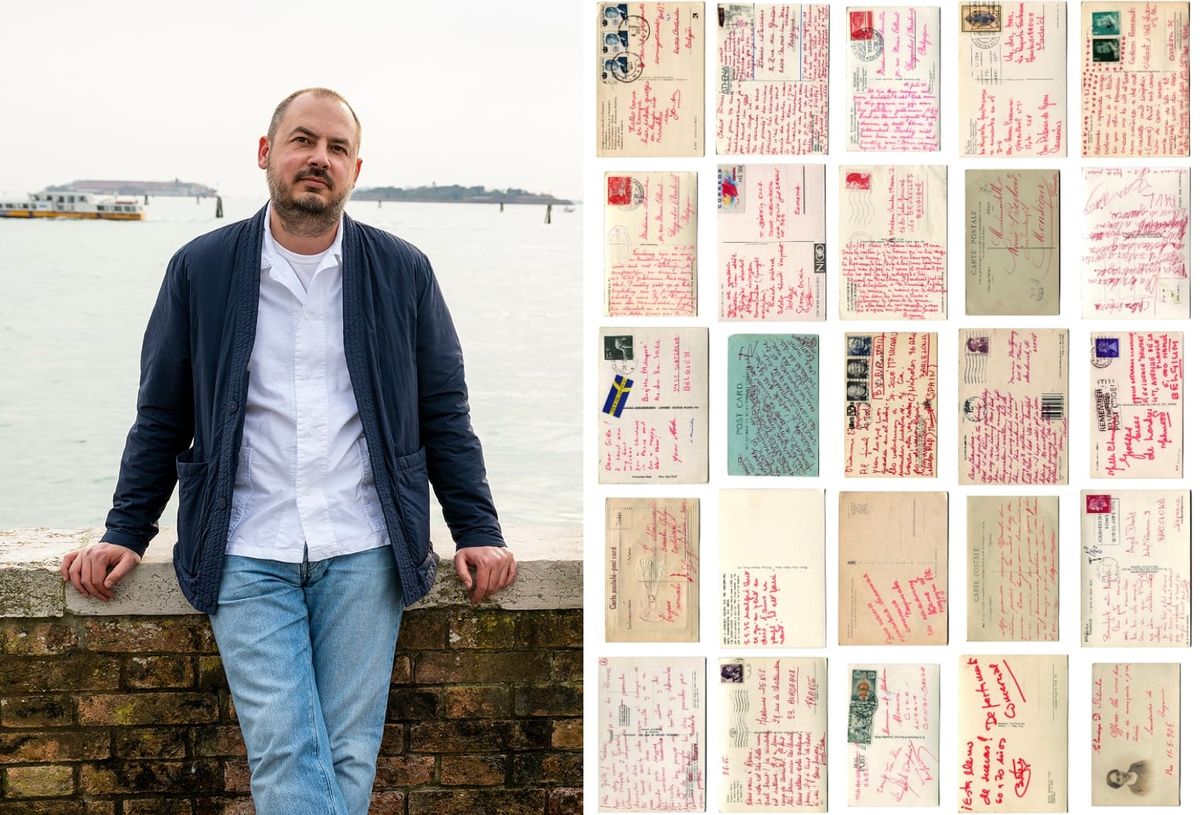
Spanish artist Oriol Vilanova will present The Pressing Duty to Remain Human at Conciliazione 5, the Holy See’s dedicated space for contemporary art in Rome, from 3 November 2026 to 10 January 2027. Curated by Donatien Grau, the installation is the third and final presentation in Reading, Again, a year-long series examining the act of reading through the practices of contemporary artists, organised by the Holy See’s Dicastery for Culture and Education.
Known for his sustained engagement with collecting and archival practices, Vilanova frequently works with picture postcards acquired from flea markets, transforming these everyday cultural objects into artworks that explore memory, communication and the circulation of images. For his presentation at Conciliazione 5, however, the artist shifts attention away from the familiar visual content of postcards towards something more intimate: the handwritten messages on their reverse.
The installation brings together postcards bearing handwritten texts in red ink. Their images remain concealed, allowing visitors looking through the windows of Conciliazione 5 to encounter the messages themselves. Comprising familiar expressions, affectionate greetings, personal observations and fragments of everyday correspondence, these brief texts offer glimpses into relationships and lives separated by time and distance.
Often treated as disposable souvenirs, postcards occupy an unusual position between the personal and the public. They are objects intended to travel, carrying messages from one individual to another while simultaneously documenting places, encounters and moments in time. In Vilanova’s installation, their handwritten sides become the central focus, revealing the emotional significance of these seemingly ordinary objects. Each message represents an attempt to preserve a connection, communicate an experience or reassure someone at a distance.
The artist describes postcard writing as a literary form in its own right, one in which the words of celebrated literary figures exist alongside the anonymous expressions of ordinary individuals. The brevity of the format brings these different voices together, creating what he calls a harmonious cacophony of messages.
“Red is a colour charged with meaning. Its presence is difficult to ignore. Red conveys a sense of urgency and demands attention,” Vilanova explains. Reflecting on the collective nature of the installation, he adds: “Each postcard retains its individuality while becoming part of a larger whole, material testimonies to our need to communicate.”
The use of red ink gives the installation an additional visual and conceptual dimension. Its intensity draws attention to the physical act of writing, emphasising the presence of the individual behind each message. In an age increasingly shaped by digital communication, automated text generation and the circulation of endlessly reproducible images, the handwritten word assumes a particular significance. The marks left by the writer become evidence of an individual presence, preserving something of the person who once held the postcard.
Cardinal José Tolentino de Mendonça, Prefect of the Dicastery for Culture and Education of the Holy See, reflects on the enduring human significance of these objects. Describing the postcard as “the humblest of images”, he considers how a few hurriedly written lines can carry profound emotional meaning.
“We arrived safely. The weather is beautiful. I miss you. It is not a banal conversation. It is the minimal form of the human condition: being far away, saying you are alive, longing to return...”
For the Cardinal, these modest expressions reveal something fundamental about human relationships. He observes that a postcard written by a stranger becomes a testament to an individual's interior life, reminding us that humanity is measured not simply by what it produces, but by the distinctive and irreplaceable traces people leave behind.
Curator Donatien Grau similarly emphasises the importance of handwriting as a physical expression of human identity. In this installation, Vilanova departs from his previous approach to postcards, which has generally focused on their images as catalogues of public discourse and cultural representation. By turning them around, he invites visitors to engage with the individual messages accumulated across decades and generations.
Grau connects this act of reading to a broader understanding of human responsibility and care, observing that the postcards represent gestures of attention towards others. The installation consequently becomes an exploration of communication as an expression of humanity, in which the act of writing and reading carries an emotional and ethical dimension.
The presentation follows Vilanova’s Los restos, created for the Spanish Pavilion at the 61st Venice Biennale in 2026, continuing his investigation into the ways cultural objects accumulate meaning through their collection and preservation. His practice frequently challenges conventional distinctions between archival material and contemporary artistic production, using objects that have circulated through everyday life to examine how personal and collective histories are constructed.
First opened in February 2025, Conciliazione 5 takes its name from its address on Via della Conciliazione in Rome. It is the first space dedicated to contemporary art established by the Holy See’s Dicastery for Culture and Education. Open to visitors 24 hours a day, the space provides an accessible platform for contemporary artistic practices within the Vatican.