Cultivating Visual Thinking in the Classroom: Why Learning to See Matters
In an image-saturated world, teaching children to look carefully has never been more important. Visual thinking encourages observation, curiosity and critical reasoning, helping students interpret artworks, discover connections and develop new ways of understanding the world.


In a world saturated with images, children are constantly looking at things. They encounter pictures on screens, illustrations in books, photographs on social media and visual information in almost every aspect of daily life. But how often do they stop to look closely, question what they see, or consider what an image might be trying to communicate? There is a difference between looking and seeing, and helping children recognise that difference could transform the way they learn.
Visual thinking is the ability to observe, interpret, question and make meaning from images, objects, spaces and visual experiences. It involves more than artistic ability or the capacity to draw. It encourages students to notice details, identify relationships, recognise patterns, consider different perspectives and construct interpretations based on what they observe. In the classroom, these skills can enrich learning across disciplines, from art and history to science, literature and mathematics.
Beyond Looking: Learning to See
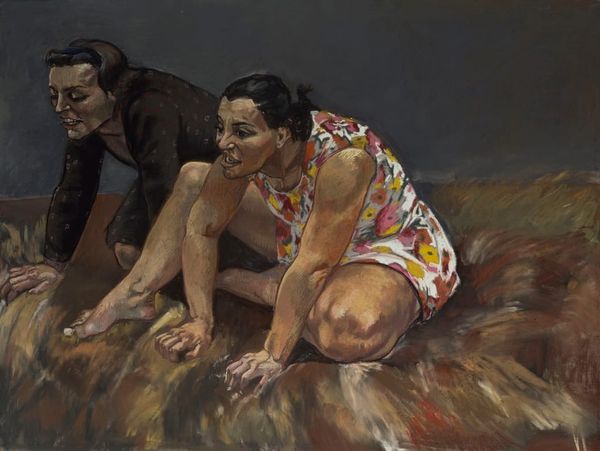
One of the most effective ways of cultivating visual thinking is through the simple act of looking at a work of art. A painting, sculpture or photograph can become the starting point for a conversation in which there are no immediately obvious right or wrong answers. Instead of telling students what an artwork represents, a teacher might ask: What do you notice? What do you think is happening? Which details make you say that? What else can you discover?
These questions encourage students to look beyond their first impressions. A painting that initially appears straightforward might reveal unexpected details when examined more carefully. The position of a figure, the direction of a gaze, the use of colour or the relationship between objects can prompt different interpretations. Students learn to support their observations with visual evidence, listen to alternative viewpoints and reconsider their own conclusions.
The Art of Asking Questions
This approach is closely associated with Visual Thinking Strategies (VTS), an educational method developed by cognitive psychologist Abigail Housen and museum educator Philip Yenawine. Originally developed through museum-based learning programmes, VTS uses carefully structured questions and facilitated group discussions to encourage close observation, critical thinking and communication. Rather than delivering information about an artwork, the teacher guides students towards discovering meaning for themselves.
The method is particularly valuable because it gives every student an opportunity to participate. A child who may be reluctant to speak during a conventional lesson might have an observation that opens up an entirely new direction for discussion. When students realise that their interpretations are worth considering, they become more confident in expressing ideas and engaging with unfamiliar material.
Thinking Beyond the Art Classroom
Visual thinking can also extend well beyond the art classroom. In science, students might examine botanical illustrations, photographs of geological formations or microscopic images, learning to identify patterns and differences through observation. In history, paintings and archival photographs can offer insights into social customs, political events and everyday life. In literature, illustrations can help students explore symbolism, atmosphere and character. Even mathematics benefits from visual reasoning through diagrams, shapes, spatial relationships and patterns.
The practice of drawing is another important component. Students do not need to become accomplished artists to benefit from putting pencil to paper. Sketching an object, mapping a landscape or recording the details of a natural specimen encourages them to slow down and examine what is in front of them. Drawing becomes a way of thinking, helping students translate observation into a visible record of their understanding.
Equally important is the opportunity to create. When children are encouraged to experiment with materials, construct compositions, photograph their surroundings or develop visual narratives, they begin to understand how images are made and how visual choices influence meaning. They learn that colour, scale, texture, perspective and composition are not simply decorative elements, but tools through which ideas can be communicated.
Bringing Visual Thinking into the Classroom
For teachers, cultivating visual thinking does not necessarily require specialist equipment or extensive changes to the curriculum. A single image displayed at the beginning of a lesson can generate a meaningful discussion. Students can be asked to compare two artworks, describe an object without naming it, or identify details that others might have overlooked. A classroom display can become an evolving collection of observations, sketches and visual interpretations.
Museums and galleries can play an equally important role. Encounters with original artworks introduce students to different materials, artistic traditions and ways of seeing the world. A visit becomes particularly rewarding when students are given time to observe independently, discuss their responses and ask questions, instead of simply moving from one artwork to another while listening to a guided explanation.
Developing a More Attentive Way of Seeing
Ultimately, visual thinking is about developing a more attentive relationship with the world. It teaches children that meaning is not always immediately apparent, that evidence matters, and that different people can arrive at different conclusions when looking at the same thing. These are valuable habits in an age when images are produced, circulated and consumed at extraordinary speed.
The classroom, therefore, can become a place where students learn not simply to recognise images, but to engage with them thoughtfully. By making observation, interpretation and visual expression an integral part of education, teachers can nurture curiosity, imagination and independent thought. Learning to see more carefully may be one of the most valuable lessons a child takes beyond the classroom.