How Homer's 'Odyssey' Shaped 3,000 Years of Art
Christopher Nolan's 'The Odyssey' has renewed interest in Homer's timeless epic, but artists have been bringing its heroes, monsters and myths to life for nearly 3,000 years. Explore the remarkable visual legacy of one of history's greatest stories.

When Christopher Nolan's forthcoming adaptation of The Odyssey arrives in cinemas, audiences around the world will once again embark on one of humanity's oldest and most transformative journeys. Long before the language of cinema existed, however, artists had already been interpreting Homer's epic through paint, marble, bronze, mosaic, tapestry and print.
Written around the eighth century BCE, The Odyssey is far more than a tale of adventure. It is a story of perseverance, identity, loyalty, temptation, loss and the longing for home. These universal themes have resonated with artists across centuries, making the poem one of the most visually represented works in Western culture.
From ancient Greece to the twenty-first century, every era has reimagined Odysseus and the extraordinary world he inhabits.
Ancient Greece
The earliest surviving artistic interpretations of The Odyssey appeared not on gallery walls but on everyday objects. Greek potters and vase painters transformed scenes from Homer's poem into intricate narratives wrapped around amphorae, kraters and kylixes.
These vessels were not merely decorative. They served practical purposes while simultaneously communicating stories familiar to their audiences. Much like illustrated books today, they helped preserve mythology through visual storytelling.
Among the most frequently depicted episodes were:
- Odysseus blinding the Cyclops Polyphemus
- Odysseus tied to the mast as the Sirens sing
- The encounter with Circe
- The escape from the cave beneath sheep
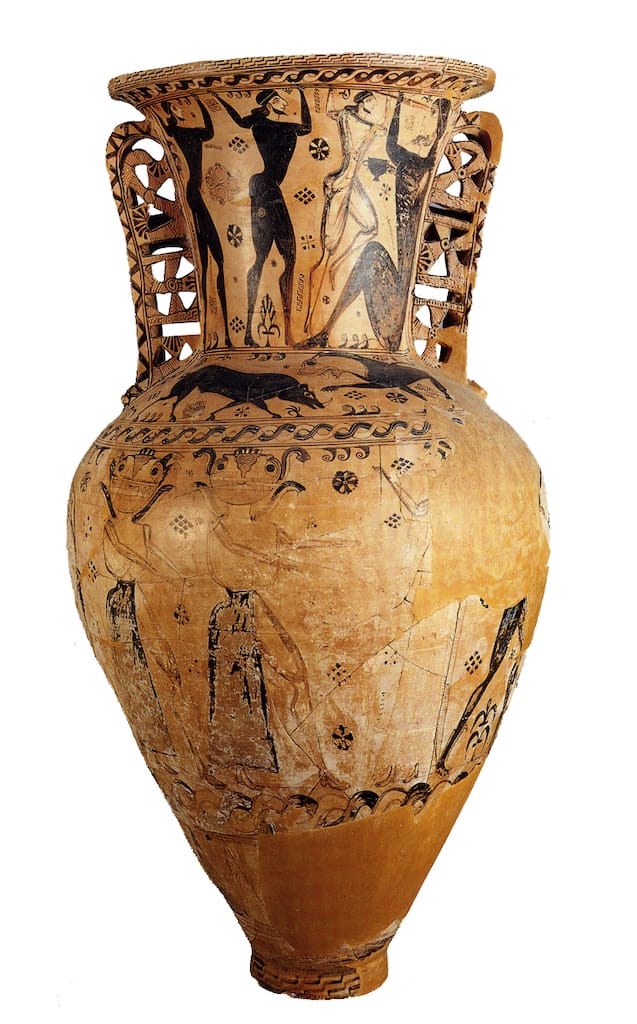
Among the finest surviving examples is the Eleusis Neck Amphora, created around 650 BCE. While the vessel features several mythological scenes, its neck depicts Odysseus and his companions blinding the Cyclops Polyphemus, making it one of the earliest known visual interpretations of Homer's Odyssey.
These artworks remind us that The Odyssey was not simply literature. It was part of everyday cultural life.
Rome
The Romans inherited Greek mythology and embraced Homer's heroes with enthusiasm. Among the finest surviving examples is a second-century CE mosaic now in the Bardo National Museum in Tunis, depicting Odysseus bound to the mast of his ship as his crew rows past the Sirens. The work demonstrates how Homer's epic had become an enduring source of artistic inspiration across the Roman world.
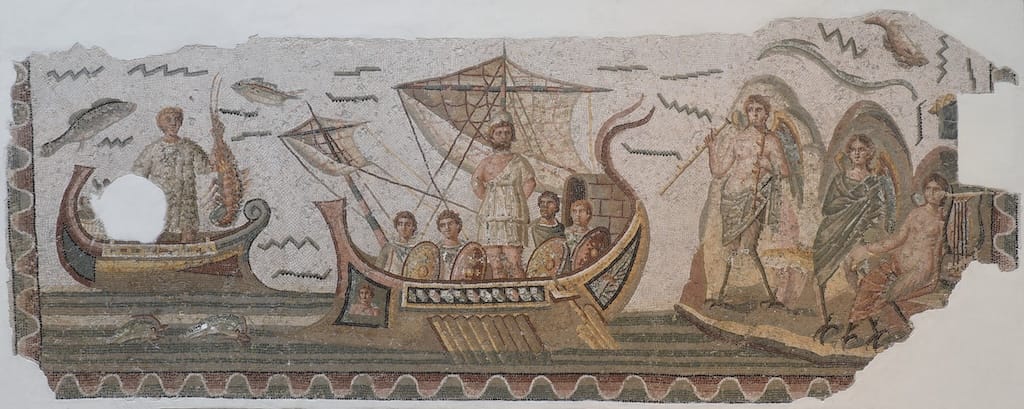
Excavations at Pompeii and elsewhere have revealed remarkable examples depicting the Sirens, Scylla and Odysseus' encounters with mythical creatures. Unlike Greek pottery, Roman mosaics often occupied entire rooms, allowing viewers literally to walk through episodes from the epic.
Wall paintings in Roman villas similarly transformed domestic interiors into theatrical landscapes populated by gods, monsters and legendary heroes. For Roman audiences, Odysseus represented not only intelligence but also resilience, qualities admired in an expanding empire.
The Renaissance and Mannerism
During the Middle Ages, direct knowledge of Homer in Western Europe became limited. That changed during the Renaissance as scholars recovered and translated classical Greek texts.
Artists, inspired by renewed interest in antiquity, began exploring Greek mythology with fresh enthusiasm. Although Biblical themes still dominated European painting, mythological subjects increasingly found favour among aristocratic patrons.
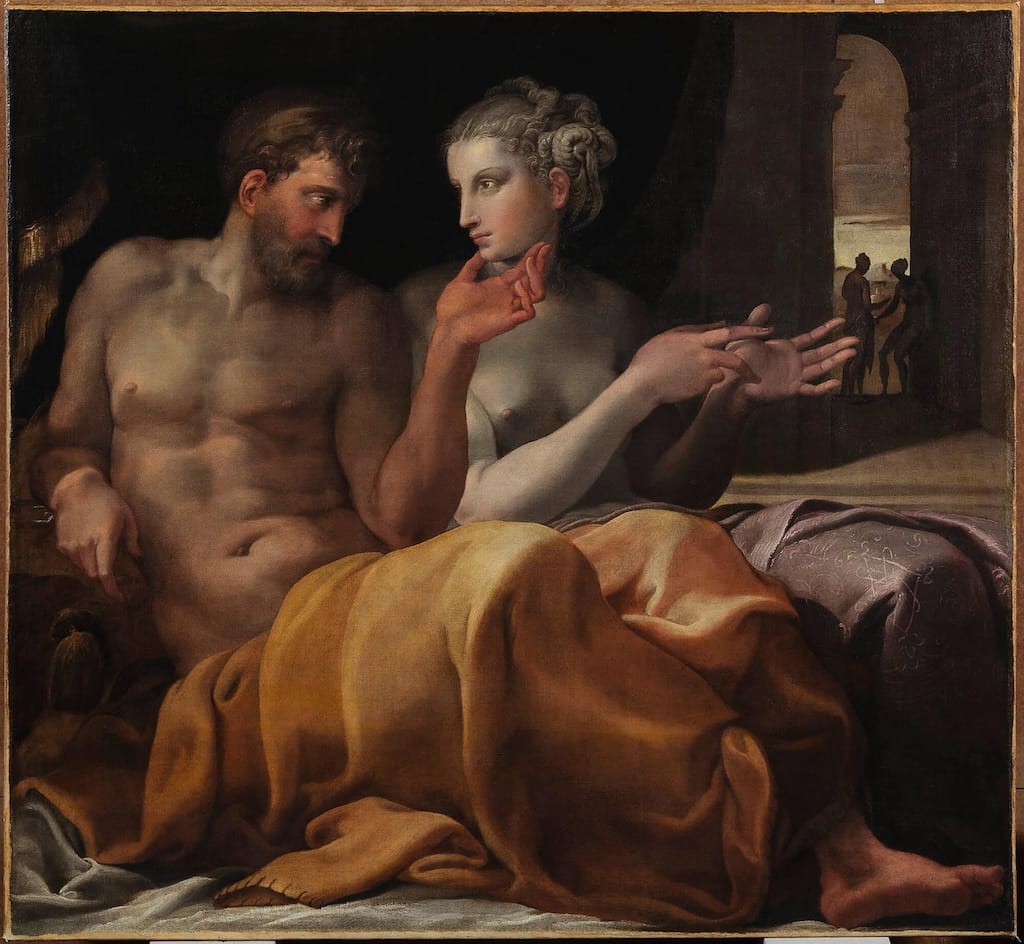
The Renaissance transformed ancient stories into opportunities to study anatomy, perspective and human emotion. Figures such as Penelope, Circe and Athena became ideal subjects through which artists could explore beauty, wisdom and virtue. Rather than merely illustrating Homer's words, Renaissance artists interpreted them according to contemporary ideals of harmony and classical perfection.
The Baroque Era
Seventeenth-century artists embraced the theatrical possibilities of The Odyssey. The Baroque period prized movement, light and emotional intensity, qualities perfectly suited to Homer's dramatic episodes.
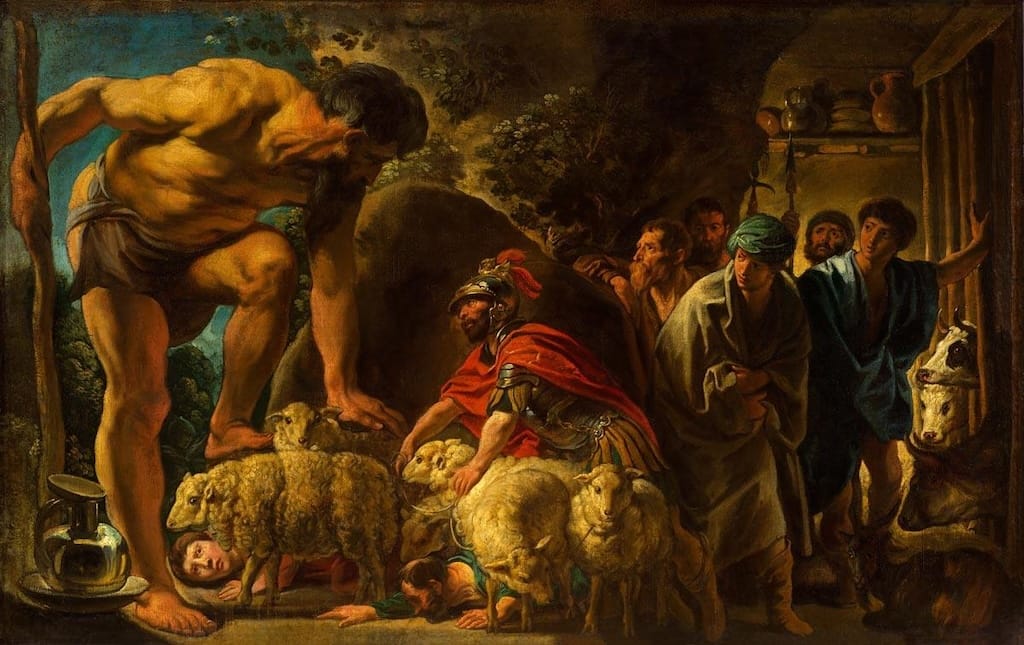
Storms at sea, supernatural encounters and moments of divine intervention became opportunities for painters to demonstrate technical brilliance. Odysseus was increasingly portrayed as a deeply human figure, battered by fate yet driven by determination. Rather than presenting mythology as distant history, Baroque artists made these stories feel immediate and emotionally compelling.
Neoclassicism
The eighteenth century witnessed another revival of classical ideals. Inspired by archaeological discoveries at Pompeii and Herculaneum, artists sought to emulate the perceived purity and balance of ancient Greece and Rome. Odysseus became more than an adventurer. He emerged as a model of rational leadership, endurance and civic responsibility.
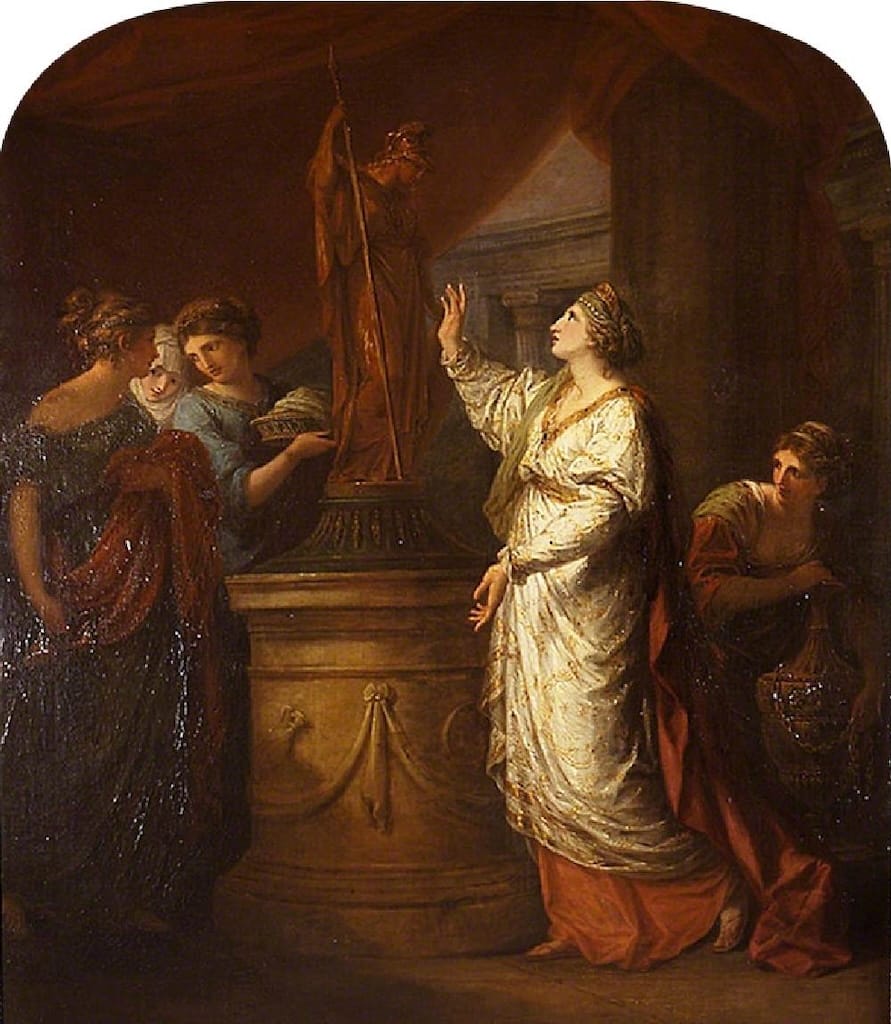
Paintings from this period often emphasised order over spectacle, portraying moments of reunion, judgement and duty rather than simply mythological excitement. The epic became a source of moral instruction as much as artistic inspiration.
The Nineteenth Century
If any period truly fell in love with The Odyssey, it was the nineteenth century. Romanticism encouraged artists to embrace imagination, mystery and emotion, while later movements such as Symbolism explored mythology through dreamlike imagery.
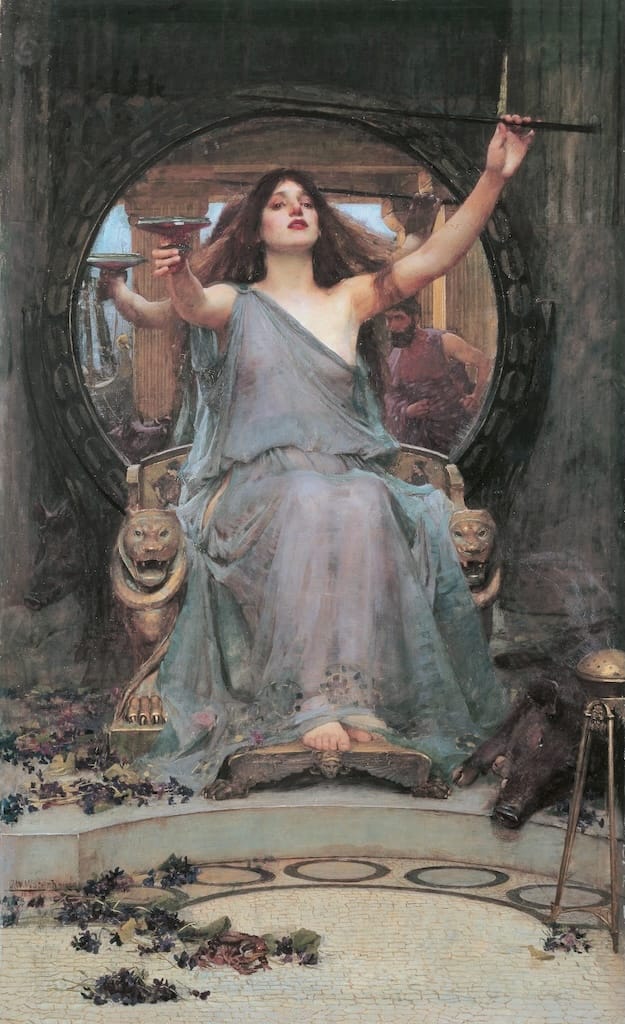
One artist stands above many others in bringing Homer's world vividly to life: John William Waterhouse. His paintings remain among the most recognisable visual interpretations of the epic.
Ulysses and the Sirens (1891)
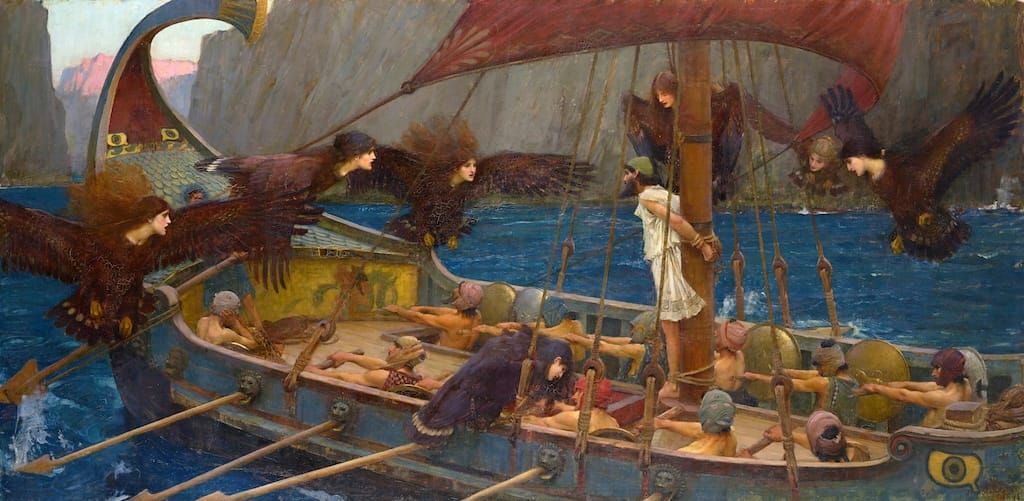
Perhaps Waterhouse's most celebrated work inspired by Homer, this dramatic canvas captures the terrifying moment when Odysseus is lashed to the mast while the Sirens attempt to lure his crew to destruction. The composition balances movement and restraint. The Sirens appear almost human yet unmistakably otherworldly, while Odysseus embodies both curiosity and discipline. The painting remains one of the defining visual representations of the poem.
Circe Offering the Cup to Ulysses (1891)
Waterhouse presents Circe as both enchanting and unsettling. Rather than depicting a monstrous sorceress, he portrays a woman of intelligence, confidence and psychological complexity. The painting reflects Victorian fascination with powerful female figures while drawing directly upon Homer's narrative.
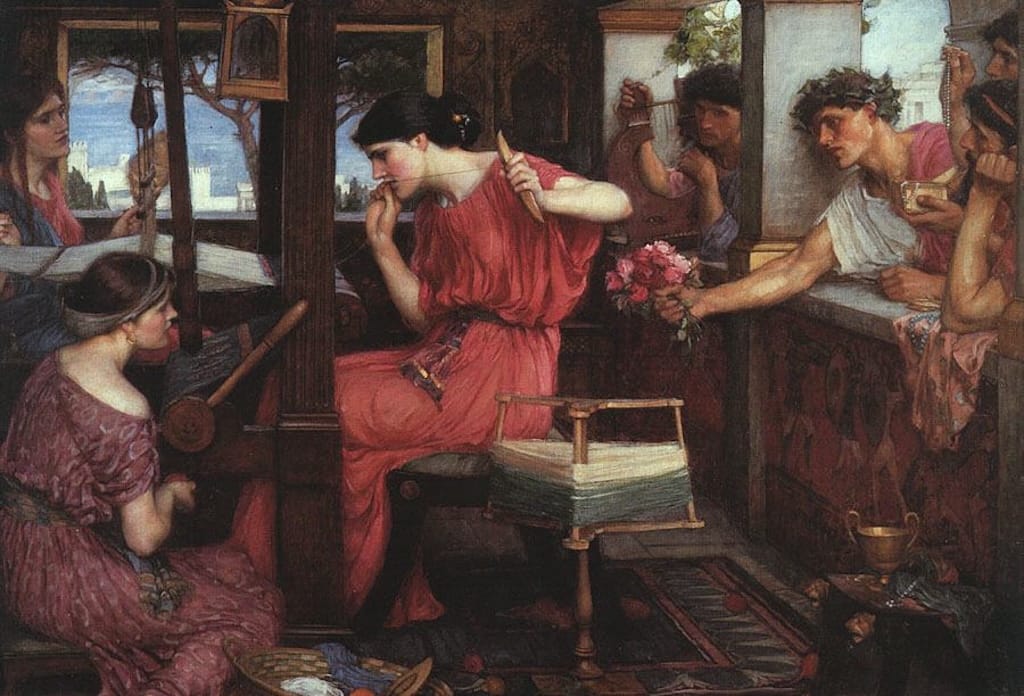
Penelope and the Suitors (1912)
Here, Waterhouse shifts attention away from Odysseus himself. Penelope, endlessly weaving and unpicking her tapestry to delay remarriage, becomes the emotional centre of the story. The painting celebrates patience, resilience and quiet strength, qualities that often receive less attention than Odysseus' adventures.
Symbolism and the Inner Journey
Towards the end of the nineteenth century, Symbolist artists increasingly interpreted Greek myths as psychological rather than historical narratives. For them, The Odyssey became an allegory of the human condition. The monsters represented fear. The sea symbolised uncertainty. The journey home reflected the search for identity.
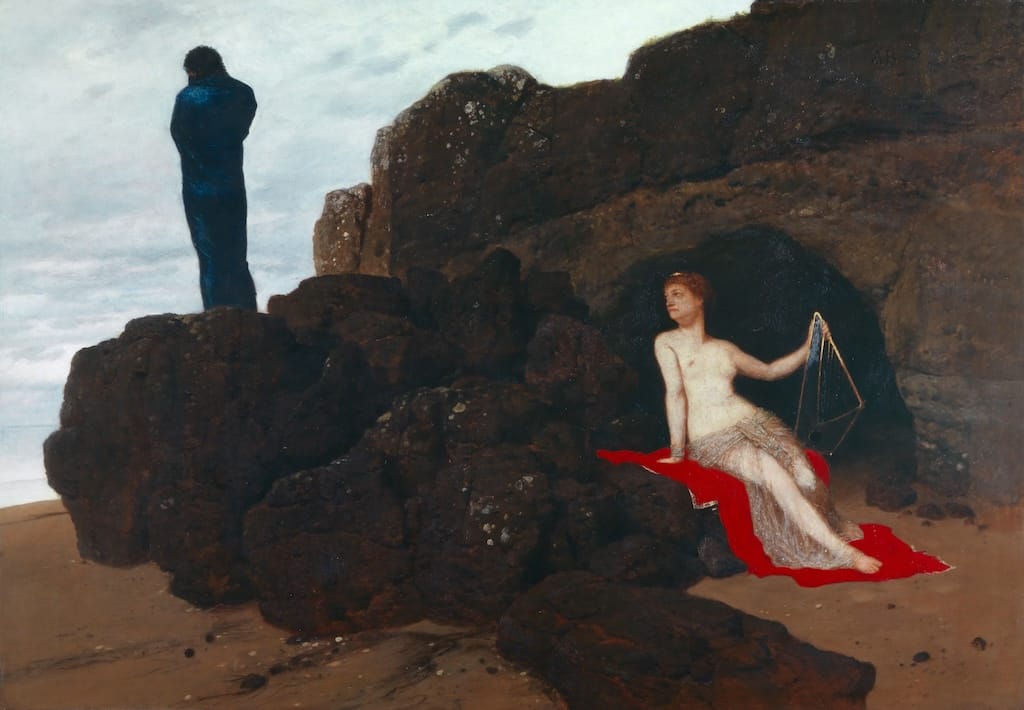
Swiss painter Arnold Böcklin frequently explored mythological landscapes in which gods and heroes inhabited mysterious, dreamlike worlds. Rather than illustrating specific passages from Homer, Symbolist artists captured the emotional atmosphere surrounding the epic.
Twentieth-Century Modernism
Modern artists approached Homer differently. Instead of retelling the story literally, many used the poem as a framework for exploring memory, fragmentation and identity.
Pablo Picasso repeatedly returned to themes from Greek mythology throughout his career, finding in ancient stories a language through which to examine conflict and human nature.
Cy Twombly immersed himself in classical literature, filling monumental canvases with energetic marks, handwritten references and mythological allusions.For Twombly, Homer became less a storyteller than an enduring cultural presence whose influence echoed across centuries.
The narrative dissolved into symbols, gestures and fragments, reflecting the complexities of modern life.
Contemporary Art
Today, artists continue to reinterpret The Odyssey through entirely new media. Installation artists explore migration and displacement. Photographers examine ideas of home and belonging. Digital artists create immersive reinterpretations of ancient myths.
Performance artists draw parallels between Odysseus' journey and modern experiences of exile, conflict and survival. Rather than treating Homer as untouchable, contemporary artists engage in dialogue with the text, adapting it to address current social and political questions. The epic remains remarkably adaptable because its central concerns are timeless.
Why Artists Never Stop Returning to The Odyssey
Few literary works have inspired visual artists with such consistency. Part of the poem's appeal lies in its extraordinary imagery. One-eyed giants, enchanting sorceresses, deadly Sirens and tempestuous seas naturally lend themselves to artistic interpretation. Yet the deeper reason is that The Odyssey is ultimately about human experience.
Every generation understands the desire to return home. Every society recognises the challenges of temptation, uncertainty and resilience. Every artist seeks stories that can be reinterpreted through the concerns of their own time. For nearly three thousand years, Homer's poem has offered precisely that.
A Journey Without End
Christopher Nolan's film will undoubtedly introduce millions of people to The Odyssey. Yet it represents only the latest chapter in a visual tradition stretching back to ancient Greece.
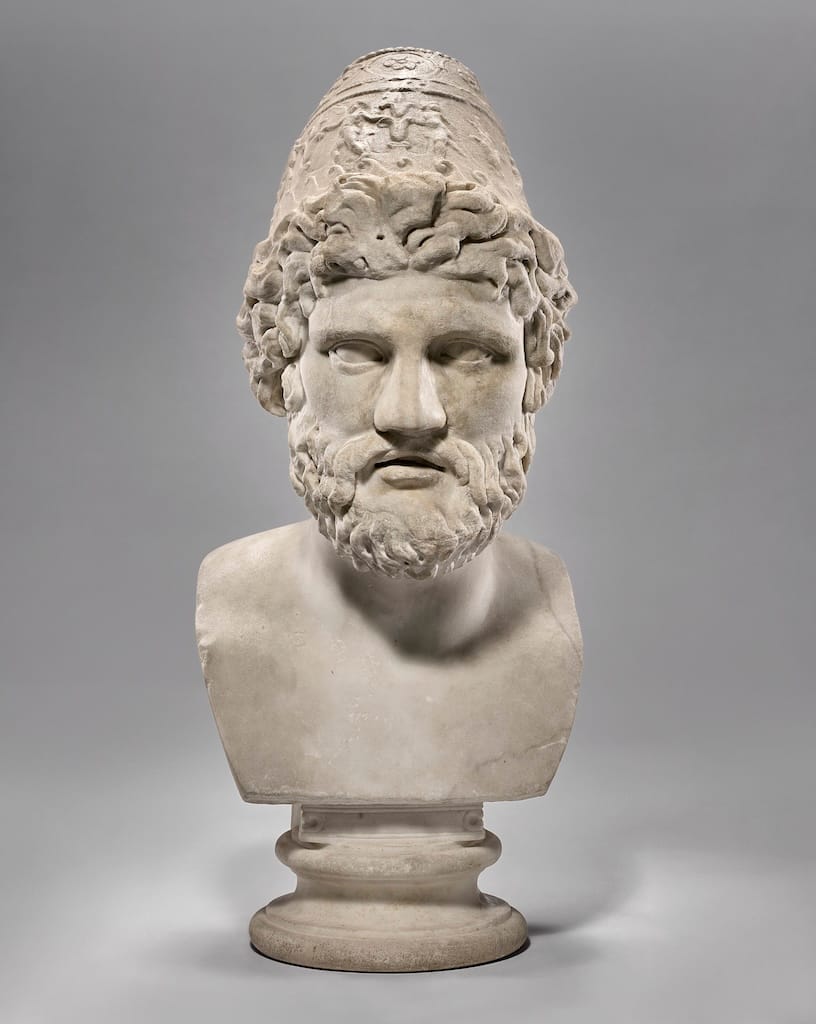
From painted pottery and Roman mosaics to Waterhouse's luminous canvases and contemporary installations, artists have continually rediscovered Homer's epic, each finding new meanings within its familiar episodes. The power of The Odyssey lies not simply in its story but in its capacity for reinvention.
Every age creates its own Odysseus. Every artist embarks upon the journey anew. Nearly three millennia after Homer first sang of a king struggling to return home, the voyage continues, not only across seas, but across the history of art itself.