Bharti Kher's New Sculptures Bring Myth, Memory and Belonging to the V&A
British Indian sculptor Bharti Kher brings four major works to the V&A South Kensington, including the unveiling of the monumental 'Gaia'. The display explores mythology, identity, transformation and belonging through sculptures placed in dialogue with the museum's historic collections.

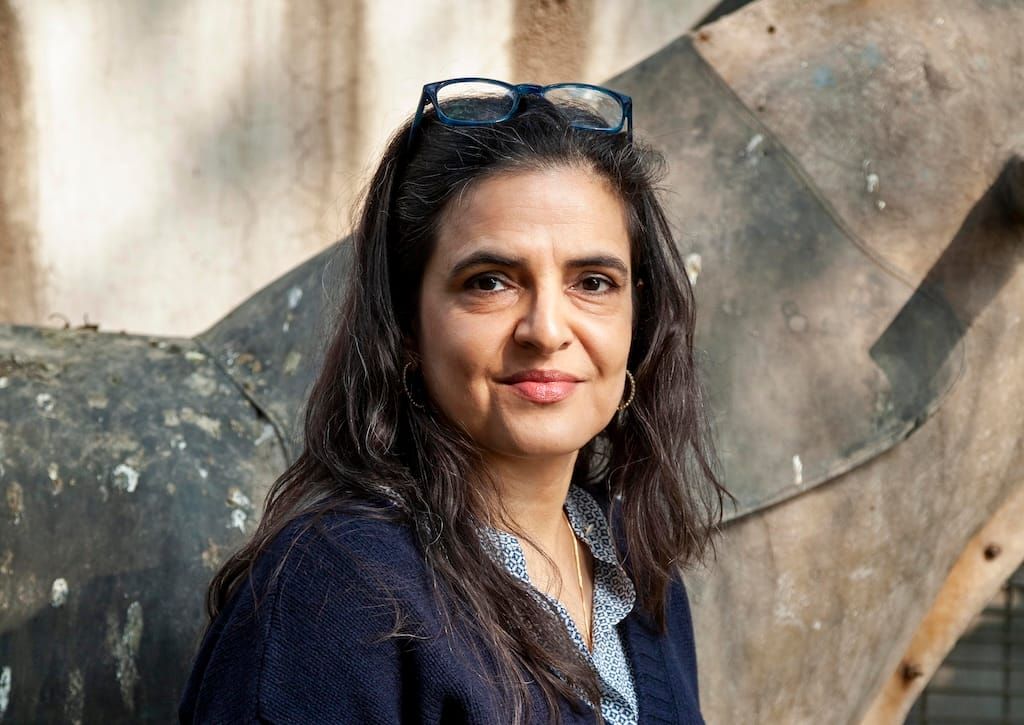
One of Britain's most celebrated contemporary artists is set to transform the grounds and galleries of the Victoria and Albert Museum this summer. From 20 July 2026 to 27 February 2027, British Indian sculptor Bharti Kher will present a focused display of four major sculptures across the V&A South Kensington, culminating in the unveiling of a monumental new bronze work in the museum's Exhibition Road Courtyard.
Rather than presenting a conventional exhibition, the V&A has chosen to position Kher's sculptures within its historic collections, allowing works created between 2008 and 2026 to enter into dialogue with centuries of artistic tradition. The installation offers visitors an opportunity to encounter contemporary sculpture in conversation with classical forms, while exploring themes of mythology, identity, transformation and belonging that have shaped Kher's practice for more than three decades.
At the centre of the presentation is Gaia (2026), a newly commissioned bronze sculpture that will be unveiled to the public for the first time. Standing four metres high, the work greets visitors approaching the museum from Exhibition Road. Combining the physical presence of a warrior with the symbolic force of Mother Earth, the sculpture presents a striking female figure balancing a house upon her head. The result is both monumental and intimate, inviting reflection on ideas of home, migration and the emotional landscapes people carry with them.
For Kher, whose life and practice span London and New Delhi, questions of displacement and cultural identity have long informed her work. Rather than offering straightforward narratives, her sculptures construct hybrid worlds where mythological references, fragments of lived experience and historical traditions merge into new visual languages.
"Art can connect us between continents and cultures and across time," Kher has said. "It is a visceral and cognitive language of its own making."
That philosophy underpins the V&A display, where each sculpture expands the stories already embedded within the museum's collections.
Whitney Kerr-Lewis, Curator of Sculpture 1800 to Now at the V&A, believes this dialogue between contemporary and historical works is central to the project.
"We are delighted to bring Bharti Kher's work to V&A South Kensington, placing it in dialogue with our historic collections," she said. "Reflecting on themes of mythology, transformation, belonging and displacement, Kher's works invite visitors to make unexpected connections, offering new ways of exploring both contemporary sculpture and the objects and histories that shape the museum."
A New Mother Earth for the Museum
Although Gaia marks the exhibition's public centrepiece, its origins are surprisingly modest.
The sculpture began as a small clay maquette and belongs to Kher's ongoing Intermediaries series, initiated in 2016. The project grew from her collection of traditional Golu figurines, the painted clay sculptures displayed in homes across South India during festival celebrations. Depicting gods, animals, ordinary people and scenes from everyday life, these figures traditionally celebrate the interconnected nature of existence.
Many of the figurines arrived damaged after transportation to Kher's studio in New Delhi. Rather than restoring them to their original forms, the artist embraced their fractures. Through acts of repair, recombination and transformation, broken objects evolved into entirely new hybrid beings suspended somewhere between ritual object, sculpture and mythological creature.
Gaia extends that process on an architectural scale. The female figure carrying a house suggests that home is not simply a physical destination but something carried internally through memory, identity and experience. Rendered with the simplicity of a child's drawing, the house becomes a universal symbol of protection while simultaneously acknowledging the realities of displacement experienced across cultures.
The sculpture also reflects Kher's continuing fascination with bodies as repositories of history. Human figures in her work rarely exist as isolated individuals. Instead, they become vessels containing personal memory, cultural inheritance and collective experience.
Reimagining the Female Form
Inside the Dorothy and Michael Hintze Sculpture Galleries, two further works continue Kher's exploration of transformation through the female body.
Both Ghost (2024) and Animus Mundi (2018) belong to a series inspired by vintage plaster mannequins collected in India. Cast directly from 1970s shop display figures, the sculptures reveal another recurring thread in Kher's artistic language: the sari.
The garment has deep personal significance. Growing up in London, Kher's mother owned a sari and textile shop in Streatham, where the young artist helped dress mannequins and arrange displays. Those early experiences introduced her to the sari as both clothing and cultural symbol, an object capable of carrying identity, memory and social meaning.
In these sculptures, real saris are coated in resin, preserving the flowing qualities of draped fabric while transforming them into permanent sculptural surfaces.
In Ghost, the translucent garment appears almost weightless. The figure recalls the flowing drapery of classical marble sculpture, simultaneously concealing and revealing the body beneath. The work reflects on mortality, absence and memory, encouraging viewers to consider whose stories museums preserve and whose histories remain invisible.
Kher has observed that "Saris hold the stories of our lives; the single piece of fabric that you wear through life finally becomes your shroud."
The sculpture's spectral quality transforms an everyday object into a meditation on human existence itself.
Human, Animal and Myth
If Ghost explores memory through absence, Animus Mundi embraces transformation through hybridity.
Named after the ancient philosophical concept meaning "world soul", the sculpture combines a female body with the head of a buffalo. Covered in Kher's signature bindis and intertwined with a flowing blood-red sari, the figure occupies the threshold between the human and the animal, the earthly and the spiritual.
References to European sculpture remain unmistakable. The armless body recalls the famous Venus de Milo, while the treatment of drapery echoes the virtuosity of Gian Lorenzo Bernini. At the same time, the sculpture draws upon South Asian visual traditions through its use of bindis and symbolic materials, creating a conversation between different artistic histories rather than privileging one over another.
Like many artists before her, Kher has found inspiration in Metamorphoses by Ovid, the classical Roman text that has shaped artistic understandings of transformation for centuries.
For the artist, Animus Mundi represents "the centre of the universe where all things converge. A connection between all living things, the vital force in a world that carries all human and animal energies."
Positioned within the V&A's historic sculpture galleries, the work challenges conventional readings of both ancient and contemporary art, proposing instead that cultural exchange has always been central to artistic production.
Redefining the Warrior
The fourth sculpture in the display, Warrior with Cloak and Shield (2008), demonstrates how long many of Kher's central concerns have informed her work.
Cast from a live model, the sculpture presents a female figure standing confidently in high-heeled shoes. Yet her protective equipment appears strangely inadequate. Her shield is fashioned from an oversized banana leaf, while her cloak consists of a simple shirt suspended beneath enormous antlers.
The improbable combination creates a figure that is simultaneously vulnerable and powerful. Rather than depicting physical strength through conventional symbols of warfare, Kher suggests resilience can emerge through contradiction, ambiguity and imagination.
She has described these recurring female figures as "mythical urban goddesses, creatures who came out of the contradictions of femininity and the idea of womanhood."
That refusal to settle into fixed definitions has become one of the defining characteristics of Kher's practice. Her sculptures resist binary categories, preferring instead to occupy spaces where mythology meets everyday life, where bodies become landscapes, and where cultural identities remain fluid rather than fixed.
Three Decades of Transformation
Born in London in 1969 and educated at Newcastle Polytechnic, Bharti Kher has built an internationally recognised practice encompassing sculpture, painting and installation. Living between London and New Delhi has given her work a distinctly transnational perspective, allowing her to draw simultaneously upon European sculptural traditions and South Asian visual culture without reducing either to simple references.
Across more than thirty years, she has consistently explored animism, surrealism and the interconnected nature of living systems. Her sculptures often incorporate found objects, discarded materials and fragments of existing forms, transforming them into new entities that challenge conventional ideas of identity and permanence.
Recent solo exhibitions at institutions including Yorkshire Sculpture Park, Tate St Ives, the Hayward Gallery and Thorvaldsens Museum have confirmed her position as one of the leading voices in contemporary sculpture. Her work is also represented in major museum collections around the world, including the British Museum, Tate, Centre Pompidou, Guggenheim Abu Dhabi and the Kiran Nadar Museum of Art.
The V&A display continues that trajectory while offering something distinct. Rather than isolating contemporary art in a dedicated gallery, the museum places Kher's sculptures directly alongside historic works, encouraging visitors to discover unexpected conversations across time, geography and culture.
The result is an installation that feels particularly appropriate for an institution whose collections span five millennia of global creativity. Kher's sculptures do not simply occupy the museum. They actively reshape how its collections might be understood, reminding viewers that artistic traditions are never static but continually renewed through encounter, exchange and reinterpretation.
On view until 27 February 2027, the display offers an opportunity to experience Bharti Kher engaging directly with one of the world's most significant museum collections. In doing so, Bharti Kher invites audiences to reconsider not only the stories museums tell, but also the ways sculpture can speak to questions of identity, memory and belonging that remain deeply relevant today.