Ahmed Ali’s 'At Work' and the Making of the Industrial Worker
Ahmed Ali’s photographs of factories, mines and laboratories reveal the workers behind India’s industrial transformation. Drawing on his studio training, 'At Work (1948–1978)' explores how labour, dignity and modernity were carefully constructed through the camera.

Ahmed Ali photographed India at work. Across factories, mines, laboratories and engineering plants, his camera recorded not only the machinery of a newly industrialising nation, but the workers who operated it. His photographs are more carefully constructed than they first appear.
At Work (1948–1978), presented by PHOTOINK in New Delhi to mark the gallery’s 25th anniversary, brings together this sustained body of industrial photography and offers a closer look at Ali’s distinctive approach to portraiture, labour and the changing visual culture of post-Independence India.
Ali’s photographs are often immediately legible as records of a rapidly industrialising country. There are machines, factories, mines, refineries, laboratories and workers surrounded by the infrastructure of production. Yet looking more closely, the photographs reveal something less straightforward. The people within them are not incidental figures placed to establish scale. Again and again, Ali makes the worker the visual subject.
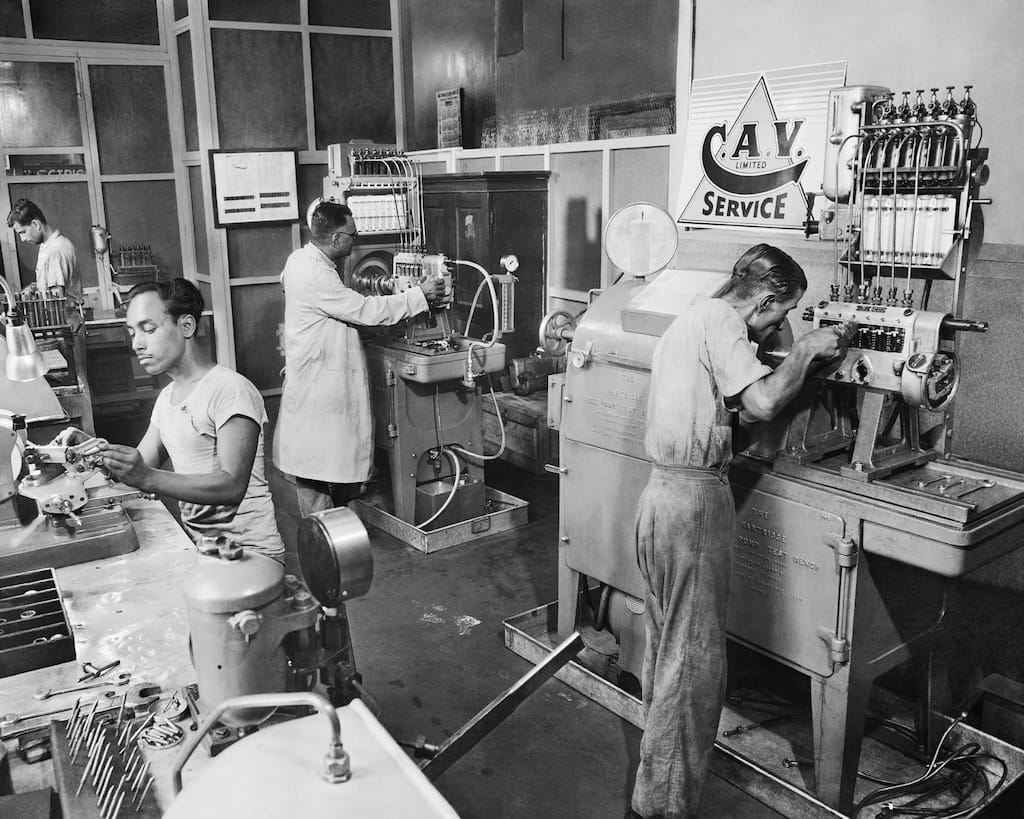
For Devika Daulet-Singh, Director at PHOTOINK, the relationship between the industrial and the human is central to understanding the archive. “Ali’s two photographic practices—monumental infrastructure and intimate portraits of workers—aren’t in tension,” she says. “The same rigour governs both.”
She points to the way Ali photographed refineries and steel plants as monuments, recalling Jawaharlal Nehru’s description of dams and mills as “temples” of modern India, before turning his attention to “a collier’s grip on a drill, the posture of a lab technician”.
The distinction between the industrial and the human, Daulet-Singh argues, is ultimately false. “To photograph only infrastructure is to erase the body; to photograph only workers is to sever them from what they’re building. Ali refuses this choice.” His photographs insist that industrial ambition and individual dignity are part of the same story. “The collier’s hands and the steel plant are not separate stories. They’re the same photograph, seen at different distances.”
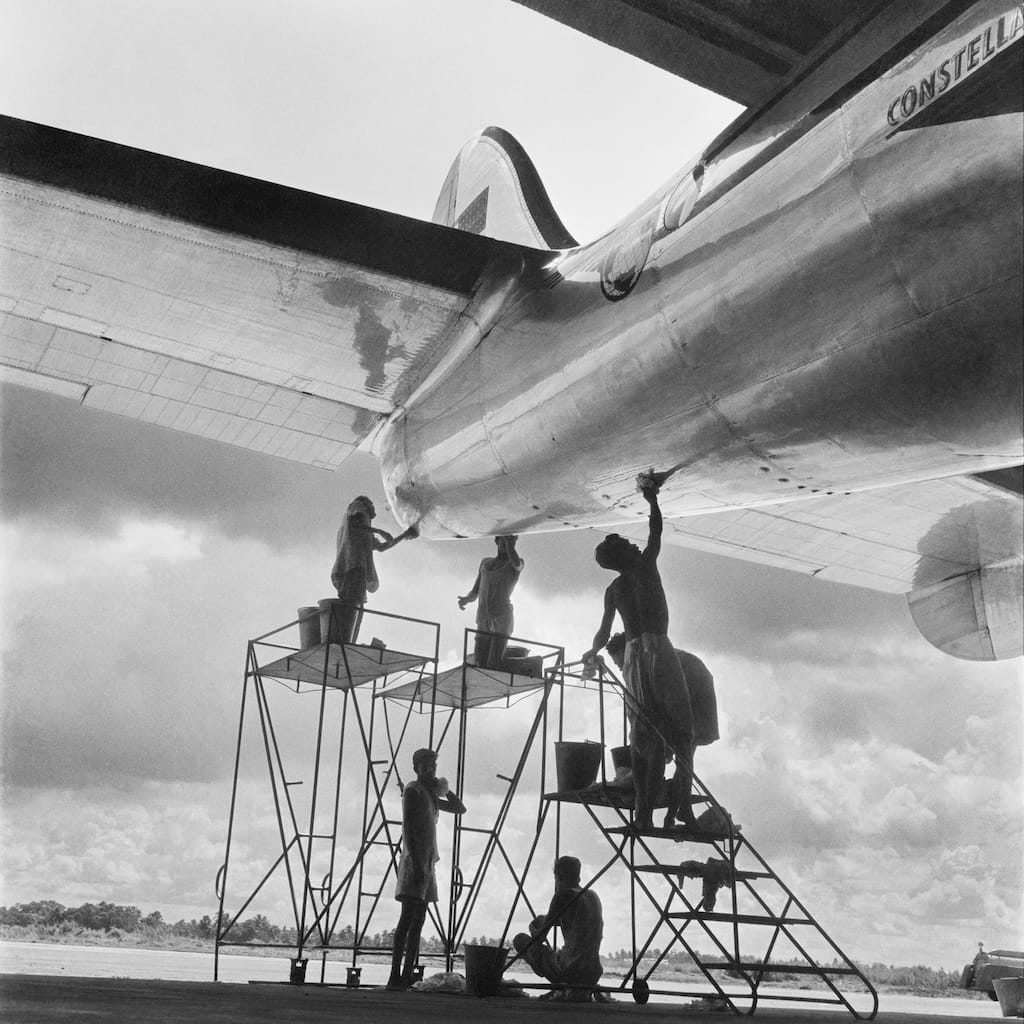
This becomes particularly revealing when considering how Ali constructed his portraits. His photographs can appear documentary at first glance, but sustained examination of the archive reveals how carefully composed many of these encounters were.
“Sustained work on his archive reveals, above all, the performative nature of his portrait,” Daulet-Singh says. Ali’s training at Bourne & Shepherd, where he began working at 17, is crucial to this understanding. Studio photography required mastery of presentation: how to light a subject, arrange a frame and render a sitter in their best aspect. Ali carried these techniques into the industrial environment.
Working through negative after negative, Daulet-Singh found a consistent pattern. “Ali is staging, not observing.” He assembled sitters, directed their posture and choreographed the performance of work itself. A worker absorbed in a machine, therefore, may not represent a spontaneous moment caught by the camera. It is instead a constructed encounter, part of Ali’s larger argument about industry and dignity.
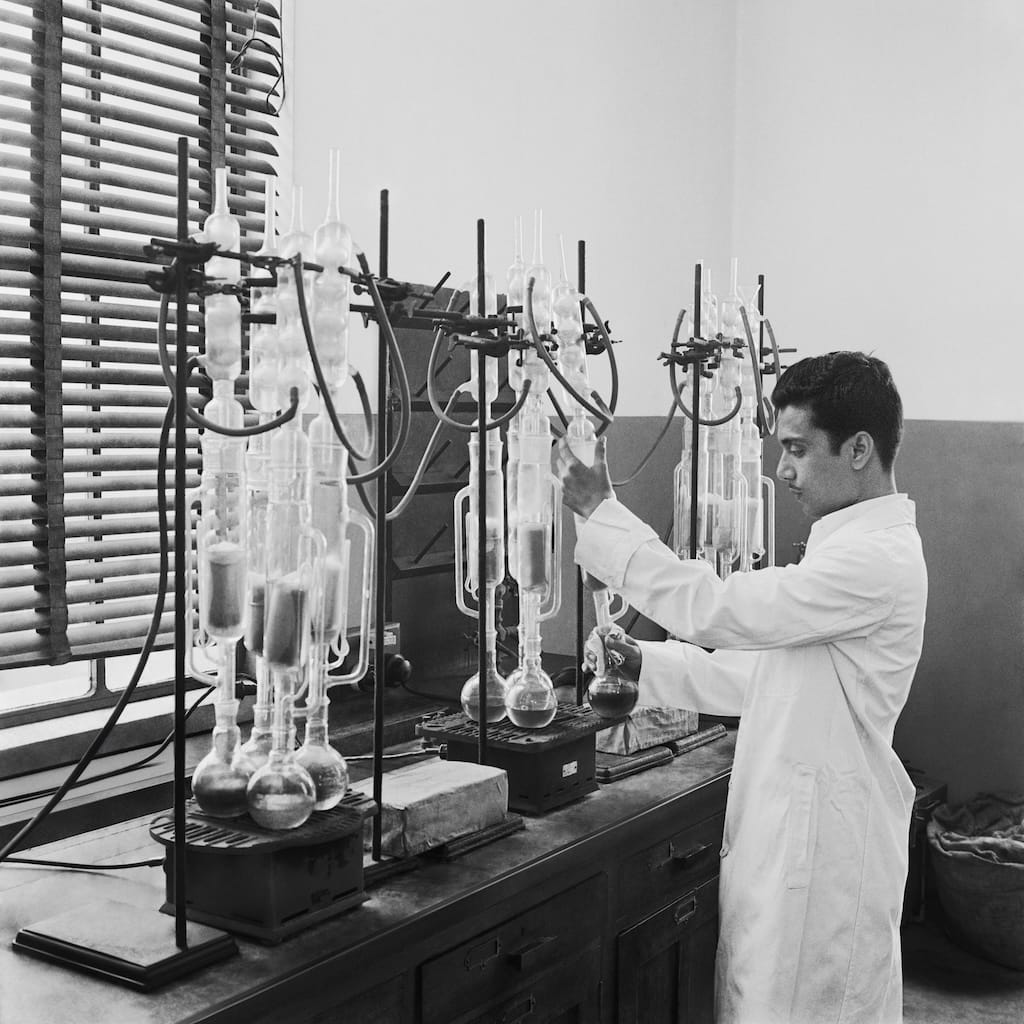
For Daulet-Singh, this was not a departure from his earlier practice. “His choreography in the factories wasn’t a departure from his training—it was the full expression of it.” His interest in portraiture, she argues, reaches its most compelling form in these industrial photographs, where “studio precision meets the politics of labour and nation-building”.
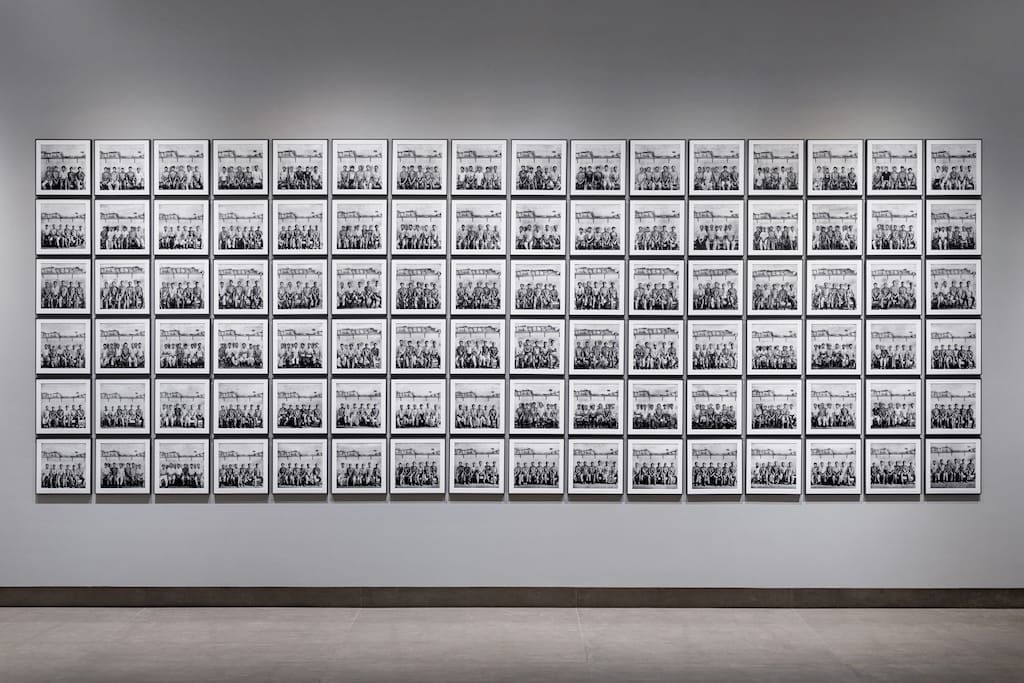
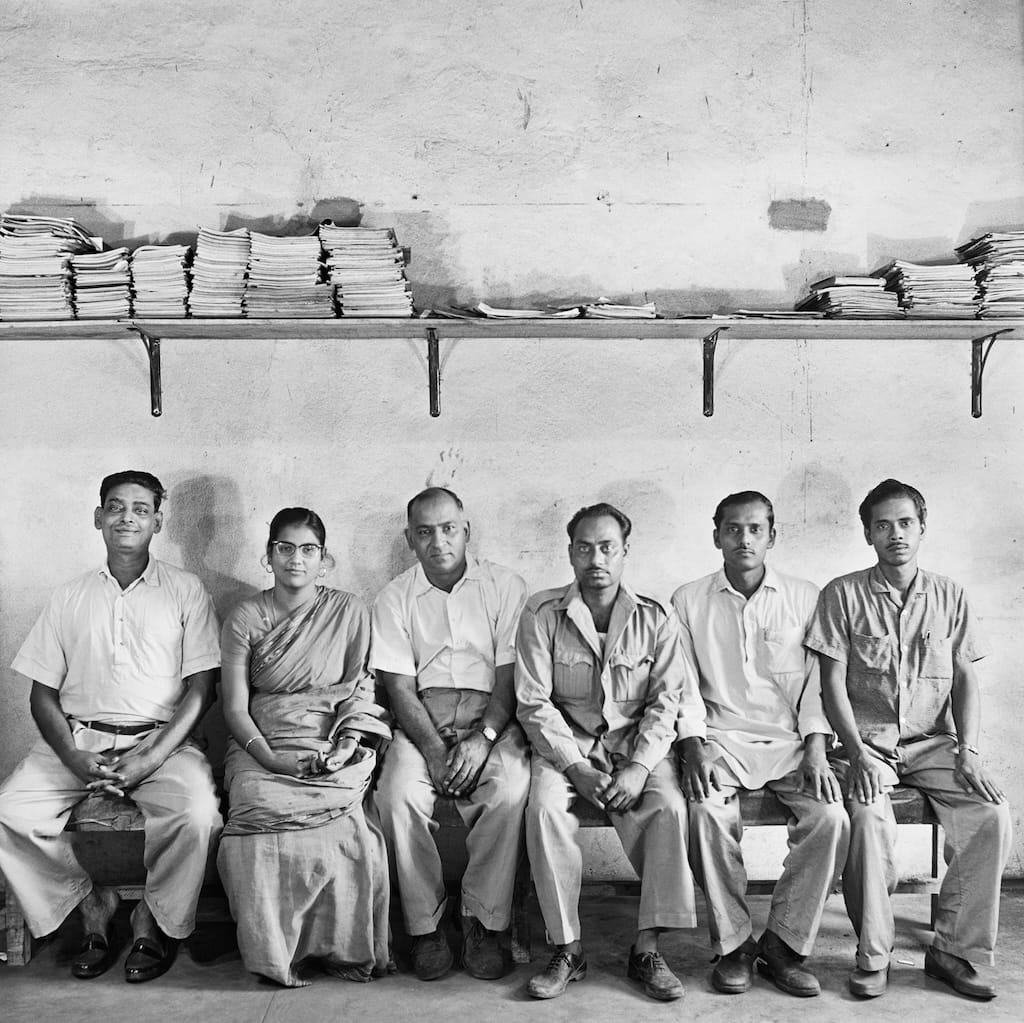
That relationship between construction and representation is especially evident in Assembly, a series of 96 portraits made at a Calcutta factory in 1952. Instead of photographing the workers at their machines, Ali removed them from their working environments and seated them together.
He creates, in Daulet-Singh’s words, a “complete decontextualization” of the workers from their jobs. Yet this removal produces its own kind of visibility. “The distinctions between management and workforce collapse entirely,” she says. “What emerges is the full breadth of the people who built this factory.”
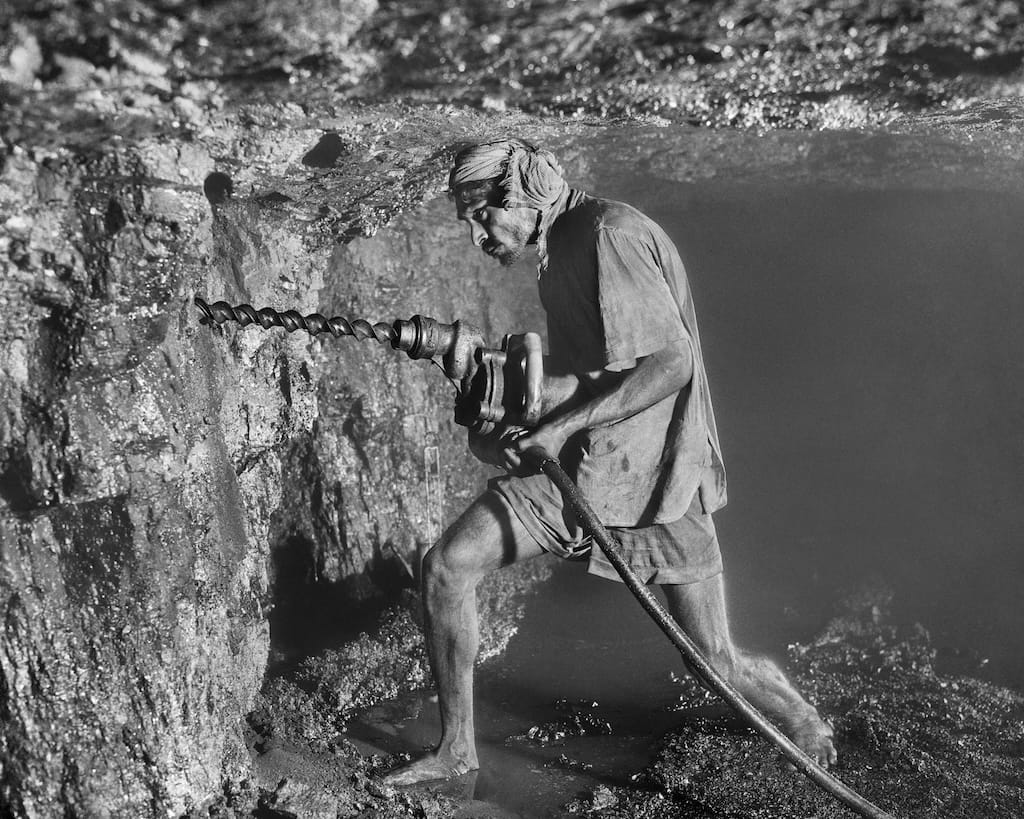
Elsewhere, Ali’s framing becomes a way of negotiating the difficult physical realities of industrial labour. Daulet-Singh points to a photograph of a coal miner in Asansol, working barefoot and without protective equipment in a narrow underground gallery. Ali shoots from below, illuminating both the tunnel and the miner’s body.
The circumstances are precarious, but the photograph does not reduce its subject to vulnerability. Instead, Daulet-Singh observes, Ali’s framing “insists on dignity”. His staging “ennobles rather than diminishes him”.
It is this attention to the individual that also makes Ali’s photographs of women particularly significant. Women are comparatively rare in the corporate documentation of Indian industrialisation from the period, yet Ali photographed them across factory floors, in laboratories and at machines.
Daulet-Singh describes these photographs as “a counter-archive: evidence of women’s work systematically absent from official industrial records”. They also reveal the speed of social change in post-Independence India, documenting the expansion of women’s education and formal employment at a moment when that transformation remained largely invisible within the visual record.
Seen together, these photographs complicate the familiar imagery of Indian industrial modernity. The factories, machines and monumental structures remain important, but Ali repeatedly returns the viewer to the people within them: their hands, postures, faces and gestures.
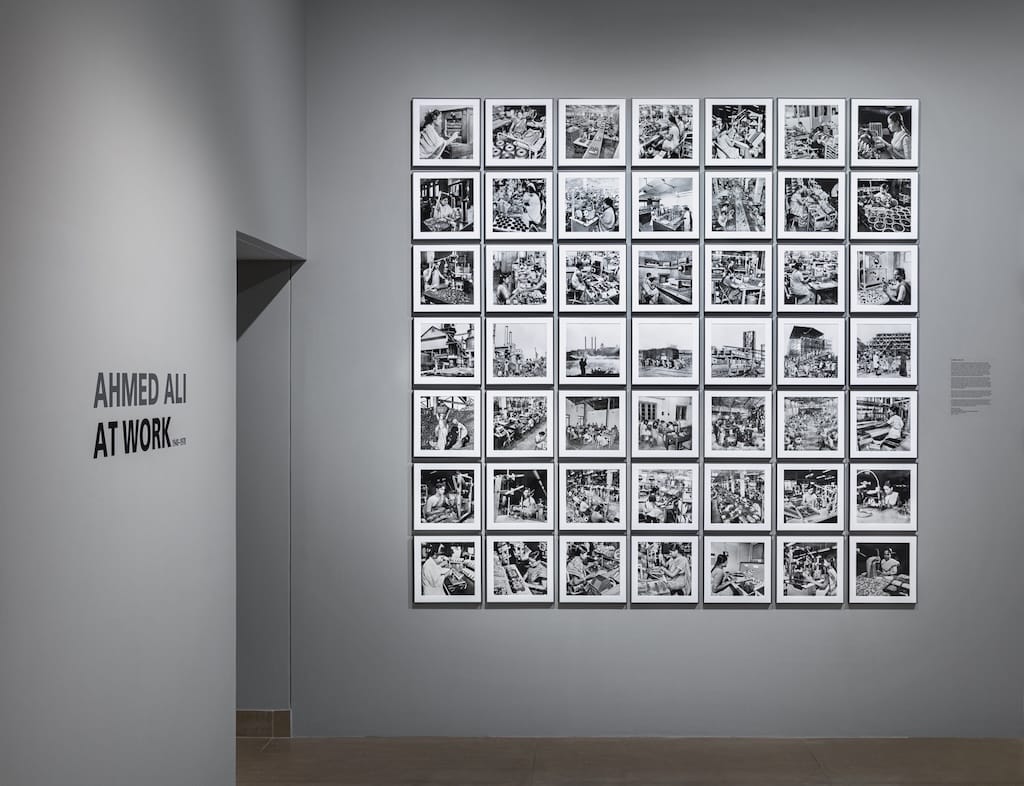
For Daulet-Singh, this is what makes the archive significant. Its importance lies not in recovering photographs of industries that have disappeared or changed beyond recognition, but in understanding how a generation of workers was represented during the making of modern India.
“Documentary photography’s real work isn’t choosing between the monumental and the intimate—it’s seeing how they’re inseparable,” she says.
At Work (1948–1978) is on view at PHOTOINK, New Delhi, until 24 October 2026.