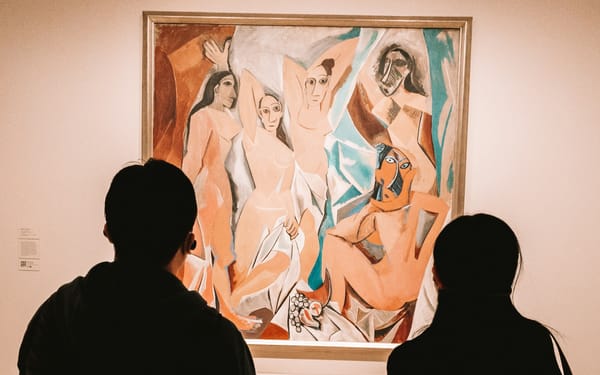
The Myth of the Tortured Genius: From Caravaggio to Basquiat
From Caravaggio’s violent life to Basquiat’s meteoric rise, the myth of the tortured genius has shaped how we view artists. But does great art truly emerge from suffering, or is this one of art history’s most persistent illusions?

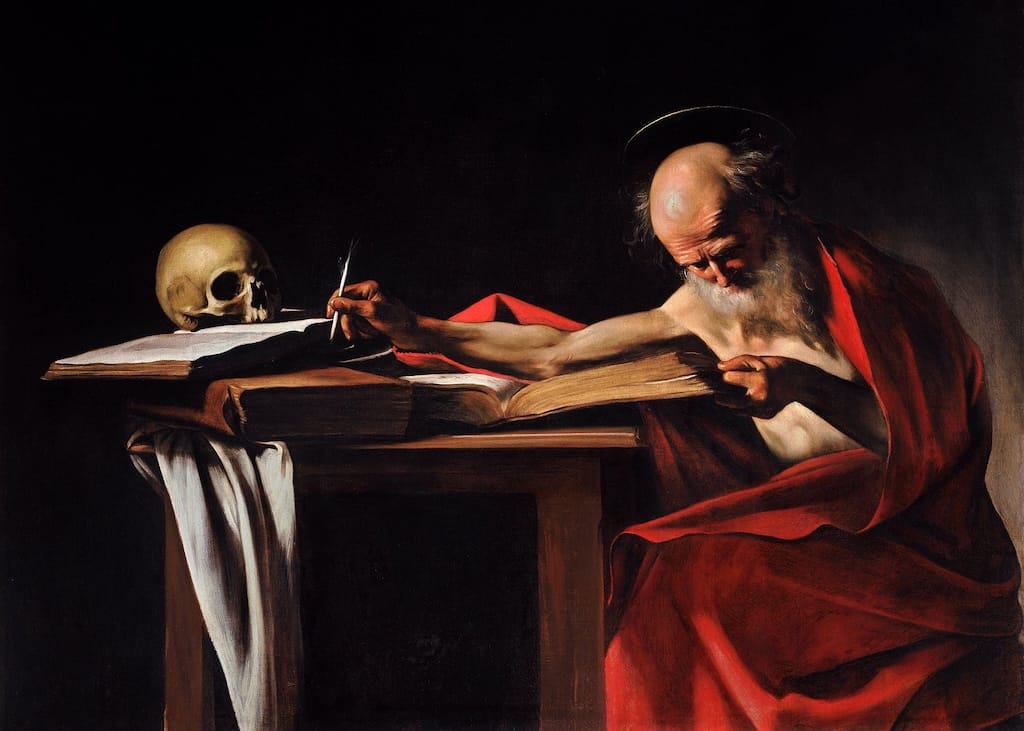
Few ideas in the history of art have proved as enduring as the notion of the tortured genius. The image is instantly recognisable: the brilliant but troubled artist who struggles against society, suffers deeply, and produces extraordinary work through personal turmoil. From the violent life of Caravaggio in seventeenth-century Rome to the meteoric rise and tragic death of Jean-Michel Basquiat in twentieth-century New York, the mythology of suffering and artistic brilliance has shaped how audiences interpret art and artists.
Yet the idea deserves closer examination. Is artistic greatness really born from suffering, or has the art world cultivated a narrative that romanticises instability and personal tragedy?
The Origins of the Myth
The association between suffering and creativity has deep historical roots. In antiquity, philosophers such as Aristotle suggested that exceptional individuals often possessed a melancholic temperament. During the Renaissance, artists began to be seen less as skilled craftsmen and more as inspired individuals touched by something extraordinary. By the seventeenth century, biographers and patrons were already fascinated by artists whose personalities appeared as dramatic as their paintings.
No figure embodies this early myth more vividly than Michelangelo Merisi da Caravaggio. His life reads almost like a novel of crime and genius. Caravaggio was repeatedly involved in violent disputes, duels, and arrests. In 1606 he killed a man during a fight in Rome and was forced to flee the city, spending the remainder of his life moving between Naples, Malta, and Sicily while seeking papal pardon.
These biographical details have long coloured interpretations of his work. Caravaggio’s paintings are renowned for their dramatic lighting, intense realism, and emotional immediacy. Works such as The Calling of Saint Matthew and Judith Beheading Holofernes possess a visceral force that seems to mirror the turbulence of the artist’s own life. For centuries critics and historians have drawn a connection between his violent temperament and the theatrical intensity of his art.
Yet it is equally true that Caravaggio was a highly disciplined painter who carefully observed models, experimented with light, and worked within the expectations of powerful patrons. His genius did not emerge from chaos alone but from extraordinary technical skill and relentless experimentation.
Romanticism and the Cult of the Artist
The myth of the tortured genius gained greater prominence during the nineteenth century, particularly in the era of Romanticism. Artists were increasingly portrayed as outsiders who rejected social conventions in pursuit of personal truth. The bohemian lifestyle, marked by poverty, excess, and emotional volatility, became part of the artistic identity.
This cultural shift profoundly influenced how artists were remembered. Figures such as Vincent van Gogh, who struggled with mental illness and died in obscurity, were elevated as archetypes of the suffering visionary whose genius was misunderstood by society.
The narrative proved powerful because it offered a dramatic explanation for artistic innovation. If a work appeared radically different from established norms, it was tempting to attribute its originality to a personality that was equally unconventional or unstable.
However, this framework often simplifies complex lives. Van Gogh, for example, produced an astonishing body of work in just over a decade through remarkable discipline and intellectual engagement with art history, literature, and colour theory. His struggles were real, but they do not alone account for the brilliance of paintings such as The Starry Night or Sunflowers.
The Twentieth Century and Modern Mythmaking
In the twentieth century the myth of the tortured genius evolved alongside modern media and the expanding art market. Artists were no longer only historical figures interpreted by scholars. They became public personalities whose lives were followed by journalists, collectors, and critics.
Few artists illustrate this phenomenon more clearly than Jean-Michel Basquiat. Emerging from the streets of downtown New York in the late 1970s and early 1980s, Basquiat quickly became one of the most visible figures in contemporary art. His paintings combined graffiti aesthetics with references to jazz, history, anatomy, and African diasporic culture.
Basquiat’s rise was astonishingly rapid. By his early twenties he was exhibiting in major galleries and collaborating with Andy Warhol. His work captured the energy of a city defined by hip-hop, punk, and new artistic experimentation.
At the same time, the media constructed a compelling narrative around his life. Basquiat was portrayed as the rebellious street artist who had suddenly entered the elite art world. His youth, charisma, and struggles with addiction contributed to a powerful mythology that intensified after his death from a heroin overdose in 1988 at the age of twenty-seven.
In retrospect, this narrative often overshadows the intellectual sophistication of his work. Basquiat was deeply informed by art history, literature, and music. His paintings contain layered references to figures such as Leonardo da Vinci, Charlie Parker, and historical accounts of colonialism and race. The myth of the tragic prodigy can obscure the seriousness of his artistic inquiry.
Why the Myth Persists
The appeal of the tortured genius lies partly in storytelling. Art history is filled with compelling personalities, and dramatic narratives attract attention. A brilliant artist who lives an unconventional or troubled life becomes a powerful symbol of creativity unbound by ordinary rules.
There is also a psychological dimension. Audiences often seek explanations for extraordinary creativity. Linking artistic brilliance to suffering offers a convenient narrative that transforms personal tragedy into a form of heroic sacrifice.
The art market has also played a role in sustaining this mythology. Stories of troubled lives can increase the mystique surrounding an artist’s work, making paintings appear more emotionally authentic or historically significant. In some cases collectors and dealers have embraced dramatic biographies as part of the artwork’s cultural value.
Films, novels, and exhibitions frequently reinforce these narratives. The life of the artist becomes almost as important as the work itself, sometimes shaping how audiences interpret the art before even encountering it.
The Dangers of Romanticising Suffering
While the myth of the tortured genius may be compelling, it carries significant risks. Romanticising suffering can obscure the real challenges faced by artists dealing with mental illness, addiction, or financial hardship. It may also encourage the belief that destructive behaviour is somehow necessary for artistic achievement.
In reality, creativity rarely emerges from chaos alone. Artistic excellence usually requires sustained discipline, study, and persistence. Even artists whose lives appear tumultuous often maintain rigorous working habits.
Caravaggio, for instance, produced technically sophisticated paintings that transformed Baroque art through careful observation and compositional innovation. Basquiat, despite his youth, developed a complex visual language that drew upon historical research and cultural critique.
The myth can also distort how audiences evaluate art. When viewers approach a painting primarily through the lens of biography, they may overlook the formal qualities that make the work significant. Composition, colour, symbolism, and historical context can be overshadowed by the drama of the artist’s life story.
Rethinking Artistic Genius
Modern scholarship increasingly seeks to move beyond the simplistic equation of suffering and creativity. Historians and critics now emphasise the broader networks that shape artistic production. Patronage, collaboration, cultural influences, and intellectual traditions all contribute to the creation of great art.
Caravaggio did not work in isolation. He operated within the vibrant artistic environment of Rome, responding to religious reforms, patron expectations, and the work of other painters. Similarly, Basquiat was part of a dynamic cultural scene that included musicians, poets, and visual artists experimenting with new forms of expression.
Understanding these contexts allows us to appreciate artists as participants in complex cultural ecosystems rather than isolated figures driven solely by personal anguish.
The Power of the Work Itself
The significance of artists such as Caravaggio and Basquiat lies not in the drama of their biographies but in the power of their work.
Caravaggio’s revolutionary use of light and shadow transformed European painting, influencing generations of artists across Italy, Spain, and the Netherlands. His ability to depict sacred stories with startling realism brought religious subjects into the immediate experience of the viewer.
Basquiat, meanwhile, reshaped contemporary painting by merging street culture with art historical references. His work confronts themes of identity, power, race, and history with a visual language that remains strikingly fresh decades after his death. These achievements arise from imagination, skill, and intellectual curiosity rather than suffering alone.