Overcoming Creative Block: Science-Backed Techniques That Work
Creative block affects artists of every discipline, but research in psychology and neuroscience reveals practical ways to overcome it. From changing environments to lowering perfectionist pressure, these science-backed techniques help restore creative momentum and sustain artistic practice.


Creative block is a familiar experience for many artists, writers, musicians, and designers. At some point, the flow of ideas slows or seems to stop entirely. What once felt exciting suddenly becomes frustrating. A blank page, empty canvas, or unfinished composition can begin to feel intimidating rather than inspiring.
Despite its reputation, creative block is not simply a personal failing or a lack of talent. Research in psychology and neuroscience suggests that creative stagnation is often linked to mental fatigue, perfectionism, stress, or rigid patterns of thinking. The encouraging news is that several practical strategies can help restore creative momentum.
Many of these techniques are supported by scientific research into cognition, problem solving, and creativity. By understanding how the brain generates ideas, artists can develop habits that make creative block easier to overcome.
Step Away from the Work
One of the most effective ways to break a creative block is to temporarily stop trying to solve the problem. While this may sound counterintuitive, research in cognitive psychology demonstrates the importance of incubation.
Incubation occurs when a person takes a break from a challenging task. During this time, the brain continues to process information in the background. Studies have shown that people who step away from a problem often return with improved solutions or fresh insights.
This phenomenon is partly related to the brain’s default mode network, a system that becomes active during rest, daydreaming, or mind wandering. The network allows distant ideas and memories to connect in unexpected ways, which can lead to creative breakthroughs.
For artists experiencing creative block, taking a walk, engaging in a different activity, or simply resting for a while can create the mental space needed for new ideas to emerge.
Lower the Pressure of Perfection
Perfectionism is one of the most common causes of creative paralysis. When artists expect every idea to be exceptional, they may become hesitant to produce anything at all.
Psychological studies show that creativity thrives in environments where experimentation and mistakes are accepted as part of the process. When the brain perceives excessive pressure or judgement, it activates stress responses that narrow attention and reduce cognitive flexibility.
One effective technique is to deliberately produce imperfect work. Writers sometimes practise “free writing”, in which they write continuously for a set period without editing or evaluating their words. Visual artists may create quick sketches or colour studies without worrying about the final result.
These exercises shift the focus from evaluation to exploration. By lowering the stakes, the mind becomes more willing to generate ideas.
Change the Environment
Environment plays a significant role in creative thinking. Research has shown that even small changes in surroundings can stimulate new perspectives.
Working in the same location every day may reinforce habitual patterns of thought. When the brain associates a space with routine tasks, it may become harder to access novel ideas.
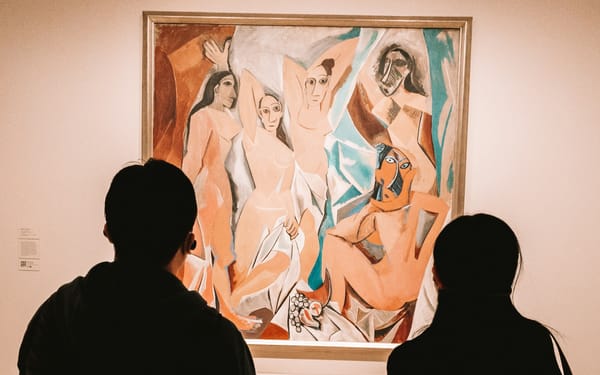
Changing the environment can disrupt these patterns. This might involve working in a different room, visiting a library or gallery, or spending time outdoors. Exposure to new visual and sensory experiences encourages the brain to form fresh associations.
Studies also suggest that moderate background noise, such as the sound of conversation in a café, can enhance creative thinking. A slightly stimulating environment appears to encourage abstract thinking without becoming distracting.
Use Constraints to Stimulate Ideas
At first glance, creativity seems to require complete freedom. In practice, however, many creative breakthroughs occur within clear limitations.
Research in creativity studies shows that constraints can encourage problem solving by forcing the mind to explore unconventional solutions. When options are unlimited, the brain may struggle to choose a direction. A defined structure can make the task more manageable.
Artists often use constraints deliberately. A painter might limit the palette to a few colours. A composer might write within a specific harmonic framework. A photographer may work with a single lens or theme.
These limitations encourage focus and experimentation within a narrower field. Rather than reducing creativity, constraints often sharpen it.
Engage in Physical Movement
Physical activity has a well documented influence on cognitive function. Studies from neuroscience and psychology show that exercise increases blood flow to the brain and stimulates the release of neurotransmitters associated with improved mood and mental clarity.
Walking, in particular, has been linked to enhanced creative thinking. Experiments conducted at Stanford University found that participants generated more original ideas while walking compared with sitting.
Movement appears to encourage a mental state that balances focus with openness. The rhythm of walking may also support a gentle form of mind wandering that helps ideas connect in unexpected ways.
For artists facing creative block, a short walk or light exercise session can often refresh the mind more effectively than prolonged effort at a desk.
Feed the Mind with New Inputs
Creativity rarely occurs in isolation. New ideas often emerge from exposure to unfamiliar concepts, images, or experiences.
Psychologists describe creativity as the ability to combine existing knowledge in novel ways. When the mind encounters new information, it gains additional material from which to form connections.
For artists, this might involve reading outside one’s usual field, visiting exhibitions, listening to unfamiliar music, or exploring different cultural traditions. Even seemingly unrelated experiences can trigger new perspectives.
Importantly, these activities should be approached with curiosity rather than pressure. The goal is not immediate productivity but the gradual enrichment of the mind’s creative resources.
Break Large Tasks into Smaller Steps
Creative projects often appear overwhelming when viewed as a single large objective. The brain may respond to this perceived complexity by avoiding the task altogether.
Behavioural research suggests that dividing a project into smaller, clearly defined steps can reduce this resistance. Each completed step provides a sense of progress, which reinforces motivation.
For example, a painter struggling to begin a new work might start by preparing the canvas, organising materials, or creating simple compositional sketches. These small actions lower the barrier to entry and gradually build momentum.
Once the creative process has begun, ideas often start to flow more naturally.
Practise Regular Creative Habits
While inspiration is often portrayed as unpredictable, many artists find that creativity becomes more reliable through consistent routines.
Neuroscience research indicates that repeated behaviours strengthen neural pathways. When creative activity becomes a regular habit, the brain learns to enter a productive state more easily.
This does not mean working continuously without rest. Instead, it involves establishing a rhythm that balances effort with recovery. Some artists dedicate a specific time each day to creative work, regardless of immediate inspiration.
Over time, the mind begins to associate that period with creative thinking, making it easier to overcome initial resistance.
Cultivate a Growth Mindset
Another important factor in overcoming creative block is mindset. Psychologist Carol Dweck’s research on growth mindset suggests that people who view abilities as developable are more resilient when facing challenges.
Artists who believe creativity is a fixed trait may interpret creative block as evidence that they lack talent. In contrast, those who view creativity as a skill recognise that periods of difficulty are a natural part of learning.
Adopting a growth mindset encourages persistence and experimentation. Each obstacle becomes an opportunity to develop new strategies or perspectives.
This shift in thinking can transform creative block from a discouraging barrier into a temporary stage in the creative process.
Conclusion
Creative block can feel discouraging, but it is rarely permanent. Psychological and neuroscientific research shows that creativity depends on a complex interaction between rest, exploration, environment, and mindset.
Techniques such as taking breaks, reducing perfectionist pressure, changing surroundings, and engaging in physical movement can help restore creative flow. Limiting options, seeking new experiences, and breaking tasks into manageable steps can further support the generation of ideas.
Perhaps most importantly, creativity thrives when approached with curiosity and patience rather than self criticism. Periods of difficulty are not signs of failure but natural pauses within the larger rhythm of creative work.