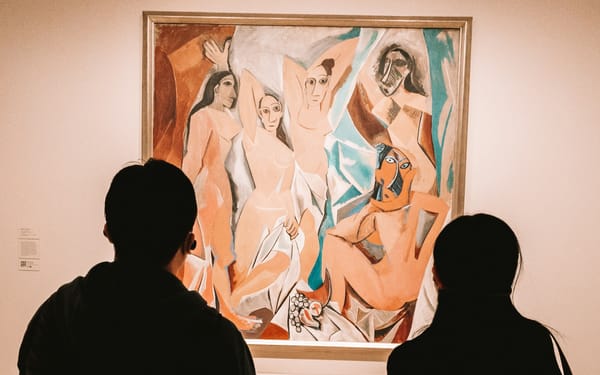
Lucian Freud vs Francis Bacon: Portraits, Friendship, and Betrayal
Lucian Freud and Francis Bacon were among the most influential figurative painters of the twentieth century. Their intense friendship, artistic rivalry, and eventual falling out reveal a fascinating story about portraiture, ambition, and the fragile bonds between great artists.

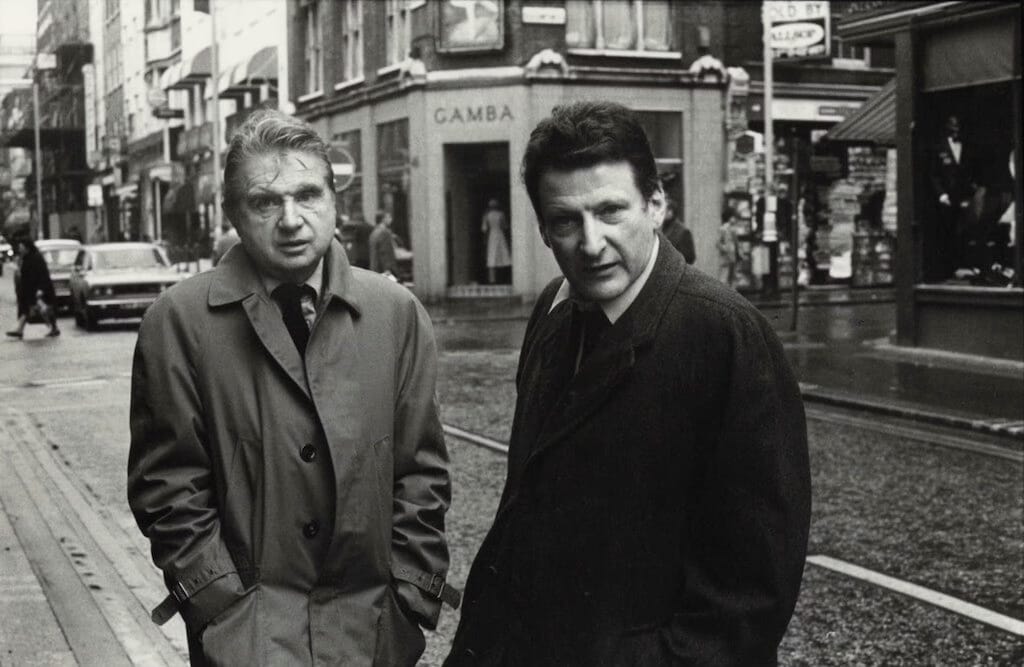
Few artistic friendships in twentieth-century Britain were as intense, creative, and ultimately fractured as that between Lucian Freud and Francis Bacon.
Both artists transformed the language of figurative painting after the Second World War, yet their approaches to the human body could hardly have been more different. Freud pursued an almost forensic realism, scrutinising flesh and form with relentless attention. Bacon, by contrast, distorted and fragmented the body, presenting figures that seemed trapped within psychological cages.
For a time, however, these two powerful personalities formed one of the most fascinating partnerships in modern art.
London, Soho, and a Meeting of Minds
Freud and Bacon first met in the mid-1940s, introduced through London’s small but vibrant artistic circles. At the time, both were young painters struggling to establish themselves. London was still recovering from the war, yet its cafés, studios, and clubs were alive with artistic experimentation.
The pair soon became inseparable. They spent long nights in Soho, frequenting places such as the Colony Room Club, where artists, writers, and critics gathered to drink, argue, and exchange ideas. Bacon, who was fifteen years older, quickly became something of a mentor to Freud.
Freud admired Bacon’s boldness and his instinctive understanding of painting. Bacon, in turn, recognised Freud’s extraordinary discipline and observational skill.
Despite their differences in temperament, they shared an obsession with the human figure. Both artists rejected abstraction, which dominated much of the post-war art world, insisting instead that the body remained the most powerful subject for modern painting.
Two Visions of the Human Body
Freud and Bacon approached portraiture in radically different ways, yet each pushed the genre to new psychological depths.
Freud’s paintings were built through long, demanding sittings. His models often posed for hundreds of hours. The resulting works are marked by dense layers of paint and a sculptural treatment of flesh. Skin becomes landscape, every crease and fold carefully observed. Works such as Benefits Supervisor Sleeping or Girl with a White Dog demonstrate his unflinching commitment to physical reality.
Bacon worked almost in the opposite manner. He preferred to paint from photographs or memory rather than direct observation. His figures twist, smear, and dissolve across the canvas, as if caught in a moment of violent transformation. Paintings such as Study after Velázquez’s Portrait of Pope Innocent X or Three Studies for Figures at the Base of a Crucifixion reveal a vision of humanity marked by anxiety, isolation, and existential dread.
Where Freud dissected the body through observation, Bacon attacked it through distortion.
Yet both artists aimed at the same goal: capturing the psychological intensity of being human.
Painting Each Other
One of the most remarkable aspects of their friendship was the way they painted one another.
Freud produced several portraits of Bacon during the 1950s. The most famous of these, Portrait of Francis Bacon (1952), showed the older artist seated in a dark interior, his features carefully rendered yet slightly tense, as if caught between composure and restlessness.
Bacon, who rarely painted portraits from life, also created a powerful tribute to his friend. His Three Studies for a Portrait of Lucian Freud (1969) presented Freud’s head across three panels, twisting and dissolving within Bacon’s characteristic geometric spaces.
Decades later, this triptych would become one of the most expensive artworks ever sold at auction, underscoring the enduring fascination with their relationship.
These portraits are more than images of two painters. They represent a dialogue between two radically different visions of portraiture.
Rivalry and Growing Distance
Friendship between strong personalities rarely remains uncomplicated. By the late 1950s and early 1960s, tensions began to appear.
Their lifestyles diverged sharply. Bacon continued to embrace a chaotic existence of gambling, drinking, and late nights in Soho. Freud, although hardly ascetic, became increasingly focused on the discipline of painting. He worked obsessively in his studio, often painting late into the night and demanding long sittings from his models.
Professional rivalry may also have played a role. Both artists were gaining international recognition, and comparisons between their work became inevitable. Critics often framed them as opposing poles of post-war figurative painting.
Gradually the friendship cooled.
The Betrayal
The final rupture between Freud and Bacon remains the subject of speculation. Many accounts point to a personal betrayal involving gambling debts and financial dealings.
Freud was known for his love of betting, particularly on horse racing. According to several stories within London’s art circles, Bacon revealed sensitive financial information about Freud to a bookmaker, causing embarrassment and anger.
Whatever the precise details, the result was clear. Freud felt deeply betrayed, and the friendship ended abruptly in the early 1970s.
The two artists, once constant companions, scarcely spoke again.
A Broken Friendship
Despite the collapse of their relationship, the artistic dialogue between Freud and Bacon continued to shape modern portraiture.
Freud’s later works pushed realism to unprecedented extremes, presenting the human body with an almost archaeological intensity. Bacon continued to create haunting triptychs that explored violence, mortality, and the fragility of identity.
Today both artists are recognised as giants of twentieth-century painting. Their works command extraordinary prices at auction and remain central to museum collections around the world. Yet the story of Freud and Bacon is not only about artistic achievement. It is also a human story of admiration, rivalry, and disappointment.
Two painters who changed the course of figurative art began as friends, challenged each other as rivals, and ultimately ended their relationship in silence. Their portraits remain, perhaps, the most honest record of what they once saw in one another.