Between Murals and Mirrors: Diego Rivera’s Influence on Frida Kahlo
Diego Rivera’s mentorship, political ideals and towering presence profoundly shaped Frida Kahlo’s confidence and cultural outlook, even as she transformed influence into a fiercely independent, intimate and enduring language of modern art.

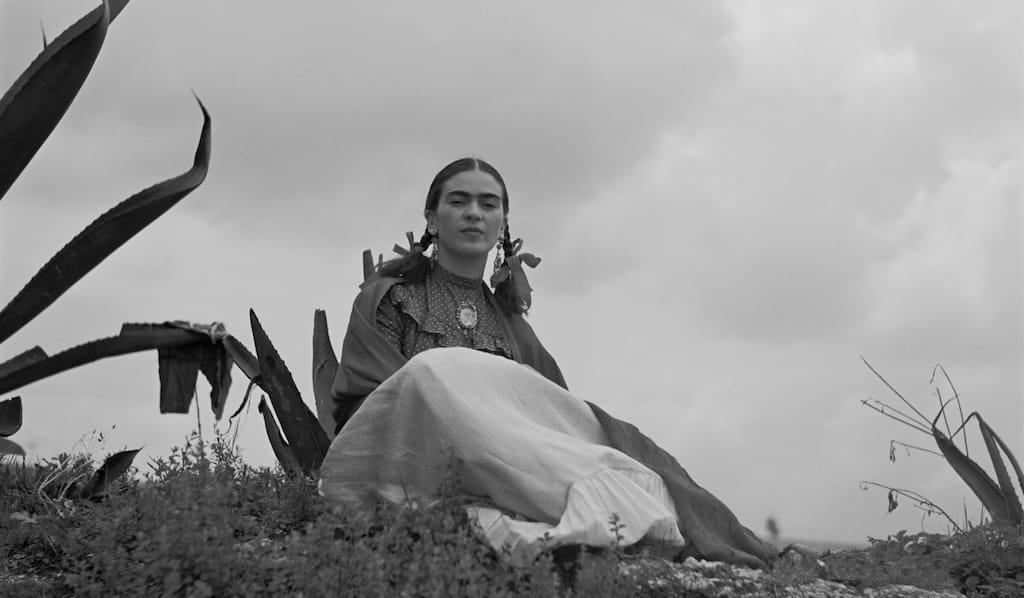
The relationship between Diego Rivera and Frida Kahlo remains one of the most discussed and emotionally charged partnerships in the history of modern art. Their marriage was marked by deep affection, ideological alignment, artistic exchange and profound personal turmoil. While Frida Kahlo is today often understood as a singular, fiercely independent voice, her artistic development cannot be fully examined without acknowledging the formative and enduring influence of Diego Rivera. This influence was not a matter of imitation but of provocation, encouragement and resistance, shaping Kahlo’s visual language, subject matter and sense of artistic purpose.
Encounter and early mentorship
Frida Kahlo first encountered Diego Rivera in 1922 at the Escuela Nacional Preparatoria in Mexico City, where Rivera was working on one of his early murals. At the time, Rivera was already a towering figure in Mexican art, celebrated for his grand public murals and his role in shaping post revolutionary cultural identity. Kahlo, still a student, was curious, sharp witted and observant. Their paths crossed again several years later when Kahlo, recovering from the catastrophic bus accident that left her in chronic pain, began to paint seriously.
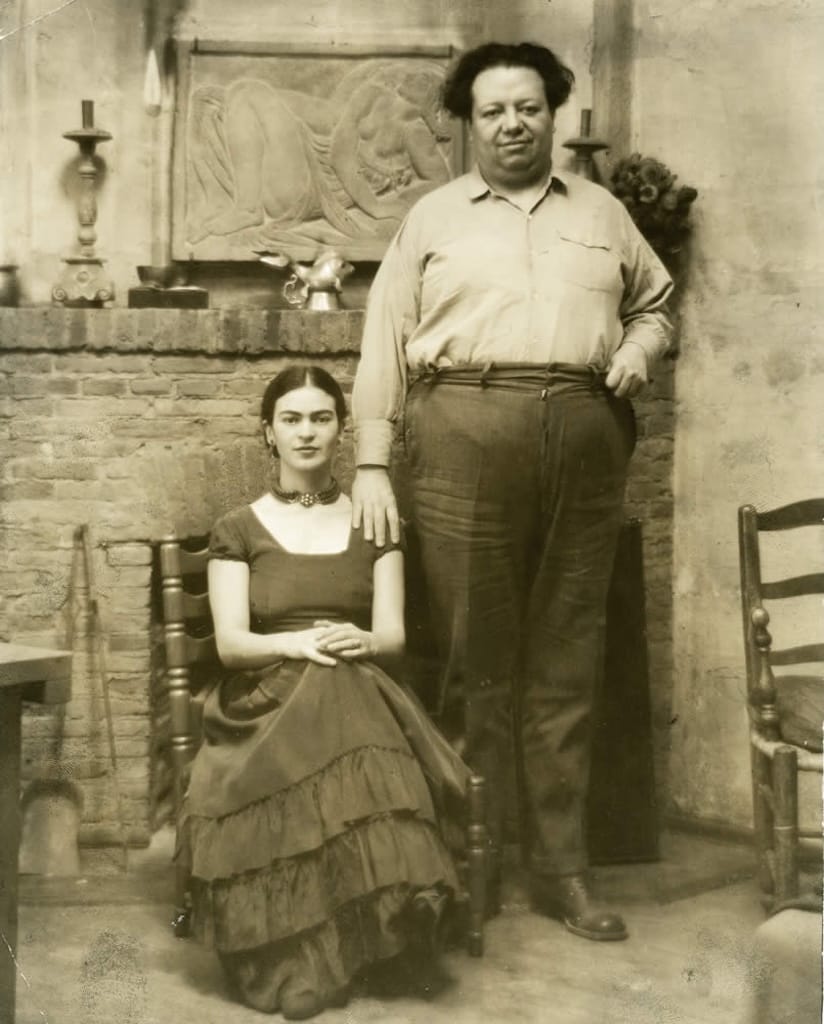
It was Rivera who first took Kahlo’s work seriously as art rather than as a pastime or therapy. When she showed him her early paintings, he recognised an unusual intensity and honesty. Rivera’s validation mattered deeply. As a mentor, he encouraged her to continue painting and to trust her instinctive approach rather than seeking academic polish. This early endorsement gave Kahlo the confidence to pursue painting as a vocation, even as she resisted Rivera’s stylistic preferences.
Political consciousness and ideological alignment
One of the most significant ways Rivera influenced Kahlo was through politics. Rivera was a committed Marxist and a vocal advocate of social justice, indigenous rights and anti imperialist thought. His murals were visual manifestos that celebrated labour, history and collective struggle. Through Rivera, Kahlo became deeply engaged with leftist politics, joining the Mexican Communist Party and embedding political identity into her personal and artistic life.
While Kahlo’s paintings rarely depict mass movements or revolutionary narratives in the way Rivera’s murals do, her political beliefs surface through symbolism, dress and subject matter. Her frequent use of traditional Tehuana clothing, for instance, was not merely aesthetic. It aligned her with indigenous matriarchal cultures and asserted a post colonial Mexican identity, ideals Rivera championed throughout his career. In this sense, Rivera’s ideological framework helped Kahlo situate her own body and experience within a broader political context.
Scale, intimacy and artistic divergence
Despite their ideological alignment, Kahlo and Rivera diverged sharply in artistic form and ambition. Rivera worked on a monumental scale, producing murals intended for public buildings and collective viewing. Kahlo, by contrast, worked on small canvases, often painting while confined to bed. Rivera encouraged her to paint from her own life, recognising that her physical suffering and emotional vulnerability could become sources of artistic strength rather than limitation.
Rivera once famously remarked that Kahlo’s art was as hard as steel and as delicate as a butterfly. This duality reflects how his influence functioned less as stylistic guidance and more as a catalyst for self definition. Kahlo rejected muralism as a mode unsuited to her temperament and circumstances, yet Rivera’s insistence that art must be rooted in lived experience resonated deeply. Her self portraits, which make up a significant portion of her oeuvre, transform personal pain into visual testimony.
Mexicanidad and cultural identity
Rivera was a central figure in promoting mexicanidad, a post revolutionary cultural movement that sought to reclaim indigenous heritage, folk traditions and pre Columbian history. This emphasis profoundly shaped Kahlo’s visual vocabulary. Her paintings frequently incorporate indigenous symbols, traditional crafts, animals and mythological references. While Kahlo’s engagement with mexicanidad was deeply personal, it was undoubtedly nurtured by Rivera’s intellectual and artistic environment.
Unlike Rivera, who depicted indigenous people as collective symbols of national identity, Kahlo internalised these references. She often merged her own image with indigenous motifs, suggesting that identity was something lived and embodied rather than observed from a distance. Rivera’s influence thus provided a cultural framework that Kahlo adapted to articulate her own sense of belonging and difference.
Emotional turbulence and creative fuel
The emotional volatility of Kahlo and Rivera’s relationship is inseparable from their artistic exchange. Rivera’s infidelities, including his affair with Kahlo’s sister Cristina, caused deep emotional wounds that found expression in Kahlo’s work. Paintings such as The Two Fridas explore themes of abandonment, divided identity and emotional rupture. Rivera’s presence, both as muse and antagonist, became a recurring undercurrent in her imagery.
Yet Rivera was not merely a source of pain. He was also a subject of devotion and fascination. Kahlo painted Rivera multiple times, often portraying him as both childlike and monumental. These portraits suggest admiration intertwined with critique. Rivera’s larger than life persona loomed over Kahlo’s emotional world, pushing her to confront love, dependency and selfhood with brutal honesty.
Artistic independence and mutual respect
Although Rivera exerted significant influence, it is crucial to recognise Kahlo’s insistence on artistic independence. Rivera never attempted to mould her work into his own style. On the contrary, he admired her refusal to conform. As Kahlo’s reputation grew, particularly in the United States and Europe, Rivera openly acknowledged her originality, even as his own international standing fluctuated.
Their relationship was marked by intellectual exchange. They discussed art, politics and history as equals, despite differences in age and fame. Rivera introduced Kahlo to influential figures, collectors and institutions, but she quickly proved capable of commanding attention on her own terms. His support provided access and visibility, yet her voice remained unmistakably her own.
The body as battleground and subject
One of the clearest distinctions between Rivera and Kahlo lies in their treatment of the human body. Rivera’s figures are robust, idealised and emblematic of collective strength. Kahlo’s body, by contrast, is fragile, wounded and exposed. While Rivera rarely depicted personal suffering, Kahlo made it central to her art.
However, Rivera’s belief that art should confront reality rather than escape it arguably legitimised Kahlo’s unflinching self examination. Her paintings of miscarriage, surgery and physical pain can be understood as a radical extension of Rivera’s realist ethos, applied inward rather than outward. In this way, his influence helped Kahlo understand that her private experiences were worthy of serious artistic treatment.
Beyond influence: dialogue rather than hierarchy
To frame Rivera solely as an influence risks diminishing the complexity of their relationship. Their artistic connection was a dialogue, shaped by admiration, disagreement and mutual challenge. Kahlo did not simply absorb Rivera’s ideas; she responded to them, transformed them and, at times, contradicted them. Where Rivera celebrated historical continuity and collective identity, Kahlo explored fragmentation, hybridity and the instability of the self.
Over time, Kahlo’s work moved further away from any visible connection to Rivera’s muralism, yet the intellectual foundations he helped establish remained. Her art retained a commitment to truth telling, cultural specificity and political awareness, even as it became increasingly introspective and symbolic.
Legacy and reassessment
In recent decades, Kahlo’s fame has eclipsed Rivera’s in popular culture. She is celebrated as a feminist icon, a symbol of resilience and a pioneer of autobiographical art. Rivera, once the dominant figure, is now often discussed in relation to her rather than the other way around. This shift invites a reassessment of influence not as dominance but as exchange.
Rivera’s impact on Kahlo was profound but not prescriptive. He provided encouragement, ideological grounding and cultural context, while Kahlo forged an artistic language that was intimate, uncompromising and singular. Their relationship demonstrates how influence in art can be generative without being restrictive, offering a foundation from which originality can emerge.