Belonging to Ellora: A Conversation with Deepanjana and Arno Klein
Ellora is not a monument frozen in stone but a living conversation across faiths, centuries and disciplines. In this deeply personal dialogue, Deepanjana and Arno Klein reflect on cross-fertilisation, unfinished histories and belonging to a site that continues to astonish.

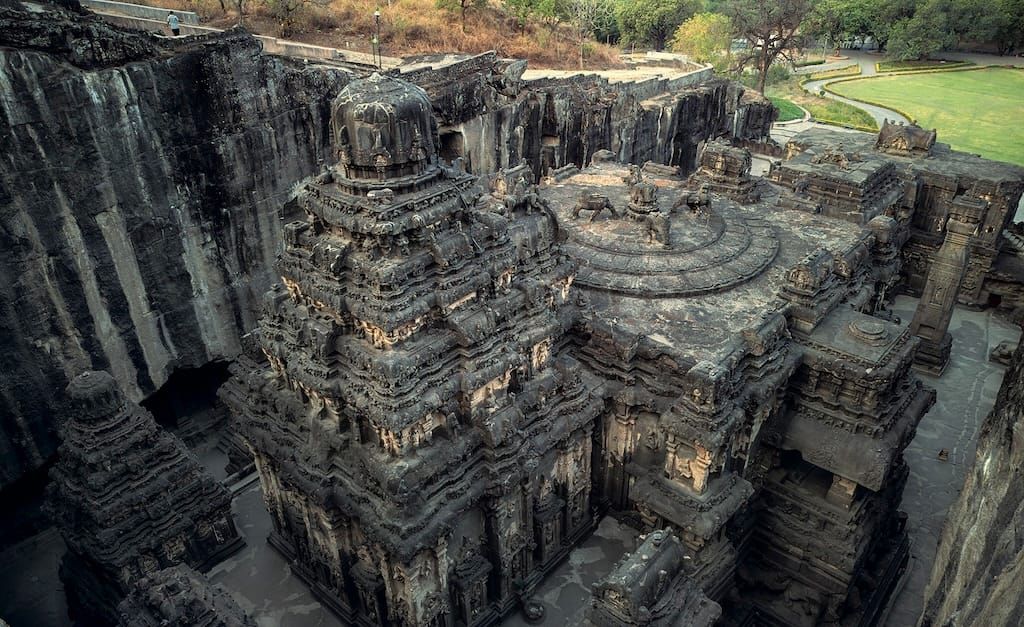
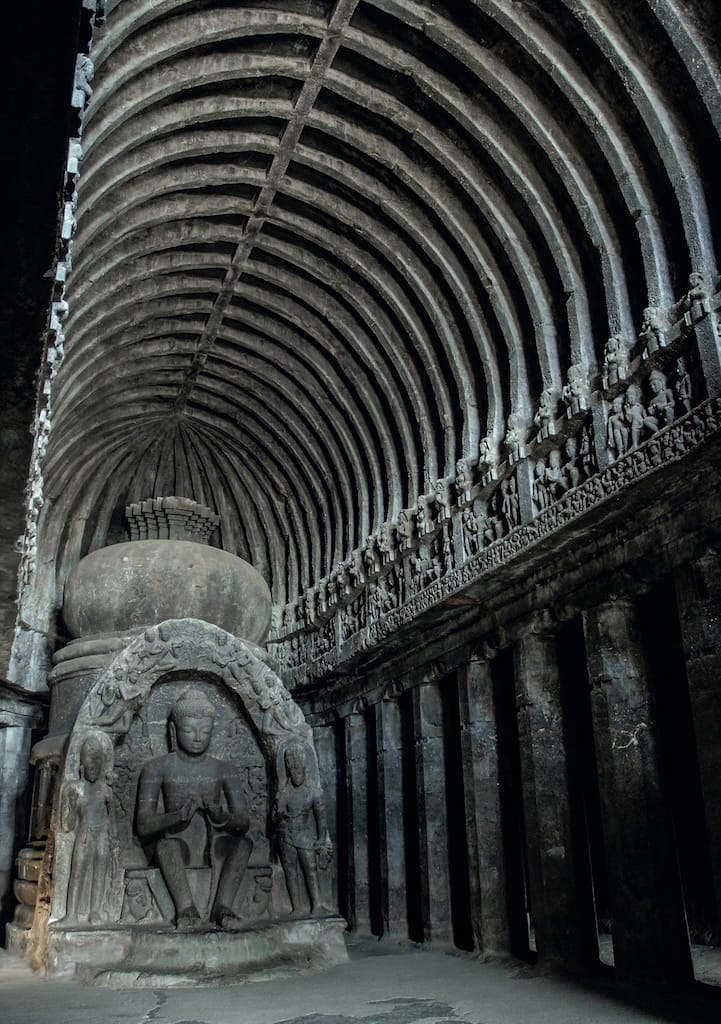
Few monuments in the world embody the audacity of human imagination quite like Ellora. Excavated between the sixth and tenth centuries CE, the site remains unparalleled in its ambition: a vertical city of stone carved from living rock, housing Buddhist monasteries, Hindu temples and Jain shrines within a single escarpment. It is the only cave complex in India where these three traditions coexist in such monumental proximity, and it continues to challenge simplistic narratives of religious separation.
Ellora: Cross-Fertilization of Style in Buddhist, Hindu and Jain Cave Temples is not a conventional survey. Conceived and edited by Dr Deepanjana Klein, Special Advisor to the Chairperson and Director of Acquisitions and Development at the Kiran Nadar Museum of Art, and shaped in close collaboration with Dr Arno Klein, Director of Innovative Technologies at the Child Mind Institute in New York, the book seeks to capture what Dr Pratapaditya Pal once urged Klein to pursue: the essence of Ellora.
That essence lies not only in iconography or chronology, but in movement. In the migration of artisans between caves. In the reappropriation of sacred space. In the shared architectural language that binds Cave 16 to Jain excavations such as Caves 30 and 32. In the unfinished surfaces that provoke questions about patronage, consecration and abandonment. And in the archive itself, from nineteenth-century documentation to contemporary digital photogrammetry.
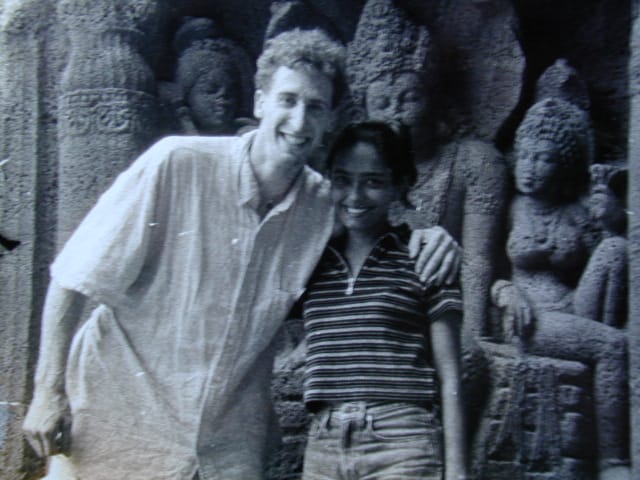
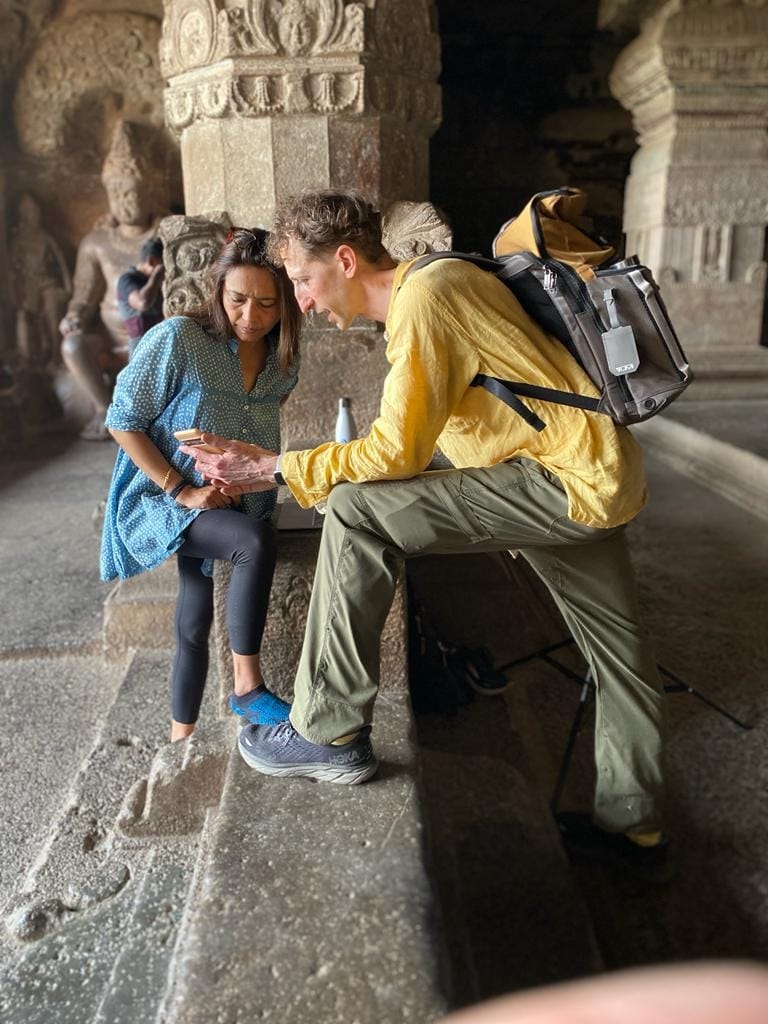
The contributors to the volume read like a roll call of leading scholars in South Asian art history, including Naman P. Ahuja, Vidya Dehejia, Lisa Owen, Nicolas Morrissey and Pia Brancaccio. Yet the intellectual rigour of the book is matched by something more intimate. For Deepanjana and Arno Klein, Ellora is not merely a research site. It is a place of return, of friendship, of family. Their daughter is named Ellora. Over three decades, they have watched surfaces erode, staff change, technologies evolve, and yet the monument’s ability to astonish remains undiminished.
Arno approaches the caves through the discipline of documentation, shaped by a scientific training in observation and systems thinking. Deepanjana approaches them through scholarship and lived belonging, formed in Santiniketan, refined at Christie’s, and now guiding acquisitions at KNMA. Together, they offer a rare convergence of art history, technology, curatorial vision and personal devotion.
Nikhil Sardana: Ellora is the only rock-cut site in India where Buddhist, Hindu and Jain caves coexist within the same escarpment. What does this proximity reveal about religious exchange between 600 and 1000 CE?
Deepanjana Klein: It is tempting to imagine these traditions operating in silos, but nothing in our world happens that way. There is always interaction, exchange and cross-fertilisation. At Ellora, we see sectarian rivalry, yes, but we also see knowledge-sharing and reappropriation.
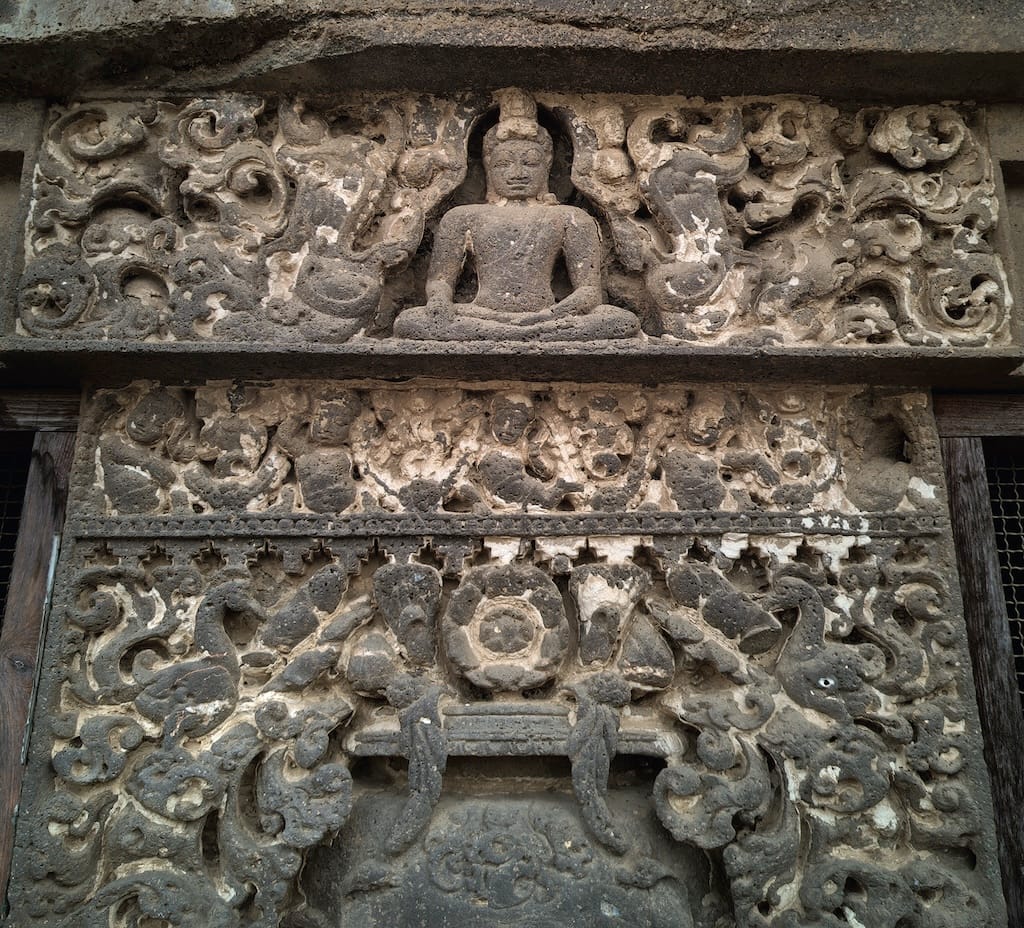
Take Cave 29 within the Hindu complex. There is evidence of sectarian shifts in patronage. The Kalachuris, who were Shaivites, begin work. Later rulers redirect resources, perhaps towards Kailasa. Similarly, in the Buddhist caves, we see façades that retain Buddhist imagery, yet interiors that were later appropriated with Hindu iconography.
Cave 15 is another fascinating example. It was likely begun as a Buddhist excavation. When Hindu patronage assumed control, the space was re-envisioned. The Nandi mandapa would not have formed part of its original conception. On the upper levels, one still finds subtle traces of earlier phases, including deeply recessed galleries that raise questions about what may have once existed on the surface before being re-carved.
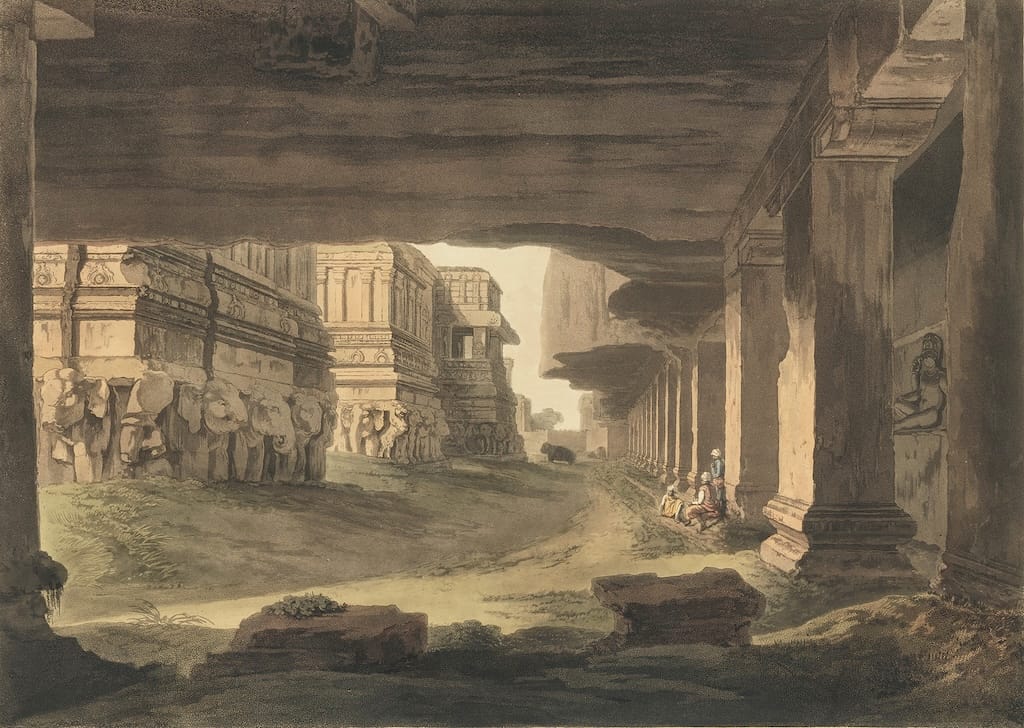
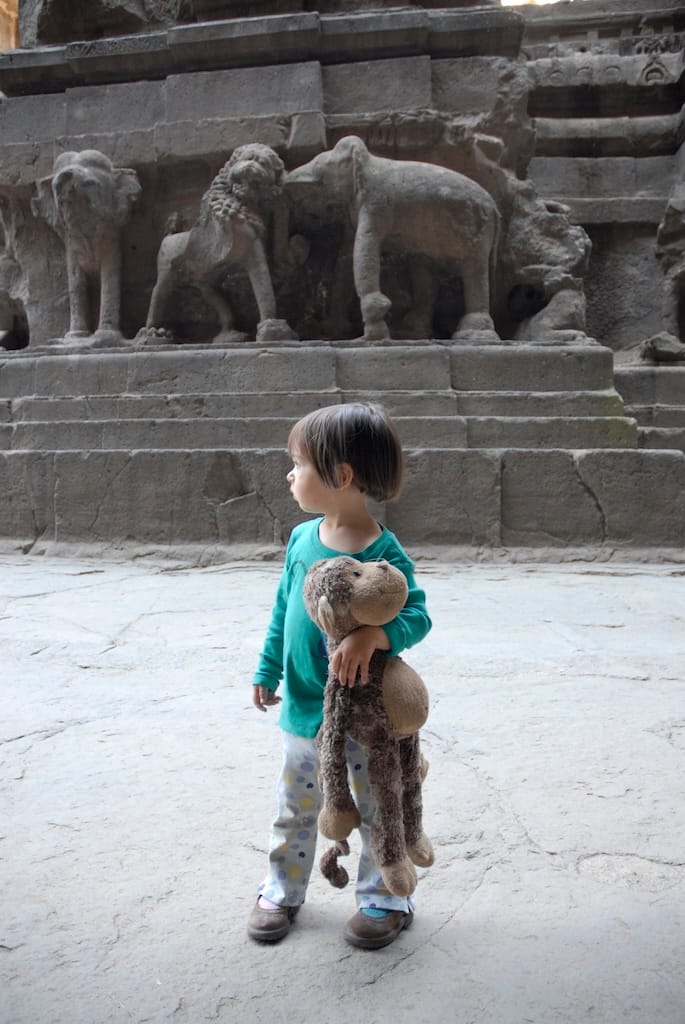
Artists themselves were not confined by sectarian boundaries. Sculptors working on a Buddhist cave could later work on a Hindu shrine, and vice versa. The largest-scale example of stylistic dialogue can be seen in the shared architectural language of Cave 16, the great Hindu Kailasanatha temple, and the Jain Caves 30 and 32. Courtyards, freestanding temples, column types and sculpted elephants reveal a continuity of design thinking. Even the so-called Chota Kailasa, though smaller in scale, represents a monumental effort that echoes its grander counterpart.
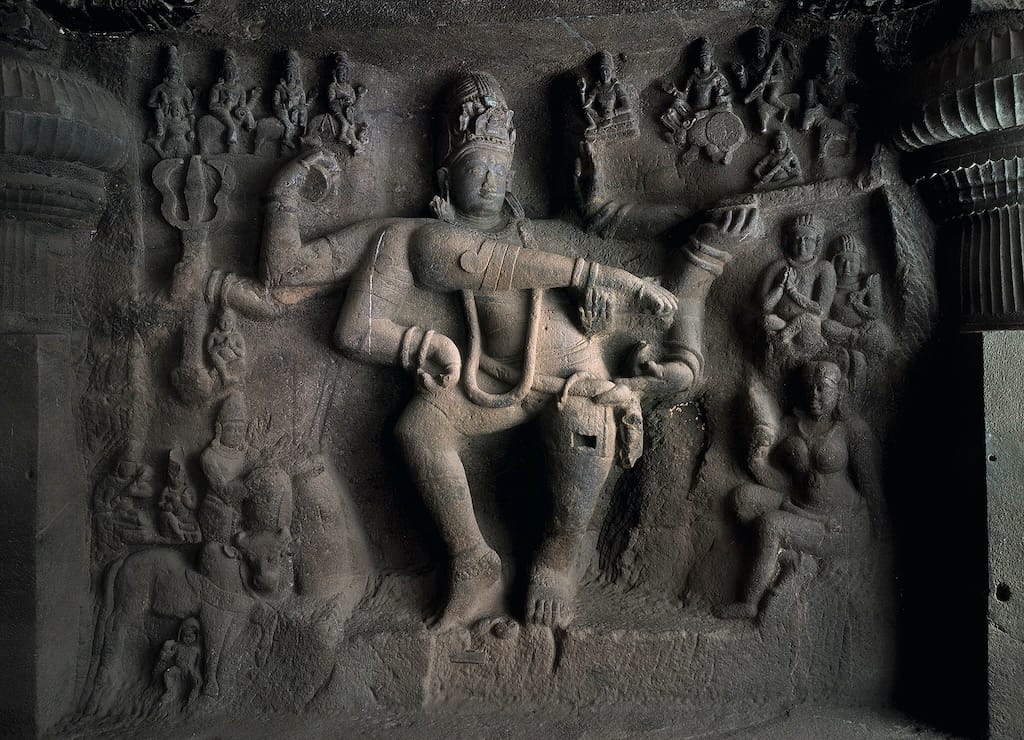
Arno Klein: It seems improbable that monks and scholars inhabiting caves in such close proximity would not have spoken to one another. While textual evidence of such exchanges is sparse, visual evidence is abundant. Motifs, architectural solutions and compositional strategies move across religious traditions.
What fascinates me is not only iconography but behaviour. When circumambulatory architecture is introduced from one tradition into another, it changes how visitors enact ritual within the space. It is not merely representational borrowing. It is an embodied convergence.
The announcing signals of a cave are also revealing. In Kailasa, the Mahayogi Shiva does not dominate the entrance as one might expect. It sits high, almost discreetly. In Jain Cave 32, the sukhanasa announces the shrine differently, tucked within shadowed recesses. These signals shape anticipation and experience.
Rather than asking only where the differences lie, one might ask how remarkably similar these caves are. When I show photographs to colleagues unfamiliar with the site, they often struggle to identify which tradition they are looking at. Only close attention to attributes, headdresses or thrones reveals distinctions. The shared visual vocabulary is profound.
NS: You both come from very different professional worlds. Deepanjana, your training began at Santiniketan. Arno, you arrived at Ajanta and Ellora through Professor Walter Spink. How did those early encounters shape your relationship to the site?
DK: Santiniketan was formative. It teaches rigour, but it also teaches you to look, to sit quietly with a work of art. I fell in love with Indian art history there and that love never left me. My path has been linear. From Santiniketan to Baroda to my PhD in England, and later to Christie’s and the Kiran Nadar Museum of Art, Indian art has remained central.
Ellora was not just an academic subject. It was deeply personal. I felt drawn to the village, to the people. We would eat in local homes, attend dargahs, listen to Sufi music late into the night. Our daughter is named Ellora. When we arrived at the modest hotel opposite the caves, the placard would read “Welcome home, Ellora.” That sense of belonging shaped everything.
Over time, I felt not that Ellora belonged to me, but that I belonged to Ellora.
AK: Walter Spink invited me to join his Ajanta seminar in 1992. He deliberately assembled eclectic groups, lawyers, scientists, artists, art historians, because he believed each perspective would apprehend the site differently.
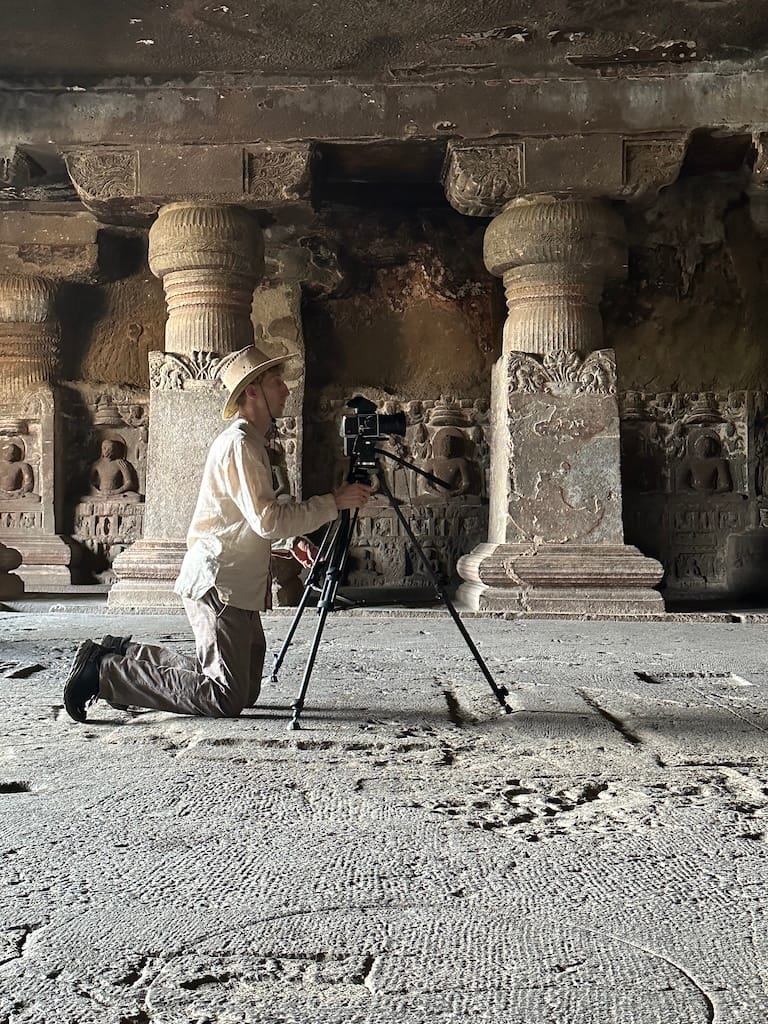
At that time I was fascinated by 3D imaging and display technologies. I even attempted to capture a holographic stereogram of the reclining Buddha at Ajanta, constructing a device to record thousands of sequential images with film. Heat and humidity quickly humbled that ambition. From then on, I committed to systematic digital photographic documentation.
Working in Walter’s basement on manuscripts, assisting with the South Asian art slide collection at the University of Michigan, and eventually documenting Ellora alongside Deepanjana transformed curiosity into commitment.
NS: Deepanjana, your years at Christie’s and now at the Kiran Nadar Museum of Art have shaped some of the most important collections of modern and contemporary South Asian art. Did that curatorial experience influence the structure of this book?
DK: Very much so. Academia gives you method and discipline. The art world teaches discernment and presentation. At Christie’s, I was privileged to handle extraordinary works and to learn from mentors who carried decades of knowledge. You learn to ask: what elevates a work from excellent to extraordinary? How do you communicate that distinction?
When I first contemplated a book on Ellora, Dr. Pratapaditya Pal advised me not to produce a conventional survey. He urged me to capture the essence of the site. That advice was transformative.
We could have structured the book chronologically, Buddhist, Hindu, Jain. Instead, we invited scholars to interrogate themes: monastic economies, artistic process, unfinished work, patronage networks, archival histories. Nicolas Morrissey reframes Buddhist caves through the lens of monastic enterprise. Vidya Dehejia explores why certain sculptures were left incomplete. Lisa Owen examines artistic exchange across traditions.
Even the design of the book reflects curatorial thinking. The sequencing of images, the scale of reproductions, the interplay between photograph and essay, all required careful orchestration. Good scholarship still requires good messaging.
AK: Essence also means recognising that Ellora remains under investigation. These caves are not closed chapters. They are open questions. What was it like to fund such an undertaking? What did it mean for artisans to abandon a sculpture once consecration occurred and move to another commission? How did guilds operate across traditions?
There is a vibrancy to Ellora that resists finality.
NS: The book engages nineteenth-century archival materials. How did you negotiate what is often termed the colonial gaze?
DK: It is too simplistic to dismiss it outright. Colonial surveyors introduced rigorous documentation and preservation practices. Their drawings, photographs and plans allow us to glimpse stucco layers and painted surfaces that have since deteriorated.
At the same time, romantic embellishments must be read critically. One must distinguish between documentation and projection. I choose to see this material as inherited knowledge that we can now reinterpret through contemporary scholarship.
AK: In the three decades we have visited Ellora, we have witnessed irreversible damage. Plaster fragments disappear. Surfaces erode. We owe a tremendous debt to anyone who documented the site before us. Burgess’s century-old cave temple plans remain among the most reliable references. Preservation is cumulative.
NS: This book is also a deeply personal collaboration. What did you learn about one another through this project?
AK: In the early days, limited digital storage forced us to pause and review images constantly. Those pauses were productive. Deepanjana would insist I revisit areas I believed I had already documented. On one occasion, that insistence led me to fragile frescoes I had overlooked. They may not survive indefinitely.
Over time, I realised that while I might focus on dynamic range and composition, she was attuned to nuance and atmosphere. Those differences strengthened the work.
DK: My experience is different. I approach Ellora emotionally. I am in love with the site and the community around it. We have formed friendships with staff and villagers. They speak of us as if we grew up there. They call Arno “Chota Kailasa” because of his height. There are stories, humour, affection.
Working on this book revealed not only our different ways of seeing but the compassion that underlies Arno’s meticulous documentation. This was never just about stone. It was about people, memory and continuity.
In the end, Ellora taught us patience. It demands time. It demands humility. And it continues to unfold.