Beginning Again and Why the First Mark Still Matters
At the start of a new year, the first mark is not about confidence or resolution. It is an act of trust, reminding us that art begins by choosing to start, imperfectly and without guarantees.

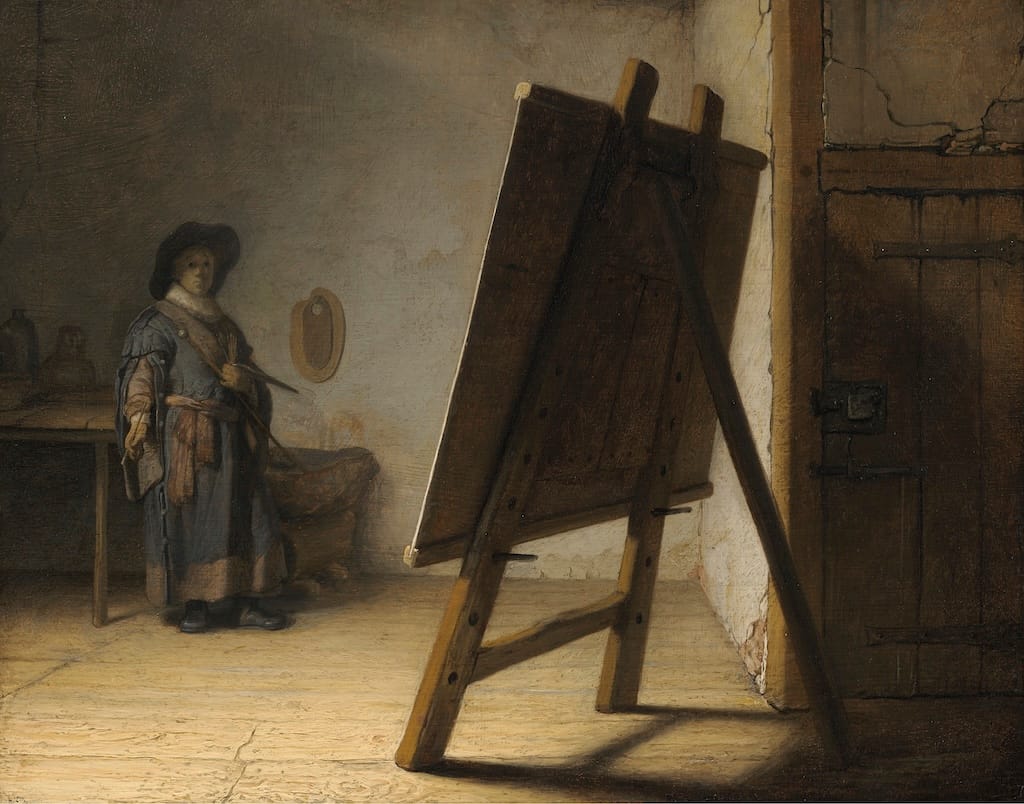
January has a particular atmosphere. The calendar turns, messages quieten, and studios reopen with a different kind of silence than the one that closed the year. It is not the hush of exhaustion, but of possibility. Somewhere between routine and resolution, artists return to tables, easels, screens, and notebooks, facing the same question they have faced many times before: where to begin.
Beginnings in art are rarely dramatic. They do not arrive with clarity or certainty. More often, they arrive tentatively, with hesitation, doubt, and the familiar weight of unfinished ideas. Yet it is precisely this modest beginning, the first mark made without guarantees, that carries one of the quietest forms of optimism there is.
The courage of starting
To begin is to accept vulnerability. The blank surface does not judge, but it reflects our own expectations back at us. We bring to it not only intention, but memory: of previous attempts, successes, failures, and long stretches of work that led somewhere unexpected or nowhere at all.
The idea that beginnings should feel confident is a myth. For many artists, the first mark is awkward, provisional, and quickly revised. But its importance lies not in its quality, but in its existence. It breaks the symmetry of the untouched page. It commits the maker to time passing, to attention being spent, to a process that cannot be undone without first being lived.
This is why beginnings matter even when the outcome remains unclear. They signal a willingness to stay with uncertainty rather than wait for confidence to arrive.
January and the illusion of freshness
The start of a new year often brings pressure to begin differently. New projects, new styles, new ambitions. Yet most meaningful beginnings are quieter than this. They are less about reinvention and more about return.
Artists rarely start from nothing. They start again. They return to habits, materials, questions, and fascinations that have followed them for years. A new sketchbook does not erase the old ones. It sits alongside them, carrying forward what has already been learned.
There is optimism in this continuity. It suggests that progress in art is not linear, nor dependent on novelty, but built through repetition and renewal. Beginning again is not failure. It is practice.
The first mark as commitment
The first mark matters because it is an agreement. An agreement to give something time without knowing what it will become. Once that line is drawn or that colour laid down, the work asks for response. It demands decisions, revisions, patience, and care.
In this sense, the first mark is less about expression and more about responsibility. It initiates a relationship between the artist and the work, one that unfolds slowly and often unpredictably. The optimism here is not that the work will succeed, but that it will be allowed to exist long enough to find its shape.
This is a valuable counterpoint to a culture that rewards instant results. Art begins by refusing immediacy. It insists that meaning takes time to emerge.
Imperfect starts and honest work
Many artists develop rituals around beginning, not to make it easier, but to make it possible. Sharpening pencils, stretching canvas, preparing surfaces. These actions do not eliminate uncertainty, but they create a structure within which uncertainty can be faced.
The first mark is rarely the best mark. Sometimes it is erased, painted over, or reworked beyond recognition. Sometimes it remains visible, a trace of the moment the work began. Both outcomes are valid. What matters is that the work has a history, that it carries the memory of its own making.
This is where optimism in art diverges from optimism elsewhere. It does not promise improvement at every step. It promises engagement. It promises that something will be attempted honestly, even if it remains unresolved.
Beginning as an ongoing skill
Over time, artists become skilled not only at making, but at beginning. They learn to recognise resistance without obeying it. They learn that waiting for the right moment is often another form of avoidance. They learn that starting badly is better than not starting at all.
This skill is transferable. The capacity to begin without certainty shapes how artists approach teaching, collaboration, and even looking. It encourages humility, curiosity, and openness, qualities that extend far beyond the studio.
In this way, the first mark matters not only for what it produces, but for what it trains in us. It teaches us to trust process over prediction.
Optimism without guarantees
There is a particular kind of optimism embedded in artistic beginnings. It is not loud or declarative. It does not insist that things will turn out well. Instead, it suggests that making is worthwhile regardless of outcome.
This optimism feels especially relevant at the start of a year, when expectations often run ahead of experience. Art offers an alternative rhythm. It allows us to begin without needing to declare goals or measure progress immediately. It gives permission to work quietly, attentively, and at one’s own pace.
The first mark is hopeful because it is honest. It acknowledges uncertainty and proceeds anyway.
Carrying forward
As the year opens, many artists find themselves returning to familiar materials and unresolved ideas. There is no need to frame this as stagnation. Returning is a form of continuity, and continuity is how depth is built.
Each beginning carries traces of previous ones. Each first mark is informed by all the marks that came before it. In this sense, nothing begins entirely anew, and nothing needs to.
What matters is the willingness to show up again, to make space for work to happen, and to accept that optimism in art is not a feeling, but an action.
A quiet opening
The first mark does not announce itself. It does not demand attention. Yet without it, nothing follows. It is small, deliberate, and essential.
As this new year begins, the most hopeful gesture may not be a grand plan or a bold statement, but a simple decision to start. To place one mark on a surface and see where it leads. To trust that making, however tentative, remains a meaningful way of engaging with time.
In art, beginnings are not promises. They are invitations. And accepting that invitation, again and again, is where optimism quietly takes root.